


Can India learn a thing or two from the PLA's modular land force?
The armed forces would do well to review structural deficiencies for its western and northern borders
Share

 "Harinder Singh")
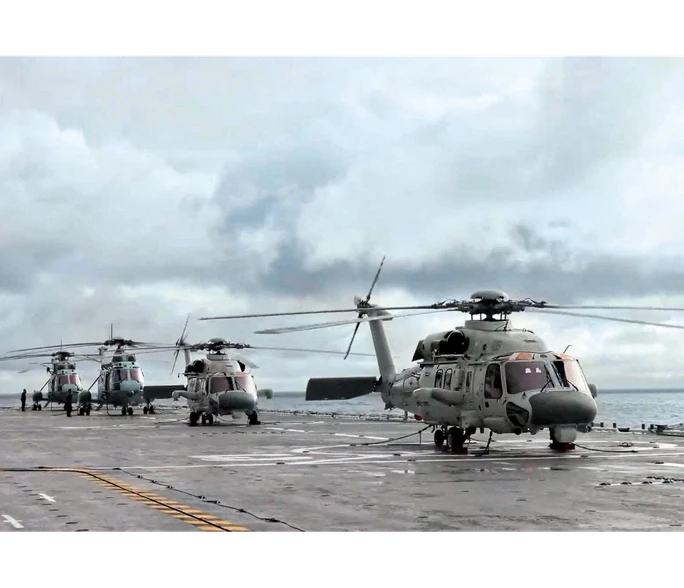 "China's helicopters on an amphibious assault ship take part in military drills in waters southeast of Taiwan, on December 29, 2025 (Photo: Reuters)")
China’s helicopters on an amphibious assault ship take part in military drills in waters southeast of Taiwan, on December 29, 2025 (Photo: Reuters)
The People’s Liberation Army (PLA) has come a long way since its origins as a revolutionary force. Having grown into a formidable fighting force, backed by China’s impressive economic growth, it is aggressively upgrading its combat potential along all dimensions of military power, be it on land, at sea, in the air, in space, or in the cyber domain. This has occurred at two levels.
In September 2015, the ruling Chinese Communist Party (CCP) embarked on an expansive top-down reformation of the PLA. It was aimed at strengthening the party’s control over the military; the theatrisation of its war-fighting capacity; and the reformation of the supporting structures of the PLA’s rocket force, strategic support force, and joint logistics support force.
In 2017, the CCP outlined its next set of reforms, widely referred to as “below-the-neck” reforms. These have focused on delivery of effects on the battlefield, by casting new, agile, and modular combat structures at the brigade and battalion levels, and fusing of old and new capabilities.
A key feature has been the resoluteness of the PLA’s reforms, even if they were occasionally hampered by bureaucratic stasis, or bouts of internal corruption. Anecdotal evidence suggests that the PLA is well past its envisioned set of reforms to assert itself at regional hotspots — at least along its peripheries, against India and its maritime neighbours — if not fully beyond its continental reach, in the global context. Its increased assertiveness points to its growing confidence to experiment with the use of force in pursuit of its core interests. This article examines the impetus for change, the scale and scope of reforms, what advantage they accord to the PLA ground forces, and how they impact India’s defensive posture along the Himalayas. It concludes that the need for a structural reform of India’s ground forces is inescapable in order to match the agility and lethality of the PLA’s reorganised brigades in a future conflict.
Military institutions often tend to look for external stimuli for implementing change. These could be technological, doctrinal, or structural. In the case of China, this impetus has largely been political, and then technological, where the president himself has been setting the agenda for change, rooted in a strong desire for state reclamation of its old glory.

 "digital payments platform Alipay")
In that sense, the central importance of the paramount leader to draw linkages between the strategic and doctrinal imperatives for institutionalising change has been the key driver of the PLA reforms. An external stimulant has been propelling change, which systematically deprioritises internal resistance to new ideas, technologies, and structures. The CCP’s reformation of its military force needs to be studied in this context.
In late 2015, the CCP’s China Military Commission (CMC) undertook a major reformation of the PLA headquarters. The four general departments were abolished and replaced with 15 functional departments, commissions, or offices. As part of it, the erstwhile military regions were recast into five joint theatre commands: Eastern, Southern, Western, Northern, and Central. Likewise, they had now to be manned by commanders, commissars, and staff from all three services, barring the PLA Rocket Force.
This, for the first time, brought commanders and staff from diverse service backgrounds face to face, which, prior to this, were single-service, depending on the orientation of each military region. Each theatre command headquarters now has a subordinate army and air force headquarters, while the coastal commands have a naval headquarters as well. Each of these headquarters — of the army, air force, and navy — are entrusted with a dual responsibility. The first entails the manning, training, and equipping of respective service components; and the second requires reporting to the joint theatre command headquarters for conduct of integrated joint operations.
At an operational level, the reforms were intended to rebalance the distribution of forces within the PLA, to make it more capable of executing joint operations beyond China’s land frontiers. This today forms the basis of the planning and thinking of the PLA’s integrated joint operations (IJO) . It implied reshaping the army’s land-centred thinking by making sweeping changes in the overall force structure, doctrine, personnel policies, professional military education, and training.
As the army’s influence declines, the other services — including the rocket and strategic support force — are expected to rise both in role and size relative to the army. As a result, there have also been considerable manpower reductions within the army, with surplus manpower moved to either the air force or the navy.
Additionally, there has been increased participation of air force and naval officers in senior positions of operational responsibility. While these overlapping changes might sound a bit confusing, they have vastly contributed to the increase in the PLA’s war-fighting capacity and its confidence to restructure and expand the new type of combat forces required for joint operations.
‘Below the neck’
At a tactical level, it is the “below-the-neck” reforms that take centre stage. They primarily seek to improve the PLA’s capacity to deliver battle-effects — either to deter, or fight an adversary. They seek to improve the PLA’s operational readiness and ability to conduct integrated joint operations at a scale and scope that overwhelms an opponent. For the PLA (Army), these reforms have largely focused on modernising and transforming its combat structures at the operational and tactical level. These include their combined corps (the erstwhile group armies), divisions, brigades, regiments, and battalions (see Table 1). While these changes would have triggered great anxiety across the PLA, the CCP, to its credit, has persisted and remained steadfast on this expansive transformation. That highlights the significance of political oversight to drive structural change, as militaries are inherently resistant to change.
The raising of the new theatre commands (TCs), combined corps (CCs), and combined arms brigades (CABs) is reflective of the intrinsic characteristic of the Chinese political system to drive and absorb large-scale change, by changing the vocabulary and imagery of instruments of the State, including its military. Be it the slogan of “Two Incompatibles” in 2006, “Two Big Gaps and Two Inabilities” (2013), the “Three Whethers” (2014), or “Five Incapables” (2015), all these catchphrases were the CCP’s way of prompting and instituting change in the PLA. The CCP’s objectives were twofold: Reform the archaic military structures in order to increase their operational effectiveness, and concurrently expand the number of modular units to prosecute IJO.
Here, we examine some of these structural innovations.
Theatre commands: Theatre commands, as a concept, are new to the PLA. Unlike the erstwhile military regions, the five new TCs combine both organisational and operational roles and functions. Organisational functions typically include equipping and training, besides peacetime maintenance and logistics. Consequently, the TCs have a mix of responsibilities: To function as operational headquarters for IJOs; exercise control over subordinate single-service headquarters tasked with routine management of the army, air force and navy; and, most importantly, maintain liaison with the provincial military district headquarters in areas where their peacetime responsibilities overlap. They provide the conceptual basis, framework, and expertise for the planning and execution of multidomain operations at a regional theatre level.
Evidently, the military district (MD) headquarters now find their roles considerably curtailed, unlike their erstwhile roles under the military regions. Much of their earlier roles with respect to recruitment and mobilisation of troops, or control over the border defence forces, seem to have passed into the hands of the CMC, or the theatre headquarters. The only exception being the Tibet and Xinjiang MDs. The Xinjiang MD still commands four infantry divisions, along with its complement of supporting arms. Similarly, the Tibet MD commands three CABs, which were earlier designated as PLA regiments.
Their command relationship with the Western Theatre Command (WTC) is rather intricate, as they report concurrently to the headquarters at Beijing, while keeping the theatre headquarters informed of the situation in their areas of responsibility. This duality of command makes for an interesting case study in operational effectiveness. While their peacetime role and employment so far seems satisfactory, the real test of its resilience might only emerge in a long-drawn-out crisis, or conflict.
Combined corps: In April 2017, 13 new combined corps were raised to replace 18 group armies. Since 1997, the erstwhile PLA group armies were reduced from 24 to 13 before being reorganised as CCs. Five group armies were disbanded, with many of their constituent units reassigned to the newly raised CCs. This large-scale reformation must have led to severe organisational turbulence. Dennis J. Blasko, a noted China military analyst, argues that an estimated 1,000-plus units were disbanded; another 100 units relocated; and anywhere between 40 to 90 per cent of the manpower was impacted. The leadership turnover alone was about 40 per cent, indicating the degree of turmoil in the early months and years of change. However, these corps seem to have quickly adjusted, with their structures standardised across the PLA for ease of operational employment.
At present, each CC commands a total of six CABs and an additional six brigades in support functions (see Table 2). These include an artillery brigade, air defence brigade, army aviation brigade, special operations forces (SOF) brigade, engineer brigade, and a service support brigade. The service support brigade caters to the functions of communications, electronic warfare, unmanned aerial vehicles, logistics, and repair and maintenance. Overall, the CCs are estimated to command between 50,000 and 60,000 personnel each, depending on the type of units and equipment assigned. Having been standardised, these CCs can quickly deploy for a multitude of operational tasks in an intra- and inter-theatre role. Besides, they can also readily accept out-of-area forces to provide the necessary surge in an evolving crisis situation.
Combined arms brigades: The most noteworthy structural innovation thus far has been the formation of the CABs — a modular outfit designed to operate under the CCs. In all, 15 former divisions were reorganised into CABs, with each erstwhile infantry or mechanised division transforming itself into two CABs. These brigades were categorised as light, medium, or heavy in order to facilitate equipping and employment. And, depending on their role, each has been authorised tracked, semi-tracked, or wheeled vehicles. Also, these brigades have been augmented with additional manpower and newer equipment. A combined arms brigade is authorised 5,000-6,000 personnel, while the support brigades are approximately half this strength.
Typically, a CAB comprises four combined arms battalions, an artillery battalion, an air defence battalion, a reconnaissance battalion, a combat support battalion, and logistic services support battalion. These newly formed combined arms battalions are now the basic battle units of the PLA Army. Composed of companies and platoons sourced from multiple branches of the army such as tank units, infantry, artillery, air defence, engineers, and logistics, they combine superior firepower with mobility, to provide effects on the battlefield. Each of these components is in the process of fielding new and more modern equipment, reflecting a high state of readiness and employability.
For instance, long-range rocket batteries equipped with 300-mm PHL 03 multiple rocket launchers, medium- and short-range drones, upgraded tanks, and ICVs, and 122/152-mm towed artillery deployments were frequently deployed by the PLA ground forces during the Eastern Ladakh crisis of 2020. In addition, a number of operational support units for intelligence, surveillance, and reconnaissance, electronic warfare, and communication tasks, which now form part of the CABs, were also positioned during the border crisis, underscoring the increased importance of information operations, cyber and electronic warfare, at the tactical level.
Border defence forces: Provincial MDs have been responsible for the peacetime security of China’s territorial borders. However, this underwent a major change during the 2017 reforms, except for Xinjiang and Tibet MDs. Elsewhere, these border defence units have been consolidated under the theatre headquarters. But more importantly, they have been equipped with modern PLA equipment, such as the PHL 03 or 155-mm howitzers, and even with mechanised infantry and air defence battalions. This implies that these units, vested with superior capabilities, remain a vital tripwire to secure contested territories. Besides, they also provide a modicum of staying power, until such time the CABs rush in to stabilise a situation. India might well review the potential of its peacetime border guarding force, notably the Indo-Tibetan Border Police (ITBP), with regards to its ability to field matching capabilities for maintenance of routine border guarding tasks.
Impact factor
Three aspects stand out. First, the impact of the PLA’s reforms — in terms of the theatrisation and brigadisation of the force — along the Himalayas is significant. It reflects a shift towards a more integrated approach to border security, with a focus on rapid response, joint operations, and precision strikes. The WTC with its subordinate headquarters caters precisely to these requirements, by enabling the PLA to improve its operational posture and responsiveness, with advanced infrastructure, logistics, and superior firepower. Consequently, the presence of the WTC along the Himalayas increases the risk of escalation to India, particularly in the event of a conflict, or miscalculation. At the same time, the Indian forces are yet to theatrise or brigadise in numbers and quality.
They are currently focused more on human adaptability, terrain familiarity, and decentralised tactics and operations, with an emphasis on a defensive strategy.
Second, a brigadised, modern land force adds to China’s coercive posture. With a marked reduction in its infantry and mechanised divisions, and a sizeable increase in its CABs (light, medium, and heavy) duly supported by a commensurate complement of supporting brigades (artillery, air defence, engineers, SOF, and others), the PLA land force is possibly the largest, most lethal, and agile force after the United States Army in Asia. In its new avatar, this brigadised land-force can dart down to any of its 14 land borders with greater mobility, to deliver effects in a possible conflict. Even if there are murmurs about the PLA struggling with the brigadisation of its force, it is reasonably evident that the PLA leadership will remain resolute in its endeavour to operationalise it against all odds.
This is so for two reasons: One, the PLA realises that the “time and space” problem posed by its far-flung peripheries can only be addressed by fielding a modular and agile force capable of transcending the constraints of multi-modal infrastructure, huge logistics, and harsh terrain and climatic conditions. Two, if the PLA Army is required to quickly deploy in a crisis situation along the borders abutting India, it can now do it with ease given superior road and rail infrastructure. Two new alignments, the G-580 and G-695, amongst other strategic road and rail projects have gained immense attention. The former would enable speedier mobilisation from the Xinjiang region to the Aksai Chin sector, while the latter, when completed, would allow PLA brigades to fully exploit the interior lines of communication to deploy or sidestep its units along the western and middle sectors of the Line of Actual Control.
And third, the impressive growth of the PLA’s Army aviation and special forces. Today, all CCs are authorised with aviation and SOF brigades, and they can provide a quick response action. Their primary role is to provide support to ground forces in a crisis situation. A total of 15 brigades of each type are now authorised. Two of these brigades are also designated for air assault tasks. While the aviation brigades are yet to grow to full strength, the sheer numbers indicate a formidable helicopter-borne capability. Once completed, an aviation brigade would hold 70-80 helicopters of all types. These would include transport (Z-8, Z-9 series) and attack (WZ-10 and WZ-19) helicopters organised into six battalions with about 12 aircraft each. As this capability grows in mass and quality, the PLA could pose a serious challenge to the Indian ground forces along the Himalayan borders.
Correspondingly, the PLA is also deeply invested into the creation of its SOF. The SOF brigades are now assigned to each CCs. PLA SOF units are equipped with advanced technology and weaponry, enabling them to conduct a range of missions, including special reconnaissance, direct action, and unconventional warfare. They have also been assigned to the Tibetan and Xinjiang MDs, highlighting the importance the PLA accords to the contested borders with India. In fact, they were extensively deployed during the Eastern Ladakh crisis of 2020 to cover the open flanks of the PLA regular units. All this underscores the importance that the PLA accords to the employment of special forces in any future conflict. While some potential challenges they might face include lack of operational experience, or adequacy of rotary wing or fixed wing lift capacity, they can be surely expected to enhance their capabilities and effectiveness in the coming years.
The reorganisation challenge
India’s military challenge is how to counter the darting PLA CABs in a possible conflict with China. This would entail the following aspects:
First, how soon can India brigadise its land force to operate along the borders with China? It might entail doing away with the divisional headquarters, to flatten the command structure by placing its reorganised brigades directly under the corps headquarters. Second, how potent would these brigade-size forces be in comparison with the PLA brigades and battalions and its supporting elements (artillery, aviation, SOF, and others)? And third, how can India’s border infrastructure be rapidly expanded to enable speedy mobilisation of its forces in a crisis situation? In the absence of matching infrastructure, a brigadised Indian land force, however potent and well-organised, would be stymied from presenting itself in time and space, or at a place of its own choosing, to battle the Chinese.
In this context, the brigadisation of India’s land force becomes a structural necessity. Its current three-tiered structure — of corps, divisions, and brigades — dilutes the advantage accruing from the reorganised brigades (the proposed Rudra brigades) as they would not compare with the two-tiered structure now adopted by the PLA. Such structural disadvantage would be least desired in any conflict, particularly against a stronger adversary like China. This implies that India’s structural challenge lies at two levels: One, of urgent theatrisation of the three services and two, the brigadisation of its land force.
The Indian armed forces might do well to order a force structure review for its western and northern borders, where necessary modular brigades are cast out of the existing infantry and mechanised divisions for better control and employment of forces. This brigadisation of the army would ensure that more hands are brought to the table, to fight the fight, and with as little a logistical tail as possible to support the battle. An agile, lethal brigadised force operating directly under a corps headquarters would not only present a low-signature on a transparent battlefield, but also have the ability to aggregate and disaggregate with speed, dictated by the battle conditions. Militaries in recent decades have seen a quantum jump in the way they equip, train, and organise for war. The prime drivers have been the fielding of cutting-edge technologies for war. New ideas and technologies usher in new dynamics, necessitating complimentary changes in doctrines, structures, tactics, and practices. But then, shedding old ideas and practices is a challenge, as militaries tend to hedge against unexpected consequences of change.
The issue gets even more complicated when change is seen in the context of the past ways of waging war.The Chinese military has done well to surmount this predicament. It has been successful in ushering in a qualitative change, and at massive scale, while continuing to exploit its old and proven methods. India could take a leaf or two out of the Chinese playbook to address its structural infirmities, and temper it with unique Indian military characteristics and its vast combat experience. India might do
well to narrow down these structural limitations vis-à-vis the PLA, with urgency.
Written By
Harinder Singh
The writer, Lt Gen Harinder Singh (Retd), is a former corps commander

 "Harinder Singh")
First Published: Feb 10 2026 | 5:30 AM IST
In this article :