


India is better prepared for the age of modern warfare
The country, situated in a region of complex security challenges, has acknowledged the critical role that drones play
Share

 "Ankit Mehta")
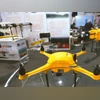 "Falcon, a surveillance drone on display at Bharat Drone Shakti 2023 organised by the Indian Air Force and Drone Federation of India at the Hindon Airbase in September 2023. Photo: Reuters")
Falcon, a surveillance drone on display at Bharat Drone Shakti 2023 organised by the Indian Air Force and Drone Federation of India at the Hindon Airbase in September 2023. Photo: Reuters
The rapidly evolving landscape of modern warfare is increasingly shaped by technological innovation. Among the most transformative developments is the use of unmanned aerial vehicles (UAVs), commonly known as drones. These versatile platforms have moved from being niche surveillance tools to central elements of military strategy across the globe. A military drone industry report by Technavio projects that the military drone market will expand by $10.29 billion at a compound annual growth rate (CAGR) of 13.1 per cent between 2024 and 2029 — an indicator of the rising strategic significance of drones in modern combat.
India, situated in a region marked by dynamic and complex security challenges, has acknowledged the critical role drones will play in both external defence and internal security. As conflicts in Ukraine, Israel, and Yemen have shown, drones offer speed, precision, and tactical flexibility — all without putting human lives at immediate risk. Widescale deployment of drones in the recently concluded Operation Sindoor carried out by the Indian Armed Forces to eradicate terrorist hideouts and training camps, in the aftermath of gruesome terrorist attacks in Pahalgam, is another example of how drones are changing warfare globally. Drones are deployed to gather real-time and valuable intelligence to plan operations, utilised for destroying targets with precision, and used to assess the post-strike damage and replan the subsequent waves of action, all without putting the brave personnel’s lives at risk. These advantages are pushing militaries worldwide, including India, to reimagine their force structures.
Drones in Indian military operations
Over the past decade, India has steadily increased the use of drones across military operations. Initially limited to surveillance
and reconnaissance missions, the scope of UAV deployment has expanded significantly. Today, drones are being integrated into counter-insurgency and counter-terrorism efforts, border patrols, and even tactical strike operations.

 "Drones, Mysterious objects in US")
The extensive use of drones after the terror attack in Pahalgam in April 2025 underscores their value to the forces. As reports emerged of militants targeting a convoy, drones were immediately deployed to assess the situation and track the attackers’ movements in the challenging forested terrain. The rapid aerial reconnaissance enabled security forces to coordinate a timely response, minimise casualties, and pursue the perpetrators effectively. This swift deployment highlighted how drones have become a critical component of India’s evolving counter-terrorism toolkit — demonstrating their effectiveness even in high-altitude and logistically difficult environments.
Building a self-reliant ecosystem
Recognizing the strategic risks of depending on foreign technologies—particularly from land-border-sharing countries—India’s Ministry of Defence has been proactive in fostering indigenous drone development. Recent advisories from the ministry have urged Indian manufacturers to avoid sourcing components from potentially adversarial countries, further reinforcing the importance of building a secure and sovereign supply chain.
This push has catalyzed rapid growth in India’s domestic drone manufacturing sector. In 2024, the government launched new incentives and policy frameworks to support the development of indigenous drones tailored specifically to Indian military needs. Several private-sector companies have emerged as key players, designing UAVs equipped with advanced surveillance systems, communication technology, and precision strike capabilities. These include small tactical drones suited for urban and jungle warfare, as well as larger UAVs capable of intelligence, surveillance, and reconnaissance (ISR) missions in
high-altitude and border zones.
Such innovations signal a decisive shift in India’s defence strategy — from importing critical technologies to creating a self-sustained ecosystem that can meet the demands of modern warfare.
However, we have a long way to go before realising this vision. And, both the government and the industry need to work together to accelerate this journey. The government needs to solve the funding challenge for R&D through dedicated and sector-specific R&D funds, provide financial incentives to scale up manufacturing, and also play the role of principal demand generator for niche and nascent technologies like drones to ensure that R&D and manufacturing ecosystem development efforts are converted into real and sustainable businesses in the country. The industry, on the other hand, needs to focus on developing technology and products and creating a sustainable ecosystem instead of relying on imports and carrying out assembly to pass on their products as “Made in India”.
How India compares globally
To evaluate India’s readiness in drone warfare, it’s essential to examine how leading nations have integrated UAVs into their defence architectures. The United States, for instance, has been a frontrunner for decades, with platforms like the MQ-9 Reaper setting benchmarks in endurance, precision, and multi-role flexibility. These drones are capable of long-range ISR missions and precision strikes, often operated with minimal risk to personnel and high levels of real-time data integration.
Israel, another global leader, has gained acclaim for its Heron and Hermes drones. These UAVs are used extensively in surveillance, counter-terrorism, and combat operations, and have been refined through years of deployment in conflict zones. Israel’s approach demonstrates the effectiveness of agile drone integration in asymmetric warfare scenarios, a challenge India too faces along its borders. China, meanwhile, has aggressively scaled its drone capabilities. Through platforms like the Wing Loong and CH-series drones, China has expanded its military reach and entered global export markets. The widespread deployment of Chinese UAVs across Asia, Africa, and West Asia underscores Beijing’s ambitions to dominate the drone technology landscape.
While India may currently lag behind these nations in terms of fleet size and technological sophistication
in larger drone categories like MALE & HALE, we already have the globally best technology and platforms in micro, mini, and small classes.The question is how fast we can integrate them into our forces and make them part of the baseline security infrastructure.
Charting a new defence frontier
India’s journey in drone warfare is still unfolding — but the direction is clear. From being an adopter of UAV technologies to becoming a serious innovator and manufacturer, India is transitioning into a strategic drone powerhouse. The groundwork laid today will determine how India responds to the warfare of tomorrow —one increasingly dominated by autonomous systems and real-time data-driven decision-making.
Drones are no longer optional assets — they are essential components of modern defence architecture. For India, the path to maintaining its sovereignty, safeguarding its borders and citizens, and responding to both conventional and asymmetric threats lies in building a robust, indigenous, and future-ready drone ecosystem. By doubling down on innovation, fostering collaboration, and embracing new-age warfare doctrines, India can not only catch up with global leaders but also lead the next wave of military transformation in the drone age.
Ankit Mehta is CEO of ideaForge Technology Limited, a manufacturer of indigenous UAVs. Views are personal.
Written By
Ankit Mehta
Ankit Mehta is CEO, ideaForge Technology Limited, a manufacturer of indigenous UAVs.

 "Ankit Mehta")
First Published: Jun 25 2025 | 7:32 PM IST
In this article :