


Pakistan-Afghanistan relations reach a breaking point
As militancy, military clashes and mass deportations collide, Pakistan and Afghanistan slide from uneasy coexistence towards open confrontation
Share

 "Ajay Darshan Behera")
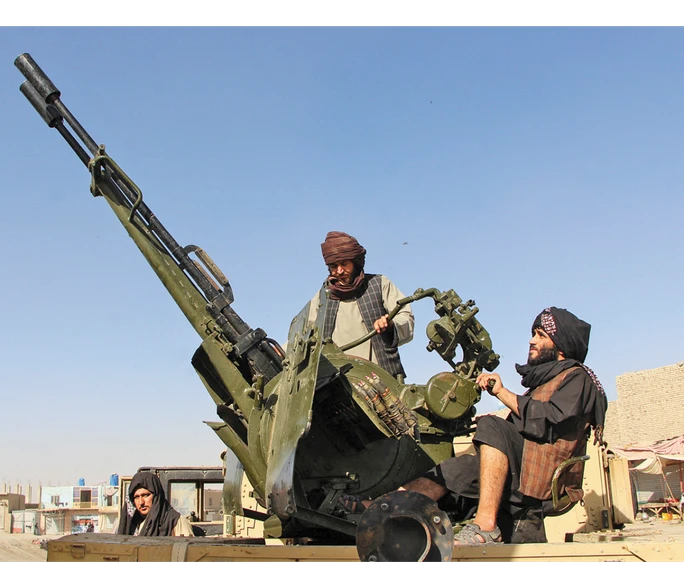 "An anti-aircraft gun at the Afghan-Pakistan border in October 2025 (Photo: Reuters)")
An anti-aircraft gun at the Afghan-Pakistan border in October 2025 (Photo: Reuters)
Relations between Pakistan and Afghanistan have entered a phase of acute tension that has gone beyond normal diplomatic discord. It is a crisis that is playing out on multiple levels — border violence, economic disruption, humanitarian distress and a trust breakdown. Although the tensions between the two are not new, the developments of 2025 appear to portend a shift from intermittent crisis towards a broader confrontation.
At the heart of the current impasse is Pakistan’s charge that the Afghan Taliban are sheltering the militant group
Tehrik-i-Taliban Pakistan (TTP), which has dramatically increased its attacks in Pakistan. Afghanistan has rejected the accusation outrightly, stating that no armed group uses Afghan soil against any neighbours. This disagreement has hardened positions on both sides and has increasingly been translated into coercive measures rather than diplomatic action.
By late 2025, these developments have led to direct military confrontation. Armed clashes along the Pakistani-Afghan border have caused the closure of major transit points by Pakistan. Consequently, trade between them has come to a standstill, with the impact of this conflict being felt across the region. A strategic shift is underway as Afghanistan seeks new economic partners for trade, presenting India with an opportunity to expand trade ties. Meanwhile, the deportation of Afghan refugees by Pakistan has triggered a serious humanitarian crisis.
Although mediation efforts by Türkiye, Qatar, and Saudi Arabia have averted a complete breakdown, tensions remain fragile. Both are open to dialogue, but it is tenuous and often interrupted by the ground happenings.

 "Afghanistan flag, Pakistan flag, Afghanistan-Pakistan")
Commonality yet clashes
Pakistan and Afghanistan have longstanding historical, cultural, and social ties. Pashtun communities straddle the Durand Line, a colonial-era boundary that remains politically contested. Both are majority-Muslim societies with cross-border movement, kinship, and trade. Pakistan has been the main refuge for war-displaced Afghans for several decades, with millions arriving after the Soviet intervention in 1979.
This history created a sense of strategic proximity, particularly for Pakistan, which was central to Afghan affairs during the second Cold War, the internal war of the 1990s, and after 2001. When the Taliban seized power in August 2021, Pakistan’s then Prime Minister Imran Khan famously said Afghans had “broken the shackles of slavery”. The expectation was simple: A friendly government in Afghanistan would restore the strategic depth and security along the western border.
But the expectation collapsed quickly. Militant violence escalated sharply in Pakistan post-2021, as the TTP began to reorganise itself under the Taliban, after being pushed into Afghanistan predominantly by Pakistan’s military operations. It dawned on Pakistan slowly that the Taliban government was unwilling or unable to crack down on ideologically compatible militant formations. The little leverage Pakistan had with Afghanistan was gone. What remained was a growing sense of betrayal and an acknowledgement that the shared history and religious affiliation were insufficient to forge convergence on fundamental security matters.
Central to the ongoing tensions are security concerns. Pakistan maintains that the TTP is able to operate from Afghanistan with impunity, and that terrorism in Pakistan is being orchestrated “from safe havens in Afghan provinces”.
This erosion of trust reached its climax in October 2025, with the worst border clashes since the Taliban's return. There were reports of several explosions in the Afghan capital, Kabul, on October 9. It is unclear whether the blasts were caused by strikes from Pakistani warplanes. But there were reports that a car carrying TTP chief Noor Wali Mehsud was targeted. The Taliban saw this as a direct challenge to Afghan sovereignty and retaliated on the border. Fighting continued until external mediation led to a ceasefire on October 12.
Pakistan said 23 of its soldiers were killed, and the Taliban reported losing nine fighters, with both claiming far larger death tolls on the other side.
Despite the end of hostilities, Pakistan began sealing all major border entry and exit points, including Torkham, Chaman, and other minor points. This halted trade, transportation, and relief activities. The effect was accentuated as the country was preparing for the Ramadan fasting season, during which food imports from Pakistan were at a record high. The deeper cause of this were the unaddressed security grievances.
Caught in the middle
The most profound consequences of the Pakistan-Afghanistan crisis have been borne by the Afghan refugees. For over four decades, Pakistan has been hosting Afghan refugees, but starting from late 2023, it has pursued a significantly coercive policy. What began as a deportation programme for “illegal foreigners” soon turned into massive expulsions of Afghan nationals at an increasing pace throughout 2024 and 2025. By the end of 2025, an estimated one million Afghan citizens had been deported or forced to flee from Pakistan. Many were long-term residents, including second- and third-generation refugees born in Pakistan.
According to the Amnesty International, Pakistan and Iran had expelled over 2.6 million Afghans in 2025, in total. These returns are occurring as Afghanistan’s human rights situation deteriorates, with harsh restrictions on women and crackdowns on dissent. Amnesty and the United Nations (UN) have warned that forced returns are illegal because they send people to countries where they could face grave harm.
Pakistan has defended the crackdown as a security necessity, citing terrorist attacks as the rationale. The details of raids, random arrests, and camp closings suggest a climate of fear and coercion.
While brinksmanship has continued, efforts have been made to de-escalate and negotiate through regional diplomatic channels, which have averted a complete collapse. Qatar and Türkiye hosted a round of ceasefire talks in October 2025, but no lasting agreement emerged from them. Pakistan formally suspended negotiations by November 7, citing irreconcilable differences. Saudi Arabia hosted direct talks on December 1, but neither side seems to compromise under security pressures.
The Pakistani Foreign Office issued a strongly worded demarche to the Afghan Taliban on December 19, citing “continued support and facilitation” the Afghan government was providing the TTP. Pakistan has urged that Afghanistan must “take immediate, concrete, and verifiable measures” against all terrorist groups staging terrorist attacks against Pakistan from their country. Pakistani officials emphasised that it “reserves the right to defend its sovereignty and protect its people”. Pakistan’s language has hardened, indicating a shift from diplomacy to deterrence, serving as a warning that force could be reused if necessary.
The Taliban leadership denied the allegations outright and reiterated that there is no militant group using Afghan territory against Pakistan, and that these accusations are politically motivated. They condemned Pakistani military operations in the country, as a breach of international norms.
International assessments, however, appear to mostly back Pakistan’s claims. In a monitoring report, the UN Security Council described the Taliban’s denial as “not credible”. It warned that Afghanistan is increasingly perceived by its neighbours to be a source of regional instability. The US Special Inspector General for Afghanistan Reconstruction has reported that groups such as the Islamic State-Khorasan Province, al-Qaeda, and the TTP operate freely within Afghanistan. The UN estimates around 6,500 TTP fighters in eastern Afghanistan under Taliban protection.
These reports have strengthened Pakistan’s stand that the Taliban have backtracked on their commitments on counterterrorism and allowed Afghanistan to become a haven for militants.
India’s strategic opening
As tensions with Pakistan soar, the Taliban government has been compelled to reassess its overseas economic and political dependencies. As the border closure at Torkham and Chaman and the use of economic leverage by Pakistan have exposed the vulnerability of the Afghan state, the lesson is unambiguous in Afghanistan. Dependence on Pakistan is too heavy a burden. So, the possibility of new relationships, particularly with India, has emerged.
India has treaded slowly but decisively into this arena. It has not recognised the Taliban regime, nor has it tempered its public stance on matters related to inclusive governance or women’s rights. But it has broadened diplomatic outreach, humanitarian support, and trade facilitation. This two-track strategy represents a deliberate separation between recognition and engagement. Engagement also permits India to stay relevant in Afghanistan without lending legitimacy to a regime whose ideology is deeply troubling. Recognition, India’s policymakers argue, would drain leverage without yielding security gains.
The increasing divergence in Pakistan-Taliban sentiments has reinforced this logic. Pakistan’s longstanding hope that the Taliban would deliver against the TTP has not been realised. Instead, Pakistan’s failure to dictate action against the TTP has revealed its limitations. This fracture has dismissed the assumption that the Taliban is only an extension of Pakistan’s security establishment. The present phase seems to indicate that Taliban leadership is more motivated by regime survival, Pashtun nationalism and economic imperative.
India, meanwhile, has quietly adjusted to this change. Economic cooperation has emerged as the point of entry. Pakistan has intermittently closed its land routes to Afghanistan, and the country has sought alternative corridors. For India, its focus on the Chabahar route (through Iran), broadening of air-cargo links, and “discussions on trade facilitation” respond to Afghanistan’s search for routes to bypass Pakistan. They also constrain Pakistan’s ability to veto India’s connectivity with Afghanistan.
Strategically, the engagement also has a defensive element. There would have been an opportunity cost to not being in Afghanistan, with Pakistan and China making inroads into this vacuum. Limited engagement enables India to monitor Taliban factions and communicate red lines on terrorism, and muddy the consolidation of anti-India militant networks. That is why India has shaped its outreach around security guarantees, insisting that Afghan territory will not be used against India. This is engagement as risk management, not alignment.
Nevertheless, Indian policymakers are aware of the limits. The Taliban is still faction-ridden, ideologically inflexible, and accommodating towards extremists. A rift with Pakistan does not imply a meeting of the minds in India. The best description of India's current policy towards Afghanistan is thus “calibrated opportunism”. It seeks to leverage Pakistan’s strained relations with Afghanistan, but does not expect them to become more than that.
The Pakistan-Afghanistan crisis has loosened rather than overturned regional alignments. India has filled the void left by closed borders, disrupted trade, and a diplomatic breakdown, without quitting its caution or moral distance. It is not clear how long this space will persist, and the answer will not be found in India’s decisions so much as in whether Pakistan–Taliban relations stabilise according to Taliban expectations.
The power dynamic being revealed in the ongoing standoff between Pakistan and Afghanistan illustrates how old alliances can break apart under new pressures. What we are witnessing is a reconfiguration of relationships. A Pakistan that once aided the Taliban’s rise now finds itself under attack from militants sheltered by the group. An Afghanistan that once relied on Pakistan for trade is now courting Pakistan’s rival, India, for economic lifelines. The impact of this standoff is stark: from the immediate human cost to broader security implications (a growing TTP insurgency).
Yet, despite this crisis, there is a common understanding of the imperative to avoid full-blown conflict within Pakistan and Afghanistan. Geography and history unite Pakistan and Afghanistan; neither can achieve its full potential by treating the other as an enemy. However, at the end of 2025, Pakistan-Afghanistan relations continue to be suspended between confrontation and containment. Without credible solutions to address terrorism, recognition of sovereign rights, and a renewed commitment to humanitarian restraint, this relationship is expected to fluctuate and create problems that will extend far beyond its boundaries.
A sustainable solution will need deep assurances against transnational terrorism, maybe through oversight by international observers. But it also needs a channel addressing both sides’ basic concerns — Pakistan’s security and Afghanistan’s sovereignty. This will be no easy task. Pakistan needs assurance that Afghan territory will not be used as a launch pad for terror attacks. The Taliban seek respect for their sovereignty and an end to military intimidation. For now, neither is willing to yield.
Written By
Ajay Darshan Behera
The author is director, MMAJ Academy of International Studies, Jamia Millia Islamia, New Delhi. Views expressed are personal

 "Ajay Darshan Behera")
First Published: Jan 10 2026 | 3:30 AM IST
In this article :