


A cooling deal - how tariffs affect the future of India-US strategic ties
US President Donald Trump's India tariffs could recast bilateral defence relationship
Share

 "Mohammad Asif Khan")
 "An Indian Navy P-8I maritime patrol aircraft")
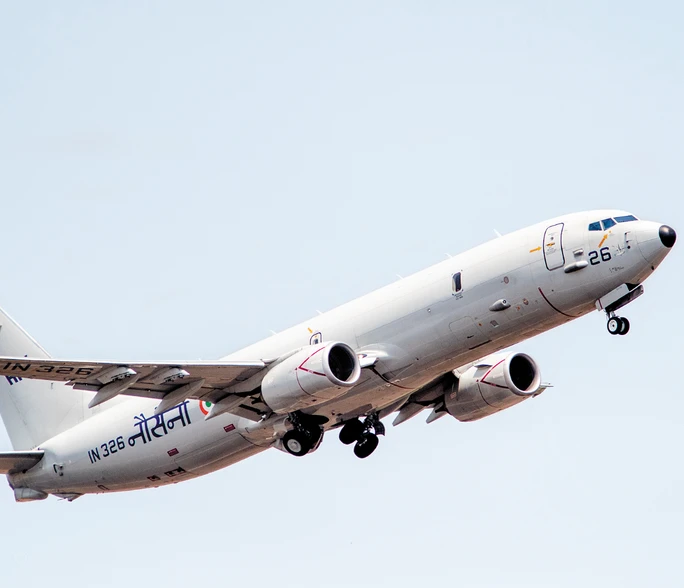
An Indian Navy P-8I maritime patrol aircraft (Photo: Reuters)
When United States (US) President Donald Trump slapped a 50 per cent tariff on Indian exports in August, the move came with little warning and sent shockwaves through diplomatic and economic circles, raising urgent questions about the future of India-US strategic cooperation.
While officials on both sides insist that strategic ties remain intact, experts say the tariffs could create pressures that influence India-US defence cooperation in the months ahead.
Initially set at 25 per cent before being doubled earlier this month, the measures were justified by Washington DC as a response to India’s high tariffs, its continued purchase of Russian oil, and its refusal to align with the US’ positions on Ukraine.
“They have always bought a vast majority of their military equipment from Russia and are Russia’s largest buyer of energy, along with China, at a time when everyone wants Russia to stop the killing in Ukraine,” Trump wrote on Truth Social, his social media platform.
Before the tariffs were scheduled to take effect, Reuters, citing unnamed officials, reported that negotiations for Stryker combat vehicles from General Dynamics and Javelin anti-tank missiles from Raytheon–Lockheed Martin had been paused, and a planned visit to Washington by Defence Minister Rajnath Singh was reportedly postponed.

 "India-US")
Sources in India’s Ministry of Defence dismissed the report, calling it “false and fabricated”, maintaining that acquisitions were proceeding “as per extant procedures”. Yet shifting diplomatic tones are fuelling doubts in New Delhi’s security establishment about whether trade tensions could seep into the military realm.
Sumit Ganguly, senior fellow, Hoover Institution, Stanford University, said India’s response would be pivotal. “Much depends on how New Delhi reacts to the tariffs. It may choose to delay these projects, though that would be a mistake,” he said. “It would be a grave error to halt their purchase, as the Indian military urgently needs to deploy these systems along both its northern and western frontiers.”
Two decades
The defence relationship between India and the US has been built since 2008, when a series of major acquisitions marked the beginning of a transformative partnership.
Since then, India has acquired Boeing C-17 Globemaster III heavy-lift aircraft, capable of transporting troops and equipment across vast distances, Lockheed Martin C-130J Super Hercules for precision special operations, and Boeing P-8I Poseidon maritime patrol aircraft, designed to track submarines and surface vessels across the Indian Ocean.
The portfolio has expanded in the years since. Boeing AH-64E Apache attack helicopters boosted the arsenal of the Indian Army and the Indian Air Force, CH-47F(I) Chinook heavy-lift helicopters helped with logistics in the rugged Himalayas, and BAE Systems M777 ultra-light howitzers offered rapid artillery deployment in high-altitude conflict zones.
With 11 C-17 Globemaster IIIs and 12 P-8I Poseidon aircraft, India now stands as the largest operator of both aircraft outside the US.
India has contracted over $24 billion worth of US defence equipment since 2008, encompassing not only aircraft but also drones and missile systems like the Harpoon anti-ship missile and procurements such as the MQ-9B Predator drones, according to that country’s government data. This deepening cooperation rests on agreements that have cemented trust
and interoperability.
In 2016, after years of cautious deliberation, India signed the Logistics Exchange Memorandum of Agreement, which allows the two militaries to access each other’s bases for refuelling, repairs and replenishment, facilitating joint operations and humanitarian missions across the Indo-Pacific region.
The Communications Compatibility and Security Agreement, signed in 2018, provided India with access to advanced encrypted communication systems, enabling seamless real-time data exchange with US and allied forces during exercises and potential contingencies.
The Basic Exchange and Cooperation Agreement, concluded in 2020, granted India access to high-precision American geospatial intelligence, enhancing the accuracy of its missiles, drones and aircraft in complex operational environments.
These agreements have been tested and strengthened through regular joint exercises. Malabar, an exercise involving the US, India, Japan and Australia, hones naval coordination.
Earlier this year, enthusiasm for the bilateral partnership had peaked. In February, India and the US agreed to draft a sweeping 10-year defence framework, aimed at strengthening logistics, intelligence, industrial collaboration and arms trade regulation between 2025 and 2035.
Senior leaders touted reciprocal procurement deals for Javelin missiles, Stryker vehicles, and additional P-8I aircraft — all under a new US-India initiative. Public remarks by Trump during Prime Minister Narendra Modi’s US visit also suggested potential long-term interest in F-35 stealth fighters, though no formal proposals have been made.
US-made Stryker combat vehicles during a patrol.India has explored their acquisition as part of expanding defence cooperation with Washington (Photo: Reuters)
Trust issues
Yet, amid this whirlwind of progress, the tariffs have cast a cold shadow. The foundation of trust and forward momentum built over two decades now faces a chill.
Rajiv Nayan, senior research associate at the Manohar Parrikar Institute for Defence Studies and Analyses, warned against a rash response. “Retaliatory tariffs on US defence imports would only raise costs for India. The response must be measured, not emotional.”
Nayan spoke of a pragmatic approach. “Trump’s tactics may seem erratic, but they are flexible. He may impose high tariffs only to reduce them later for strategic gains. India must engage in mature, interest-driven negotiations, keeping communication channels open.”
For New Delhi, the tariffs evoke memories of past frictions: US technology denials during the Cold War, when India leaned towards Moscow; sanctions following the 1998 nuclear tests, which stalled defence cooperation; and export controls that delayed critical procurements well into the 2000s.
The current economic pressure arrives as India navigates a delicate balance, seeking to maintain its multi-alignment strategy while facing a volatile global order marked by Russia’s war in Ukraine, China’s assertiveness in the Indo-Pacific, and “global South” cooperation.
“It could go either way,” Ganguly said. “To appease Trump, New Delhi might accelerate defence acquisitions. Alternatively, to address a surge of nationalistic sentiment, it could turn back to Russia, though Moscow’s capacity to deliver is questionable, given its commitments in Ukraine.”
India plans to acquire US-made Javelin missiles and is eyeing a larger coproductiondeal under the Make inIndia initiative with Raytheonand Lockheed Martin (Photo: Reuters)
Co-development risk
The cooperation extends beyond arms transfers. Indus-X — the India-US Defence Acceleration Ecosystem — aims to spur joint research and coproduction in India. The Defence Technology and Trade Initiative seeks to move production lines and supply chains to India.
The proposed coproduction of the GE F414 jet engine between General Electric and Hindustan Aeronautics Ltd for India’s next-generation fighter aircraft is a flagship effort that would test Washington’s willingness to share sensitive technology.
The planned acquisition of MQ-9B SeaGuardian drones includes provisions for local assembly and payload integration tailored to Indian needs. Collaborative ventures are also underway to develop artificial intelligence-driven maritime surveillance systems and counter-drone technologies aimed at securing contested littoral zones.
These projects demand not only government-to-government trust but also confidence from private-sector investors. If tariffs erode that trust, progress could falter. US companies may hesitate to commit resources to India’s defence market.
Indian policymakers, cautious of over-reliance on a single partner, may diversify towards European suppliers like France or Israel or even explore limited defence-industrial partnerships within Brics.
“The GE F414 engine deal predates this crisis, but delays have already occurred due to US domestic priorities,” Vivek Mishra, deputy director, Strategic Studies Programme, Observer Research Foundation, said. “India has been trying to convey that such delays create supply-chain bottlenecks, which could now be further compounded, potentially straining the relationship.”
India’s designation as a “major defence partner” in 2016 and its “strategic trade authorisation Tier-I status in 2018 have granted it some access to advanced US defence technologies once reserved for Washington’s closest allies. Stepping back from this level of cooperation would carry significant costs, particularly in the Indo-Pacific, where both countries view China’s reach as a shared challenge.
The pursuit of defence self-reliance, championed under the Atmanirbhar Bharat initiative, remains constrained by structural realities. Mishra said switching away from US defence equipment and technology could not be done immediately. “In the short term, India cannot replace US defence supply chains,” he said. “Over a decade, however, sustained investment in domestic defence production could build indigenous capabilities and reduce dependence.”
For now, both countries are working to keep military-to-military channels open. The 21st edition of the Yudh Abhyas exercise is scheduled to be held in Alaska. The Ministry of External Affairs maintains that, despite tariff tension, strategic ties remain intact.
Yet, the political cooling — after both leaders vowed to double bilateral trade to $500 billion by 2030 — is evident.
For a partnership that has grown from modest beginnings in the early 2000s to a cornerstone of Indo-Pacific security today, the stakes are high. The outcome will also depend on US-Russia dealings over the Ukraine war, as well as India-US trade talks.
The choices made by New Delhi and Washington will resonate not only in their countries but also in Moscow, Beijing and among India’s Brics partners, where defence cooperation is seen as a barometer of India’s long-term strategic alignment in a multipolar world.
Written By
Mohammad Asif Khan
Mohammad Asif Khan is a Senior Correspondent at Business Standard, where he covers defence, security, and strategic affairs.

 "Mohammad Asif Khan")
First Published: Aug 31 2025 | 9:23 PM IST
In this article :