


Army to acquire stealth-enabled long-range drones under modernisation plan
15-year plan reveals intent to acquire up to 70 drones for intelligence, jamming, and surveillance
Share

 "Bhaswar Kumar")
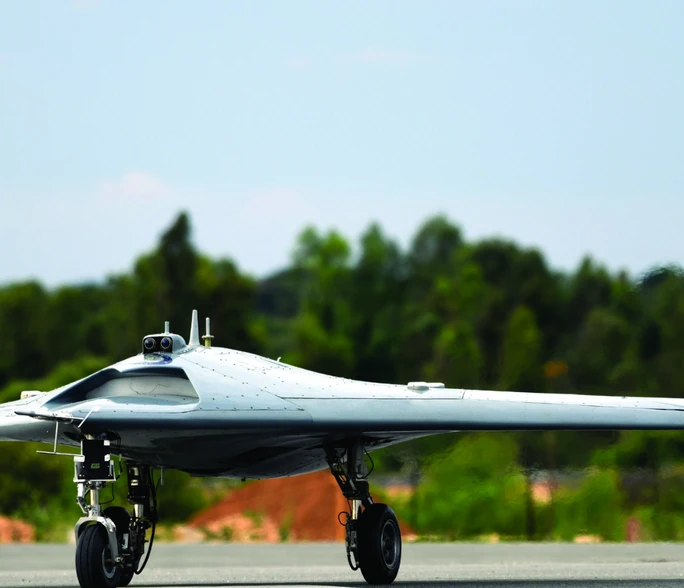 "The Autonomous Flying Wing Technology Demonstrator, an indigenous high-speed flying-wing Unmanned Aerial Vehicle (UAV) designed and developed by DRDO's aeronautical development establishment (Photo:PIB)")
The Autonomous Flying Wing Technology Demonstrator, an indigenous high-speed flying-wing Unmanned Aerial Vehicle (UAV) designed and developed by DRDO’s aeronautical development establishment (Photo:PIB)
Up to 70 radar-evading remotely piloted aircraft (RPA) are part of the Indian Army’s requirements under the defence modernisation plan unveiled last week. That’s in addition to over 670 unmanned aerial vehicles (UAVs) — ranging from heavy high-altitude, long-endurance drones to vertical take-off systems — that are expected to be acquired by the armed forces over the years under the same plan.
The Technology Perspective and Capability Roadmap (TPCR), which outlines the armed forces’ capability requirements over the next 15 years, includes a projected need for 55 to 70 “stealth RPA”, each with a projected service life of 20 years from the date of induction.
Under the TPCR, these RPA are classified as either medium-altitude long-endurance UAVs — capable of operating between 10,000 and 30,000 feet for 24 to 48 hours — or high-altitude long-endurance platforms that can fly at 50,000 to 65,000 feet. However, the specific requirement listed indicates that it will most likely fall in the latter category, with a “range up to 1,500 kilometre and an altitude (of) 50,000 to 60,000 feet”.
The requirement to possess “stealth capability to avoid detection by enemy radars” is explicitly listed, indicating that the RPA will feature a low-radar cross section — the effective area that reflects electromagnetic energy back to a radar receiver, and a key measure of radar detectability. This is typically achieved through a combination of aerodynamic shaping and specialised construction materials, including radar-absorbing materials and radar-absorbing structures. Given the planned operational range, the RPA will also need secure, long-range communication systems capable of functioning beyond the line of sight, without risk of detection or interception.
Interestingly, the RPA does not appear to be intended for air-to-ground strikes. Instead, the TPCR specifies the ability to carry “special payloads”, including equipment for communication interception, jamming, and detection of nuclear, biological, and chemical agents. This suggests a focus on Signals Intelligence, Electronic Attack, and the detection, identification, and monitoring of weapons of mass destruction capabilities.
The TPCR also lists the ability to direct artillery fire as a key requirement, suggesting that the RPA will play a role in compressing the Army’s kill chain — the sequence of identifying, targeting, engaging, and neutralising a threat.
Written By
Bhaswar Kumar
Bhaswar Kumar has over seven years of experience in journalism. He has written on India Inc, corporate governance, government policy, and economic data. Currently, he covers defence, security and geopolitics, focusing on defence procurement policies, defence and aerospace majors, and developments in India’s neighbourhood.

 "Bhaswar Kumar")

First Published: Sep 12 2025 | 5:19 PM IST
In this article :