


Why air power continues to dominate modern warfare
The lessons from Operation Sindoor highlight how flexibility, precision, and speed make air power the weapon of choice, but what else is required?
Share

 "Anil Golani")
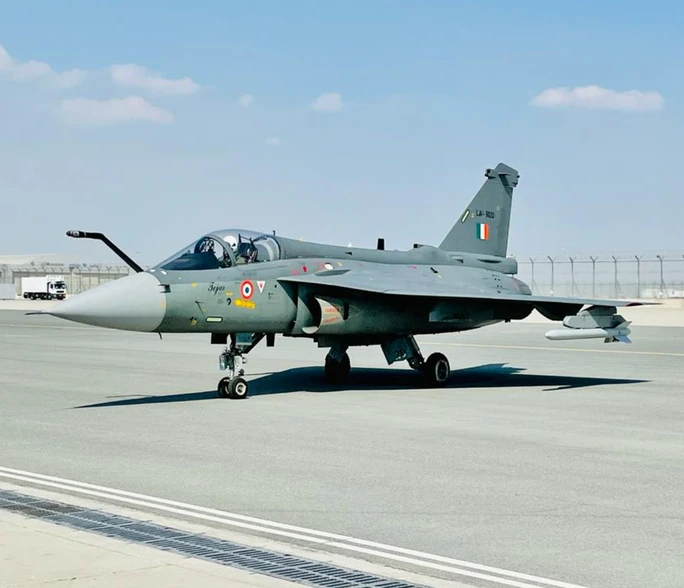 "Deterrence by punishment through air power is carried out to convince the enemy that the cost of continuing the conflict would outweigh any potential gain (Photo: IAF)")
Deterrence by punishment through air power is carried out to convince the enemy that the cost of continuing the conflict would outweigh any potential gain (Photo: IAF)
Recent conflicts across the world have once again proved the efficacy of air power as a powerful arrow in a nation’s quiver of military power. From the ongoing Russia-Ukraine conflict to the Israel-Iran and the India-Pakistan ‘Operation Sindoor’, there are important lessons to be learnt on the salience of air power.
Air power, with its flexibility, reach, precision, and lethality, invariably becomes the preferred tool for policymakers when faced with a situation that calls for the employment of force against both state as well as non-state actors. With the ‘utility of force’ and the penchant for using it in crisis situations going up several notches, there exists a need to carry out a fair and unbiased assessment of the role of air power in modern warfare. Technological developments have increased the range, autonomy and speed of modern weapons, both air-to-ground as well as air-to-air, to the extent that air combat today takes place with the adversaries well beyond visual ranges. Moreover, the ability of air power to influence the battle of the surface forces makes it the preferred choice for multi-domain operations.
The Feb 26, 2019, ‘Op Bandar’, popularly known as the Balakot strike, when Indian Air Force (IAF) fighter aircraft crossed the international border for the first time to carry out an attack on terror infrastructure in Pakistan, marked a significant shift in India’s response to state-sponsored terrorism from Pakistan. Viewed in hindsight, India’s strategy of coercive diplomacy by resorting to deterrence by punishment had its effect, albeit limited in time and space. The unprecedented heinous terror attack on innocent tourists in Pahalgam on April 22, 2025, called for an unprecedented response from India. Expectations had grown since the Balakot strike of 2019, as also the capability of the IAF with the induction and operationalisation of 4.5 generation Rafale fighter aircraft.
The IAF, meanwhile, had also upgraded its Integrated Air Command and Control System (IACCS), acquired the S-400 surface-to-air missile system from Russia, operationalised the indigenous Akash system and integrated precision weapons with the Rafale. While actions across the diplomatic, political and economic domains were taken immediately after the Pahalgam massacre, military action took some time.
‘Operation Sindoor’ launched on the intervening night of May 6-7, 2025, witnessed India carrying out a punitive strike on nine terror camps and infrastructure across Pakistan and Pakistan-occupied Kashmir, including the headquarters of Jaish-e-Mohammed at Bahawalpur and the Lashkar-e-Taiba at Muridke. These attacks were measured, non-escalatory and focused only on the terror infrastructure in Pakistan, avoiding any military or civilian targets. The response from Pakistan targeted Indian military installations, cities and places of worship with drones and missiles all along the international border. The Indian retaliation, subsequently on the night of May 9-10, 2025, was targeted at Pakistan Air Force (PAF) airfields, air defence radars and command and control structures across the Pakistani heartland, inflicting substantial damage to PAF capability. Pakistan requested a ceasefire that came into effect less than four days after the conflict had started. Indian air power had achieved the political objective of deterrence by punishment in a short timespan while controlling the escalation ladder.

 "Polish service members listen as Prime Minister Donald Tusk stands in front of F-16 fighter jets as he holds a press conference regarding the threat posed by Russian drones in Polish airspace on September 11, 2025 (Photo: Reuters)")
The asymmetry between the IAF and PAF over the years has continued to decrease in favour of Pakistan, while that between the IAF and PLA has continued to increase in favour of China (Photo: IAF)
Operation Sindoor clearly demonstrated the ability of the IAF to respond with alacrity and precision in a no war, no peace situation, to deliver while controlling the escalation ladder. This operation in some ways was also a test of the higher defence organisation comprising the intelligence agencies, bureaucracy and the military, after the defence reforms of 2019, wherein the CDS and Secretary DMA were appointed. The synergy and integration between the armed forces towards joint planning and decentralised execution worked perfectly to deliver within the existing structures. Future integration towards operationalisation of theatre commands, however, would have to factor in the lessons learnt from Operation Sindoor.
The IAF delivered in a short and intense skirmish that lasted for less than four days; however, the capacity of the IAF to engage in a conventional conflict over a prolonged period of time is stymied by the lack of resources. The IAF as on date may have the capability to deliver, but the capacity in terms of platforms, fighter aircraft and combat enablers like airborne early warning and control systems (AWACS) and flight refuelling aircraft (FRA) needs to be augmented post haste, as quantity has a quality of its own. Development of indigenous weapon systems, software-designed radios and operational data links for secure communication needs to be fast-tracked.
The active collusion between People’s Liberation Army Air Force (PLAAF) and PAF in real time, as also between Pakistan and Turkiye towards the supply of drones, is another factor that India needs to be wary and cognisant of. Aatmanirbharta is the way forward, and the push towards research & development, indigenous design development and manufacturing in the aerospace sector needs to be pursued in mission mode. The effort towards this has to be top-driven, facilitating the private sector in collaboration with public-sector undertakings and strategic collaboration with foreign original equipment manufacturers to not only ‘Make in India’ for domestic consumption but also for export to make for the world.
A dispassionate assessment of recent conflicts that have employed air power provides lessons that are contextual and cannot be universally applied. Israel-Iran and the ongoing Russia-Ukraine conflicts have both witnessed the employment of air power in situations that have had an asymmetric force ratio with respect to the respective adversaries. Ukraine, without a credible air force consisting of manned aircraft, has used drones, missiles and asymmetric unconventional tactics to carry out offensive action and ensure air denial to the Russian Air Force (VKS). VKS, doctrinally employed in support of the surface forces, being vastly superior to the Ukrainian Air Force, has not been able to achieve military objectives. Similarly, Iran, without significant manned aircraft capability, has used drones, but with limited effect. Israel and the United States have both used their air forces with telling effect to inflict damage on Iranian nuclear infrastructure and military leadership. The jury is out on whether this would deter Iran from pursuing its nuclear weapons programme. These operations, therefore, though tactically brilliant in execution, may prove to be futile in the use of air power to achieve political objectives.
The asymmetry between the IAF and PAF over the years has continued to decrease in favour of Pakistan, while that between the IAF and PLAAF has continued to increase in favour of China. The technological gap between India and China continues to increase, and this would indirectly affect the IAF during a face-off with Pakistan as well, due to the latter’s ‘higher than the mountains and deeper than the oceans’ relationship with China. The IAF has repeatedly vindicated the faith reposed in its capability by the political leadership; however, much needs to be done to enhance its capacity and keep its cutting edge sharpened. With the IAF and air power as the instrument of choice for military action, the nation would do well to ensure that the ‘utility of force’ should not turn into ‘futility of force’.
Written By
Anil Golani
Anil Golani is a retired Air Vice Marshal of the Indian Air Force. He is currently the director-general at the Centre for Air Power Studies, New Delhi

 "Anil Golani")
First Published: Sep 02 2025 | 4:54 PM IST
In this article :