


India eyes sixth-generation network-centric programmes in air combat
Unlike fifth-generation fighters such as stealth aircraft, these programmes are designed as integrated combat ecosystems
Share

 "Martand Mishra")
 "AMCA")
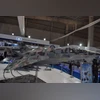
Model of India's planned fifth-generation stealth fighter jet Advanced Medium Combat Aircraft (AMCA). Image credit: Shutterstock
As air warfare becomes “increasingly air-centric”, India has indicated that it is evaluating participation in a sixth-generation fighter ecosystem, signalling a shift beyond its indigenous fifth-generation Advanced Medium Combat Aircraft (AMCA).
The Ministry of Defence informed the Parliamentary Standing Committee on Defence that the Indian Air Force is “exploring collaboration” with one of the two sixth-generation programmes: the Global Combat Air Programme (GCAP), a joint effort of the UK, Italy and Japan, or the Future Combat Air System (FCAS), which France, Germany and Spain are developing.
The committee was told that the objective is to assess potential partnerships to ensure India remains aligned with emerging technologies in advanced combat aviation.
The two programmes
The global sixth-generation effort is currently between Europe's FCAS and the UK–Japan–Italy-led GCAP. Both programmes target operational timelines between 2035-2040 and are expected to cost tens of billions of dollars across partner nations.
Unlike fifth-generation fighters such as stealth aircraft, these programmes are not centred on a single platform but are designed as integrated combat ecosystems, combining crewed fighters, unmanned systems and real-time data networks into a unified architecture.

 "AFCAT 1 Result 2026 out")
While fifth-generation aircraft focus on stealth, sensor fusion and network-enabled operations, sixth-generation systems are being conceived as highly integrated “system of systems.”
These platforms are expected to operate alongside swarms of unmanned aircraft, employ artificial intelligence for decision support and integrate advanced sensors and electronic warfare capabilities. It will integrate technologies such as adaptive-cycle engines and directed-energy weapons useful for future combat scenarios.
In FCAS, this includes a next-generation fighter supported by multiple unmanned “remote carriers” and connected through a secure combat cloud. GCAP follows a similar approach, with an optionally manned aircraft capable of controlling several drones in parallel.
It marks a shift from platform-centric warfare to network-centric operations, where a single fighter can direct multiple assets across domains. One aircraft could simultaneously manage surveillance drones, electronic warfare platforms and strike systems, expanding combat reach without risking pilots’ lives.
Sixth-generation systems will stand out due to the integration of multiple advanced technologies into a unified combat architecture.
Artificial intelligence is expected to enable real-time sensor fusion, threat prioritisation and autonomous teaming, significantly reducing pilot workload. Manned–unmanned teaming introduces loyal wingman drones that can scout, jam or strike independently and it features stealth capabilities that evolve beyond radar to include electronic warfare and cyber resilience.
These programmes are also being designed with directed energy weapon compatibility, particularly for counter-drone and missile defence roles, involving multi-domain integration and development cycles over 10–15 years.
Even as India advances its fifth-generation AMCA, expected to enter service in the mid-2030s, the complexity and cost of next-generation systems are forcing countries toward collaborative models that pool resources, expertise and industrial capacity.
Written By
Martand Mishra
Martand Mishra has started his reporting career with defence coverage. He is a graduate of the Indian Institute of Mass Communication. He enjoys reading books on defence, history and biographies.

 "Martand Mishra")


First Published: Mar 20 2026 | 4:59 PM IST
In this article :