


India's race for rare earth minerals
From fighter jets to submarines, the country's external dependence on materials is challenging its self-reliance

 "Martand Mishra")
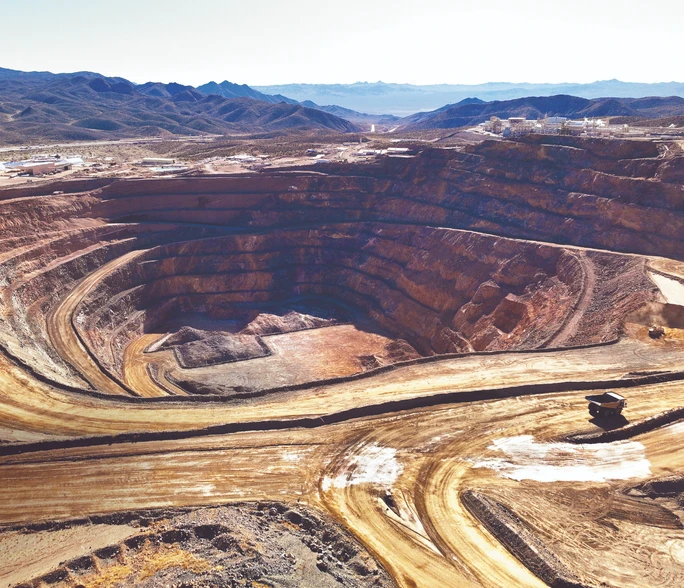 "Representational image (Photo: Shutterstock)")
Representational image (Photo: Shutterstock)
When Prime Minister Narendra Modi visited Tianjin on the invitation of Chinese President Xi Jinping for the 25th Shanghai Cooperation Organisation summit in late August — his first since the deadly Galwan Valley clash of 2020 — it signalled a strategic recalibration amid escalated tariffs imposed on both countries by US President Donald Trump.
As the US raises tariffs on Chinese imports, causing ripples across global supply networks, countries are becoming more aware of their strategic vulnerabilities in critical minerals, crucial for a range of defence and civilian applications.
Rare earth elements (REEs), a group of 17 elements, have become the backbone of advanced technology and defence systems as the “new oil” for the 21st century. These REEs are further classified into light rare earth elements (LREE), which are more common and easier to extract, and heavy rare earth elements (HREE) that are rarer and found in smaller concentrations, making their supply chain more vulnerable and strategically significant.
Neha Mishra, visiting associate fellow, Centre for Air Power and Strategic Studies (CAPSS), a New Delhi-based think-tank, explained, “Rare earth is not rare, it’s the process of separation and production which makes it rare. These elements are vital for everything we use in our day-to-day life — from laptops and smartphones to optics — as well as advanced defence systems.”
According to a 2022 CAPSS journal, the global demand for REEs is projected to reach 315,000 tonnes by 2030. This rising demand, coupled with supply chain risk of China's dominance, highlights their significant economic and strategic value.

 "A drone flies over a neighborhood in Houston, Texas")
The US Department of War website says an F-35 aircraft needs about 900 pounds of REEs, whereas an Arleigh Burke DDG-51 destroyer requires 5,200 pounds and a Virginia-class submarine 9,200 pounds of REEs.
Across the world, the defence sector’s dependence on REEs is striking. The reliance lies in the production process that uses permanent magnets, which are made from rare earth alloys such as neodymium iron boron and samarium cobalt. These magnets generate a powerful magnetic force in small components, and are used to power a wide range of military hardware such as generators, missile guidance systems, underwater mine detectors, anti-missile defence shields, radars, and satellite communication systems.
Apart from magnets, these specific REEs are crucial for vital functions: lanthanum, for instance, improves glass clarity for intelligence, surveillance, and reconnaissance, while europium is harnessed in LED lights and plasma displays. Gadolinium, samarium, and yttrium are used for radar and sonar systems, while communication and avionics systems use dysprosium, erbium, europium, neodymium, and praseodymium. Tanks and armed vehicles use europium, terbium, and yttrium in their mounting systems.
The CAPSS paper also highlights the use of REEs in cruise missiles, anti-ship missiles, and surface-to-air systems that rely on rare earth magnets to drive guidance motors and actuators. American Tomahawk cruise missiles, smart bombs, joint direct attack munitions, and even Predator drones depend on these elements for their accuracy and control.
India has the world’s fifth-largest rare earth resources, estimated at 8.5 million tonnes, Jitendra Singh, Minister of State (MoS), told the Lok Sabha in July. But it is not among the leading producers of REEs.
Amoha Basrur, junior fellow in the Centre for Security, Strategy and Technology at the Observer and Research Foundation, said, “India has around 7 per cent of the world’s REE reserves, but our actual production in 2024 was about 2,900 metric tonnes, close to 0.7 per cent of the global production of 390,000 metric tonnes. The biggest challenge is that the quality of the ores we possess is quite low-grade. Moreover, our deposits are overwhelmingly skewed towards light REEs, while heavy REEs, which are particularly important for defence supply chains, exist only in non-extractable concentrations.”
While India possesses the upstream capacity to mine REEs, primarily from monazite sand, this task has been primarily carried out by IREL (India) Ltd (formerly Indian Rare Earth Ltd), a public sector undertaking (PSU) under the Department of Atomic Energy.
Midstream capacity refers to processing and refining the ores into usable oxides and metals, while downstream involves manufacturing end-products like magnets and components for EVs and defence.
“We do have upstream mining capacity, but the major limitation is downstream processing. Without refining and manufacturing capability, we are forced to rely on imports. Currently, we possess mostly light rare earth elements from monazite sands, while heavy rare earth elements critical for electric vehicles and defence are largely absent in India’s resource profile,” explained Mishra.
IREL dominates the mining sector but does not share much with industry. The reason lies in the composition of monazite sand. The primary source of these elements in India, the sand also contains uranium and thorium — materials classified as strategic assets due to their potential use as nuclear fuel. “These structural bottlenecks explain why we remain dependent on imports,” said Mishra.
In 2022, MoS Jitendra Singh said India is not reliant on China for accessing rare earth minerals. Today, China’s dominance is evident on the ground.
China was “strategically advanced” and at least a decade ahead of other countries in recognising the importance of rare earths, said Mishra. While India, the US and other countries are working today to diversify and develop supply chain resilience, China already has its next 20-year plan in progress. Despite its R&D strength, the US does not have downstream-processing capacity and continues to rely on China, which uses the leverage of its rare earth supplies to impact the US economy.
While China accounts for approximately 60 per cent of global REE production, it accounts for 90 per cent of global REE processing, giving it a massive advantage in the global supply chain. When the US imposed tariffs on China, for instance, China placed export restrictions on US exports of key rare earth metals, forcing the US to negotiate and allow Chinese shipments.
In April, Indian automakers had to cut production targets because of a shortage in the supply of REE magnets. And yet, even during times of heightened confrontation like Galwan, imports from China continued. “Cutting China out of the supply chain is not possible in the short to medium term, and doubtful even in the long term,” said Basrur, highlighting the need for India to urgently build counterbalances, partnerships, and resilience.
According to government data, from 2019–20 to 2022–23, China accounted for nearly 90 per cent of India’s imports of rare earth products, including magnets. The figure was at its highest at 94.55 per cent in 2020–21 and above 90 per cent for three years in a row.
In 2023–24, even amid rising contributions from Hong Kong, Japan, and Mongolia in India’s rare earth import, China still supplied 699 tonnes out of 1,185 tonnes (58.98 per cent). Notably, China’s supply volume remained constant compared with earlier years; the decline in percentage is not because of low imports but due to the entry of new regional suppliers, showing that India’s dependence on China remains structurally significant.
India has opened up its vital mineral sector to private companies in an effort to cut its reliance on China. The government, in September, held the sixth round of auctions, involving 23 blocks in many states for the discovery of key minerals, including rare earths. Out of 55 blocks, 34 have been successfully auctioned in all six rounds, indicating increased private sector participation.
India has launched the National Critical Mineral Mission (NCMM), 2025, with an allocation of ₹16,300 crore to cater to 30 critical minerals and plan 1,200 exploration projects through the Geological Survey of India by 2031, focussing on defence, aerospace, and clean energy sectors.
“India has taken steps with its NCMM, which only a handful of countries possess. We are moving in the right direction, but implementation is also crucial. Without strengthening downstream processing, building strategic partnerships, and incentivising industry participation, India cannot achieve self-reliance in rare earths,” said Mishra.
Beyond the NCMM, the India Rare Earths Mission is streamlining regulations and encouraging private investment in mining, refining and magnet production. The Mines and Minerals (Development and Regulation) Act reform in 2023 opened the sector to private participation, removing elements like niobium and zirconium from the atomic minerals list, which led to over 100 exploration licences being issued to private firms in 2024.
Khanij Bidesh India Ltd, a joint venture of three central public sector enterprises, has signed an exploration and development contract for lithium and cobalt exploration in Argentina and is negotiating rare earth access in Australia and Brazil.
“Private sector should be given a mandate for conditional allowance to create defence-backed buffers; short-term (0–18 months) to long-term ecosystem, from mining to magnet manufacturing over the next few years,” said Rohan Dange, distinguished fellow at the Forum for Global Studies, a New Delhi–based think-tank.
The Department of Defence Production is considering building a “national stock of critical minerals and metals” as a short-term measure to meet urgent requirements, said Defence Secretary Rajesh Kumar Singh, at the launch of the Blueprint in New Delhi on September 20.
Over the long term, India’s reasonable reserves of critical minerals could be utilised more effectively for strategic purposes. Recently, the Ministry of Environment classified critical mineral mines as strategic, enabling faster environmental clearances, highlighting India’s defence reforms, indigenous technology push, startup support, and critical mineral strategy.
Written By
Martand Mishra

 "Martand Mishra")


First Published: Oct 07 2025 | 3:32 PM IST
In this article :