


US debuts precision strike missile to hit Iranian targets in Op Epic Fury
Unlike cruise missiles, which fly low and remain powered throughout flight, the PrSM relies on speed and altitude for survivability, making it harder to intercept
Share

 "Martand Mishra")
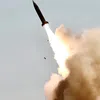 "The PrSM was developed as part of the army's Long Range Precision Fires initiative by Lockheed Martin")
The PrSM was developed as part of the army’s Long Range Precision Fires initiative by Lockheed Martin (Source: US Central Command via X)
The US is debuting weapons against Iran in the ongoing Operation Epic Fury, with the latest being the Precision Strike Missile (PrSM).
Under US Central Command, American forces employed the PrSM, a next-generation short-range ballistic missile designed to expand the army’s deep-strike capability.
The PrSM’s combat appearance comes amid a broader escalation in West Asia, with the US and Israel conducting hundreds of coordinated strikes targeting Iran’s command-and-control facilities, missile bases, air defence systems, and other critical infrastructure.
Iranian state media and regional outlets reported significant damage to military and government sites, with Tehran retaliating with missile and drone attacks on US bases and allied positions across the Gulf region. This prompted condemnation and calls for de-escalation at the UN Security Council, raising fears of broader regional conflict.
Earlier, the US military had for the first time used Low-Cost Unmanned Combat Attack System (LUCAS), a long-range kamikaze drone built with Iranian loitering munition technology, during its military offensive against Iran.

 "Tata Group")
What is PrSM?
The PrSM was developed as part of the army’s Long Range Precision Fires initiative by Lockheed Martin. It is designed to be fired from platforms such as the M142 High Mobility Artillery Rocket System (HIMARS), a lightweight launcher vehicle featuring “shoot-and-scoot” capabilities for rapid firing and relocation.
The PrSM replaces the older Army Tactical Missile System (ATACMS) and brings major improvements in range and accuracy on the battlefield. The missile follows a ballistic trajectory: it is rocket-boosted at launch, climbs high before descending at extreme speed toward its target.
Unlike cruise missiles, which fly low and remain powered throughout flight, the PrSM relies on speed and altitude for survivability, making it harder to intercept. While the ATACMS could strike targets up to roughly 300 kilometres, the PrSM can reach about 500 kilometres, with future variants expected to go about 1,000 kilometres, marking a significant upgrade in range and deep-strike capability.
Another key advantage lies in capacity and mobility. The missile is fired from existing platforms such as HIMARS and the M270 launcher and its slimmer design allows two missiles per launch pod instead of one, effectively doubling firepower.
It is guided by inertial navigation and GPS, offering precision to carry out strikes against command centres, air defence systems and other high-value targets deep inside territory with reduced collateral damage.
Analysts suggest that by integrating deep-strike ballistic missiles into land-based units like HIMARS, American forces can rapidly engage high-value targets without extended aircraft sorties or significant forward basing, changing how future conflicts are conducted.
Written By
Martand Mishra
Martand Mishra has started his reporting career with defence coverage. He is a graduate of the Indian Institute of Mass Communication. He enjoys reading books on defence, history and biographies.

 "Martand Mishra")


First Published: Mar 03 2026 | 2:46 PM IST
In this article :