
 "image")

What are locust attacks
Why is locust attack in news?
Locusts normally arrive during July-October, but have already caused chaos in Rajasthan. At a time India is battling coronavirus pandemic, locusts present a new worry with their potential for exponential growth and crop destruction. Standing crops and vegetables in Rajasthan, Punajb, Haryana and Madhya Pradesh face a major threat as swarms of locust have been reported a month in advance. There is an alert for Uttar Pradesh, Maharashtra and Delhi as well.
Locusts in India, Pakistan
Lcusts are normally seen in India between July-October and mostly as solitary insects or in small isolated groups. Their being spotted along the India-Pakistan border before mid-April this time — and coming after the damage they caused to the growing rabi crops along western Rajasthan and parts of northern Gujarat during December-January — has raised the alarm bells.
What is a locust?
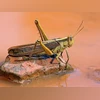
Locusts are the oldest migratory pests in the world. They are insects that belongs to the family of grasshoppers. Locusts are essentially harmless, however, when they meet suitable environmental conditions, they become start breeding. Locusts form enormous swarms that spread across regions, devouring crops and leaving serious agricultural damage in their wake.
What is a locust attack/invasion/plague
When the locusts start attacking crops and thereby destroy the entire agricultural economy, it is referred to as locust plague/locust invasion. Plagues of locusts have devastated societies since the Pharaohs led ancient Egypt, and they still wreak havoc today. Over 60 countries are susceptible to swarms.
How and when do locusts become harmful?
During dry spells, solitary locusts are forced together in the patchy areas of land with remaining vegetation. This sudden crowding makes locusts. Then, when rains return—producing moist soil and abundant green plants, locusts begin to reproduce rapidly and become even more crowded together. In these circumstances, they shift completely from their solitary lifestyle to a group lifestyle in what’s called the gregarious phase. Locusts can even change colour and body shape when they move into this phase. Their endurance increases and even their brains get larger.
What is locust swarm?
Locust swarms are typically in motion and can cover vast distances—some species may travel 81 miles or more a day. Locust swarms devastate crops and cause major agricultural damage, which can lead to famine and starvation. A swarm of desert locust containing around 40 million locusts can consume (or destroy) food that would suffice the hunger need of 35,000 people, assuming that one person consumes around 2.3 kg of food every day.
How can locust swarming/attack be prevented
Weather patterns and historical locust records help experts predict where swarms might form. Once identified, an area is sprayed with chemicals to kill locusts before they can gather.
Types of locusts
There are four types of locusts that create a plague – desert locust, migratory locust, Bombay locust, and tree locust. The desert locust is a notorious species. Found in Africa, the Middle East, and Asia, this species inhabits an area of about six million square miles, or 30 countries, during a quiet period, according to National Geographic. During a plague, when large swarms descend upon a region, however, these locusts can spread out across some 60 countries and cover a fifth of Earth's land surface.
Locusts attack across the world
Kenya has reported its worst locust outbreak in 70 years, while Ethiopia and Somalia haven’t seen one this bad in quarter of a century.
Locust attack in India 2020
According to the Ministry of Environment, Forests and Climate Change, “Locust swarm from Pakistan has entered Rajasthan, Punjab, Haryana and Madhya Pradesh, threatening major damage to standing cotton crops and vegetables. Rajasthan is the most affected state. During the current year, the swarm of locusts has entered India earlier than their normal time of June and July. States are adopting various means for controlling the swarms.”