Combating civil wars

Ms Walter has a political scientist's fondness for data sets and numerical scales
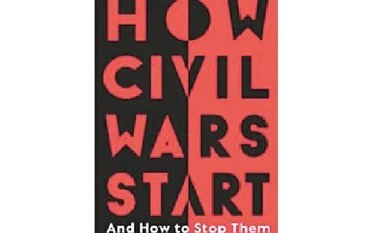
Book cover
Book Cover (How Civil Wars Start: And How to Stop Them)
Jennifer Szalai | NYT
5 min read Last Updated : Jan 17 2022 | 2:05 AM IST
How Civil Wars Start: And How to Stop Them
Author: Barbara F Walter
Publisher: Penguin
Price: Rs 799
Pages: 293

In the year since the rampage at the Capitol, chatter about a 21st-century American civil war has seeped from the fringes into the mainstream. During the Trump presidency, there were of course any number of books about political fracture; still, they mostly discussed widening but (usually) peaceable differences.

Also Read


By contrast, predictions of an imminent conflagration tended to come from those quarters that also celebrated it, on MAGA [Make America Great Again] Twitter and its companion talk shows. The logic was hard to follow, but it often went something like this: Snowflakes (i.e. liberals), despite being so wimpy that they’re cowed into wearing “face diapers” (i.e. masks), were physically preparing to muscle their way to a gun-free hellscape of gender-neutral bathrooms and critical race theory.

Who wanted to dignify such dumb scenarios with sober analyses?  When Barbara F Walter began writing How Civil Wars Start in 2018, the few people who heard that it was “about a possible second civil war in America” thought it was “an exercise in fear-mongering,” she writes in her acknowledgments, “perhaps even irresponsible.”

 That “even” gives you a sense of Ms Walter’s cautious inclinations. As a political scientist who has spent her career studying conflicts in other countries, she approaches her work methodically, patiently gathering her evidence before laying out her case. She spends the first half of the book explaining how civil wars have started in a number of places around the world, including the former Yugoslavia, the Philippines and Iraq.

The range of her case studies implies that another damper on the American imagination has been an insistent exceptionaism — the belief that political collapse is something that happens elsewhere.

Contemporary civil wars are in some sense common (Ms Walter says there have been “hundreds” in the last 75 years), and in another sense rare. In any given year, only 4 per cent of the countries that “meet the conditions for war” actually descend into one. “Civil wars ignite and escalate in ways that are predictable; they follow a script,” she writes in her introduction, in what I thought was a bit of mechanistic hyperbole. It turns out that she and other scholars have identified certain risk factors, signs that things are starting to go awry.

Ms Walter has a political scientist’s fondness for data sets and numerical scales. She says that the US is firmly within the “danger zone” of a “five-point scale” measuring factionalism and a “21-point scale” measuring a country’s “polity index,” where a full autocracy gets a -10 and a full democracy gets +10 (the US slid from +10 to +5 in a few years, occupying what Ms Walter and her colleagues call the not-quite-democratic and not-quite-autocratic zone of an “anocracy”). The numbers serve a function, corralling troubling observations into a cold system of measurement that presents itself as beyond dispute, seemingly nonpartisan and scientific.

Of course, nothing is beyond dispute anymore — and the book has a chapter on that, too. Social media, for all its initial promises of interpersonal harmony, has become an efficient machine for stoking rage, tearing people apart when it isn’t bringing extremists together. An “ethnic entrepreneur” seeking to amass power by making bigoted appeals to a particular group doesn’t need an especially sophisticated disinformation campaign to get people to feel fearful and despairing, convincing them to turn against a democracy that includes people they hate. There’s comfort in assuming that autocracy has to arrive with a military coup: “Now it’s being ushered in by the voters themselves.”

Ms Walter’s earnest advice about what to do comes across as well-meaning but insufficient. “The US government shouldn’t indulge extremists — the creation of a white ethno-state would be disastrous for the country.” Thank you, Professor Walter. She proposes that the government instead “renew its commitment to providing for its most vulnerable citizens, white, Black or brown.” This, too, seems unobjectionable — but she also makes clear that right-wing militias planning to kidnap and murder government officials are zero-sum thinkers; they experience any benefit that might be shared by people who don’t look like them as a grievous loss.

While the blithely unworried are hindered by too little imagination, the florid fantasies of QAnon show that some Americans are beset by too much of the same. Ms Walter mostly sticks to citing the scholarship in her field, but at one point, discussing the sinister clowning of Alex Jones, she reaches for Voltaire: “Those who can make you believe absurdities can make you commit atrocities.” The absurdities are by definition preposterous, but this book suggests that it would be preposterous to assume they’re irrelevant; it’s only by thinking about what was once unfathomable that we can see the country as it really is.
©2022TheNewYorkTimesNewsService

One subscription. Two world-class reads.

Already subscribed? Log in

Subscribe to read the full story →
*Subscribe to Business Standard digital and get complimentary access to The New York Times

Smart Quarterly

₹900

3 Months

₹300/Month

SAVE 25%

Smart Essential

₹2,700

1 Year

₹225/Month

SAVE 46%
*Complimentary New York Times access for the 2nd year will be given after 12 months

Super Saver

₹3,900

2 Years

₹162/Month

Subscribe

Renews automatically, cancel anytime

Here’s what’s included in our digital subscription plans

Exclusive premium stories online

  • Over 30 premium stories daily, handpicked by our editors

Complimentary Access to The New York Times

  • News, Games, Cooking, Audio, Wirecutter & The Athletic

Business Standard Epaper

  • Digital replica of our daily newspaper — with options to read, save, and share

Curated Newsletters

  • Insights on markets, finance, politics, tech, and more delivered to your inbox

Market Analysis & Investment Insights

  • In-depth market analysis & insights with access to The Smart Investor

Archives

  • Repository of articles and publications dating back to 1997

Ad-free Reading

  • Uninterrupted reading experience with no advertisements

Seamless Access Across All Devices

  • Access Business Standard across devices — mobile, tablet, or PC, via web or app

Topics :BOOK REVIEWLiterature

Next Story



