In India, it is a common practice to segregate the utensils used by the household help from those of family members. The implicit bias and hostility of this act is barely acknowledged by those of us (most of us, one might assume) who do have odd bits of crockery demarcated for domestic staff. Author Gunjan Veda confronts her own prejudices in the hesitant but brave epilogue of her book The Museum of Broken Tea Cups: Postcards from India’s Margins, published in February this year. She admits that in her own home, there has always been a separate glass for the help — labourers, plumbers, electricians, and other insignificant, yet paradoxically, necessary supporters of urban lives. When she confronts her mother about it, she gets a bewildered but honest response: “I never thought about it. It has been there for as long as I remember.”
Like Veda’s mother, we probably don’t think about it either — this daily othering, this differentiation between “us” and “them”. And had it not been for the story of the tea cups, told inside an air-conditioned car one summer afternoon in April 2015, Veda too would not have thought about it, let alone confess to it. On that afternoon, when she was on her way to schools in Ahmedabad and Surendranagar, her travelling companion, 55-year-old Martin Macwan, a Dalit human rights activist who founded the Navsarjan Trust in 1988, first mentions the tea cups. In 1977, a 17-year-old Macwan begins an investigation of the lives of Dalits in the village of Vainaj in Gujarat, together with his professors from the Behavioural Science Centre of St Xavier’s College, Ahmedabad. He notices a cup and saucer lying outside every home in the village, placed either on a wooden pillar or upon a courtyard fence. “The village was like a veritable museum of tea cups!” Macwan tells Veda.
The cups, or Rampatars, as Martin discovers they are called, are utensils that are kept aside by the upper castes for Dalit labourers to drink tea or water from, after they have completed the task for which they have been summoned. “But it took me 25 long years to fully comprehend the role of the Rampatar and to break its symbolism,” Macwan tells Veda, as they drive towards a new expedition into the unforgiving topography of caste in India.
The Museum of Broken Tea Cups is an edifice of fortitude, a magnificent structure of sunlit stories from dingy corners of the country. To break the metaphorical tea cup is to break free from the confines of one’s caste and its predestined lot: poverty, humiliation and disenfranchisement. The story of each smashed tea cup is chronicled upon a postcard with the photograph of the individual or group that has been documented, as well as the district and state to which they belong.
To break the metaphorical tea cup is to break free from the confines of one’s caste and its predestined lot
In Kanpur she visits the home of 85-year-old Gangaprassad Naqqarawadak, who reminisces about his days as a naqqarchi or a player of the naqqara, an instrument like a kettledrum. In Balangir, a town in Odisha, she meets Chesta Chhatriya, who belongs to the Gana or Ganda community of untouchables. She also meets his grandfather, 95-year-old Shatrughan Chhatriya, who learnt how to weave the kapta, a short sari, when he was only 12 years old.
Veda uses the term “cultural philanthropists” to describe the Dalit artistes she meets. Splendid in their craft, they often face fierce resistance from the upper castes in pursuing the arts. Shatrughan, for instance, had to struggle to weave the famed Sambalpuri Ikat sari, which was brought into western Odisha by the Bhulia community in 1192 AD. “We were regarded as untouchables. Who would teach us,” he asks Veda, rhetorically. He eventually does learn to weave the Sambalpuri Ikat sari, an act that amplifies the metaphorical breaking of the tea cups.
The book, then, is a celebration of defiance. It is boisterous applause to the music of the Ganda Bajaa troupes — the offensive nomenclature (ganda means foul smelling) an indicator of their instruments made of cowhide, and the act of touching their own saliva while playing the mohuri. It is ecstatic dancing to the ballads of the Dewar group of nomads.
But The Museum of Broken Tea Cups is also a sobering interrogation. For instance, it wants to know why the girls of the leather-working Madiga community of Telangana are still dedicated to temple services, married to Goddess Yellamma at the age of 10 or 11 and made to lead the life of a jogini, a euphemism for sex worker. It also questions us, albeit gently, about the chipped tea cups in our own homes, set aside for the help. Veda has already acknowledged her own biases. Now she urges us to do the same, at least to ourselves.

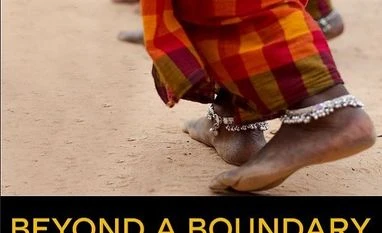 "Gunjan Veda's book seeks to break caste through sunlit stories from India")












 Connect with us on WhatsApp