The kinder clothes

With some thought put into buying fashion, your clothes can become less harmful for the environment
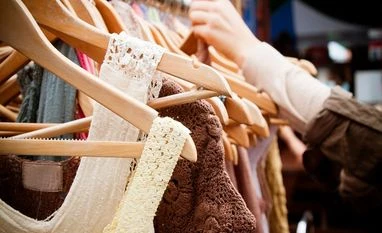
Clothes, fabric, textile
Tatiana Schlossberg | NYT
Last Updated : May 26 2017 | 10:11 PM IST
In the Garden of Eden, figuring out what to wear was easy and the fig leaves were environmentally friendly. Today, it’s much harder to find clothes that don’t have some kind of negative impact on the planet.

Textile manufacturers use complicated chemical and industrial processes to make clothing materials, from cotton to synthetic fibres. And while the environmental consequences aren’t always clear, consumption is growing. Americans spent 14 per cent more on clothing and footwear in 2016 — around $350 billion total — than they did in 2011, and the trend is similar or greater in much of the rest of the world, according to the market research firm Euromonitor International.

Buying less is the easiest way to make a difference. But when you do need new clothes, you will usually be choosing among four major types of fibers: oil-based synthetics, cotton, rayon and wool. Their environmental trade-offs are so varied that a definitive ranking would be impossible. But here’s what we know, so you can make more informed decisions.

Synthetic fibers — polyester, nylon and others — make up more than 60 per cent of the global fiber market by some estimates. Most are made from oil, a nonrenewable resource.

Polyester, one of the most common fibers, is a plastic derived from crude oil. The long fibers that make up polyester thread are woven together to make fabric. Extracting the oil and melting the plastic require energy.

Perhaps a bigger concern is whathappens when synthetics get into the hands of consumers.

Synthetic fibres shed plastic filaments — possibly from daily wear and tear, but also in the wash. If shed in the laundry, the filaments can make it into sewer systems and eventually into waterways. Even if these microplastics are trapped at filtration plants, they can end up in sludge produced by the facilities, which is often sent to farms to be used as fertiliser. From there, the fibres can make their way into other water systems, or into the digestive tracts of animals that graze on the fertilised plants.

Cotton makes up about a quarter of all fibres used in clothing, furniture and other textiles. Synthetic fibres or rayon are often blended with cotton thread, especially if there is a cotton shortage, as there was in 2011, or if the price of cotton goes up.

Cotton also requires pesticides. According to the Department of Agriculture, 7 per cent of all pesticides in the United States are used on cotton. Many of those chemicals seep into the ground or run off into surface water. Consumers can choose organic cotton grown without pesticides, but it uses more water and requires more land than conventional crops. Organic cotton can also be much more expensive and difficult to find.

Rayon, one of the first man-made fibers, was developed from plant fibers as a substitute for silk in the 19th century. Most rayon today is produced as viscose rayon, which is treated with chemicals, including carbon disulfide.

Chronic exposure to carbon disulfide can cause serious health problems for rayon workers, including Parkinson’s disease, premature heart attack and stroke, said Paul Blanc, a professor of medicine at the University of California, San Francisco, who has written about the history of rayon. The chemicals may also be released into the environment, though the effects are harder to pinpoint. By the time the rayon gets to the store, it poses no danger to consumers, Blanc said.

Viscose rayon is often made from bamboo. In Indonesia and other areas, producers are cutting down old-growth forests to plant bamboo for rayon, said Frances Kozen, associate director of the Cornell Institute of Fashion and Fiber Innovation.

If viscose rayon is produced mechanically from bamboo instead of chemically, which is sometimes known as “bamboo linen”, it has a relatively small environmental impact, but it is much more expensive.

Another type of rayon fibre, known as lyocell or Tencel, is often made from bamboo but uses a different chemical that is thought to be less toxic, though studies are scarce, Blanc said.

Producing wool requires sheep. And sheep, like other ruminants including cattle, produce methane, a powerful greenhouse gas, in their burps. One study suggested that 50 per cent of the greenhouse gas emissions from the wool industry come from the sheep themselves.

So what can you do? “The best thing we can all do is buy less and wear more,” Kozen said.
© 2017 The New York Times

One subscription. Two world-class reads.

Already subscribed? Log in

Subscribe to read the full story →
*Subscribe to Business Standard digital and get complimentary access to The New York Times

Smart Quarterly

₹900

3 Months

₹300/Month

SAVE 25%

Smart Essential

₹2,700

1 Year

₹225/Month

SAVE 46%
*Complimentary New York Times access for the 2nd year will be given after 12 months

Super Saver

₹3,900

2 Years

₹162/Month

Subscribe

Renews automatically, cancel anytime

Here’s what’s included in our digital subscription plans

Exclusive premium stories online

  • Over 30 premium stories daily, handpicked by our editors

Complimentary Access to The New York Times

  • News, Games, Cooking, Audio, Wirecutter & The Athletic

Business Standard Epaper

  • Digital replica of our daily newspaper — with options to read, save, and share

Curated Newsletters

  • Insights on markets, finance, politics, tech, and more delivered to your inbox

Market Analysis & Investment Insights

  • In-depth market analysis & insights with access to The Smart Investor

Archives

  • Repository of articles and publications dating back to 1997

Ad-free Reading

  • Uninterrupted reading experience with no advertisements

Seamless Access Across All Devices

  • Access Business Standard across devices — mobile, tablet, or PC, via web or app

Next Story



