Simulator fault: DGCA asks SpiceJet to retrain 90 737 Max first officers

During a routine check, the DGCA surveillance team found that the stick shaker of the simulator was non-functional
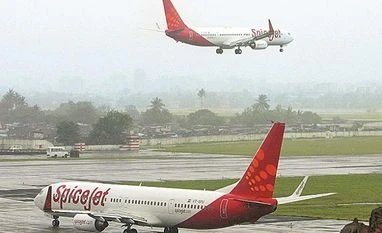
SpiceJet
SpiceJet, which has 13 737 Max aircraft and is currently operating 11, said that the DGCA action would not impact its operations as it has enough pilots trained on the Max
Arindam Majumder New Delhi
4 min read Last Updated : Apr 14 2022 | 1:45 AM IST
Indian aviation regulator DGCA has barred 90 SpiceJet pilots from flying Boeing 737 MAX planes after faults were detected at the simulator centre for training. The pilots will have to be retrained, the regulator has ordered.  

This comes within eight months of the DGCA lifting a ban on Boeing 737 MAX aircraft. While it was grounded worldwide from March 2019 to December 2020 following two crashes — in Indonesia and Ethiopia — killing 346, DGCA lifted the ban much later in August 2021.

The faults were found during a surveillance check by the regulator at the Greater Noida-based facility of CAE Simulation Training Pvt Ltd (CSTPL), which is a joint venture between IndiGo promoter Rahul Bhatia’s Interglobe Enterprise and Canada-based flight simulator company CAE.

CSTPL has the only approved 737 MAX simulator in India. This was installed by Boeing as part of a compensation package it provided to SpiceJet due to the business loss caused by the two-year grounding of the aircraft.

Scheduled surveillance checks and surprise audits are done by the regulator to find inefficiencies in the safety system of airlines, airports, flying training organisations and simulators to find deficiencies and implement corrective measures.

During such a check, the DGCA surveillance team found that the stick shaker of the simulator was non-functional. Stick shaker is an instrument which vibrates rapidly when the aircraft is stalling, failing to lift itself.

The computer compares the current signal against a default value that indicates safe flight. If the sensor signal exceeds that value, it vibrates rapidly enough to make the pilot’s hands shake to attract his attention.

Sources said that while the stick shaker was functional on the commander’s side, the one meant for the co-pilot (first officer) developed a fault and was non-functional.

The system was dysfunctional since March 17 due to a faulty component which CSTPL imports from abroad. Hence, all co-pilots who have done simulator training will have to undergo the extra two hours of training once again.

“For the moment, we have barred these pilots from flying Max and they have to retrain successfully to resume flying the aircraft,” DGCA chief Arun Kumar said.

The regulator is also mulling action against the head of training of the airline and has called for a report from both the airline and the simulator operator.

According to norms, the simulator lists the dysfunctional items clearly so that the crew is aware and the training is not impacted. “According to laid down regulations of the manual and trainer’s instruction, they can decide whether it is suitable to undergo training in the simulator or not,” an executive of a simulator company said.

Sources said that SpiceJet in its communication pointed out that the Boeing manual, which was rewritten during the return-to-service of the 737 Max, notes that for co-pilots training on the stick shaker is “demonstration only”. It implies that it needn’t be performed by the pilot during his training sessions.

However, the regulator disagreed with SpiceJet, stating that the software system developed by Boeing called ‘The Manoeuvring Characteristics Augmentation System (MCAS)’ to prevent stall of the aircraft was found to be the primary reasons by investigators behind the Lion Air and Ethiopian crash. A faulty sensor caused an automatic anti-stall system to kick in erroneously, forcing the aeroplane’s nose downwards.

The difference in opinion stems from the contrasting requirements of the European regulator EASA and US regulator FAA while clearing the 737 Max fit to fly.

Among the key differences was the importance of the stick shaker. EASA service manual allowed pilots to switch off the stick shaker and prevent it from vibrating if the flight system on board has activated it erroneously. In contrast, FAA didn’t allow it, fearing that it would divert pilots' attention.

“DGCA has considered EASA’s procedures as more robust and has stressed that Indian operators of the 737 Max follow it,” an official said.

SpiceJet, which has 13 737 Max aircraft and is currently operating 11, said that the DGCA action would not impact its operations as it has enough pilots trained on the Max.

“SpiceJet has 650 pilots trained on Boeing 737 MAX. DGCA had an observation on the training profile followed for 90 pilots, and therefore as per the advice of DGCA, SpiceJet has restricted 90 pilots from operating MAX aircraft, until these pilots undergo re-training to the satisfaction of DGCA. These pilots continue to remain available for other Boeing 737 aircraft,” a spokesperson of the airline said.

One subscription. Two world-class reads.

Already subscribed? Log in

Subscribe to read the full story →
*Subscribe to Business Standard digital and get complimentary access to The New York Times

Smart Quarterly

₹900

3 Months

₹300/Month

SAVE 25%

Smart Essential

₹2,700

1 Year

₹225/Month

SAVE 46%
*Complimentary New York Times access for the 2nd year will be given after 12 months

Super Saver

₹3,900

2 Years

₹162/Month

Subscribe

Renews automatically, cancel anytime

Here’s what’s included in our digital subscription plans

Exclusive premium stories online

  • Over 30 premium stories daily, handpicked by our editors

Complimentary Access to The New York Times

  • News, Games, Cooking, Audio, Wirecutter & The Athletic

Business Standard Epaper

  • Digital replica of our daily newspaper — with options to read, save, and share

Curated Newsletters

  • Insights on markets, finance, politics, tech, and more delivered to your inbox

Market Analysis & Investment Insights

  • In-depth market analysis & insights with access to The Smart Investor

Archives

  • Repository of articles and publications dating back to 1997

Ad-free Reading

  • Uninterrupted reading experience with no advertisements

Seamless Access Across All Devices

  • Access Business Standard across devices — mobile, tablet, or PC, via web or app

Topics :DGCASpiceJetBoeing 737 MAX

Next Story



