Vedanta's Agarwal: Scrap trader from Bihar with an appetite for business

The failure of Vedanta's delisting plan is unlikely to discourage him to make his empire asset-light
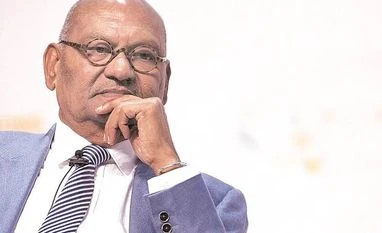
Anil Agarwal
Vedanta Chairman Anil Agarwal
Jyoti Mukul New Delhi
4 min read Last Updated : Oct 17 2020 | 6:10 AM IST
Anil Agarwal once admitted that though his family likes to try out Chinese, Thai, Japanese and Korean cuisine when they eat out in London, if he's still hungry he'll go back for dal-chawal at home. Like many of his generation who have grown up on Indian fare, Southeast Asian cuisine is too light to fill them up. But Agarwal differs in that he has no inhibitions trying out new things and even manages "to carve out a vegetarian meal" from these essentially non-vegetarian cuisines.

As expansive in his businesses as he is as a host, perhaps it is his ability to discover what suits him also makes him an acquirer of businesses and not a seller of assets even when his businesses have a huge debt pile-up. This refusal to be asset-light makes it necessary for him to restructure his businesses every few years.

When the group announced it would delist Vedanta Ltd from the Indian stock exchanges on May 12, Agarwal said in an interview to Business Standard, "The idea is to further simplify the corporate structure so that we can service our debt better. With aluminium and oil prices remaining gloomy for long and no one putting money in it, we (the promoters) decided that it is best to stay away from the market.”

He even made a last-ditch effort to pull off the delisting when on the last day of submission of shares on October 9, he told CNBC TV18 that he could even "make a counter offer". The company, however, fell short by 7 per cent in garnering around 1.34 billion shares to delist. The problem was a low floor price of Rs 87.25 a share, which did not inspire confidence among shareholders. Nevertheless, Vedanta shareholders had the option of bidding higher but a failed attempt at getting enough bids meant the option of making a counter offer was closed. Now, the promoter company, Vedanta Resources, will have to repay $1.4 billion raised via bonds and another $1.1 billion in loans that were raised to fund the delisting exercise.

Failures are not new to him. Though Agarwal came from a Bihar-based business family and carved out his venture of scrap trading, he tasted his first success only after shutting down some seven businesses. That was in 1988 when he started supplying jelly-filled cables in collaboration with an American company to the department of telecommunication, which was the sole buyer. Even now Agarwal continues to be in the optic fibre cable through Twin Star Overseas, which owns Sterlite Technologies Ltd. The company has cable manufacturing facilities in India, Italy, China and Brazil, apart from software-development centres.

It is, however, mining that gives Agarwal’s Vedanta its identity — and its controversies. The group mines copper, iron ore, lead, silver, zinc and even crude oil and natural gas, globally as well as in India. "I am not sure whether the bad image that the group has globally is the right one or wrong, but the mining sector is such that invites allegations and protests,” says a former close associate of Agarwal.

The loss of business in iron ore — banned by a Supreme Court order — and copper smelting - closed for alleged emission violations by the Tamil Nadu government - is a corollary to this anti-mining sentiment that has become more pronounced in India over the last decade, since mining has a negative impact on the environment and local people. Vedanta has not found reprieve in the courts for its Thoothukudi copper smelter, which has been shut since 2018.

Controversies have confounded him also in the stock market. In 2001, when he wanted to delist Sterile Industries through a buyback offer, it failed and the promoters had to face an inquiry following a complaint filed by Kirit Somaiya, then a BJP member of Parliament and president of Investors Grievances Forum (IGF).

Vedanta's expansive policy made its foray into the oil and gas business by buying Cairn India in 2011. Later it entered the steel business by buying Electrosteel in 2018 under bankruptcy proceedings.

In some ways, each of Agarwal's businesses hedge the risk in other business segments since every commodity has its own upturn and downturn. But the failure of delisting is not likely to push Agarwal towards an asset-light model. True to the nature of businessmen who build their empire from scratch, he likes to be in control. Though he has attempted to bring in professional managers to run his businesses and even limited the role of family members, one of the reasons for frequent top-level churning in his companies, an insider says, is that the 67-year-old wants to run the show himself.

One subscription. Two world-class reads.

Already subscribed? Log in

Subscribe to read the full story →
*Subscribe to Business Standard digital and get complimentary access to The New York Times

Smart Quarterly

₹900

3 Months

₹300/Month

SAVE 25%

Smart Essential

₹2,700

1 Year

₹225/Month

SAVE 46%
*Complimentary New York Times access for the 2nd year will be given after 12 months

Super Saver

₹3,900

2 Years

₹162/Month

Subscribe

Renews automatically, cancel anytime

Here’s what’s included in our digital subscription plans

Exclusive premium stories online

  • Over 30 premium stories daily, handpicked by our editors

Complimentary Access to The New York Times

  • News, Games, Cooking, Audio, Wirecutter & The Athletic

Business Standard Epaper

  • Digital replica of our daily newspaper — with options to read, save, and share

Curated Newsletters

  • Insights on markets, finance, politics, tech, and more delivered to your inbox

Market Analysis & Investment Insights

  • In-depth market analysis & insights with access to The Smart Investor

Archives

  • Repository of articles and publications dating back to 1997

Ad-free Reading

  • Uninterrupted reading experience with no advertisements

Seamless Access Across All Devices

  • Access Business Standard across devices — mobile, tablet, or PC, via web or app

Topics :Anil AgarwalVedanta

Next Story



