Centre looks to take state route after repeal of three farm laws

Over 20 states already have rules similar to the farm laws
Farmers
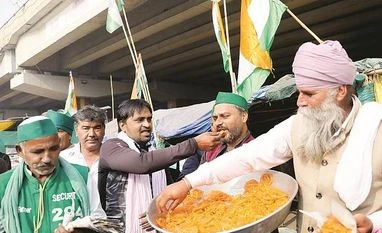
Sweet victory: Farmers celebrate at Delhi’s Ghazipur border after Prime Minister Narendra Modi announced that he will repeal the controversial farm laws, on Friday (Photo: Reuters)
Sanjeeb Mukherjee New Delhi
3 min read Last Updated : Nov 20 2021 | 6:05 AM IST
After the repeal of the three controversial agriculture Acts, officials said the focus would shift to convincing states to adopt model APMC laws that were promulgated some years back, and if possible link their adoption to some sort of fiscal benefit as suggested by the 15th Finance Commission (FFC) in its draft report.

“As far as contract farming is concerned, we already have a model act and states will be encouraged to adopt them. In the case of the trade Act, already there is the Electronic National Agriculture Market (e-NaM) platform that provides the option of selling and purchasing directly. Regarding the Essential Commodities Act, the situation as prevailed earlier would be restored,” a senior official said.

The Centre a few years ago had circulated two model Acts on reforming APMCs and also contract farming, which has been adopted by some states.

These were called the model Agricultural Produce Marketing (Regulation) Act-2017 and the Agriculture Produce and Livestock Contract Farming and Services (Promotion and Facilitation) Act, 2018.

The FFC had suggested linking part of its performance-based grants to states that adopt these model laws, along with the one on land leasing.


The Centre, too, had made repeated attempts to encourage states to reform their agriculture marketing laws with varying degrees of success.

Studies suggest that even before the three central Acts were brought to allow contract farming, regulate trade outside the mandis, and amend the Essential Commodities Act (EC Act) in June 2018, as many as 23 states had permitted direct purchase from farmers, 21 allowed e-trading, 23 had single-point levy of market fee, and 22 issued single trading licence for the entire state.

That apart, 22 states and Union Territories had allowed private wholesale markets, 20 permitted contract farming, and 15 even freed fruits and vegetables from the APMC regulation altogether.

“Clearly, even before the current set of central laws came into force, states were doing agriculture reforms which and they will continue,” said Professor Sukhpal Singh, chairperson for Centre for Management in Agriculture in IIM Ahmedabad.

Interestingly, the modifications suggested by the Central government during the course of its 11-round of negotiations with agitating farmers on the Acts was to give the state’s power to regulate trade outside the mandis.

But, P K Joshi, former Director South-Asia of the International Food Policy Research Institute (IFPRI) and one who has been part of the three-member committee set up by the Supreme Court to study the three Acts and suggest a way forward, said that big-ticket agriculture investments will get affected because of the PM’s decision to repeal the Acts.

“I feel investments in the sector, be it domestic or foreign, will get impacted and we all know that farming needs big-ticket investments to boost productivity and also exports,” Joshi told Business Standard.

One subscription. Two world-class reads.

Already subscribed? Log in

Subscribe to read the full story →
*Subscribe to Business Standard digital and get complimentary access to The New York Times

Smart Quarterly

₹900

3 Months

₹300/Month

SAVE 25%

Smart Essential

₹2,700

1 Year

₹225/Month

SAVE 46%
*Complimentary New York Times access for the 2nd year will be given after 12 months

Super Saver

₹3,900

2 Years

₹162/Month

Subscribe

Renews automatically, cancel anytime

Here’s what’s included in our digital subscription plans

Exclusive premium stories online

  • Over 30 premium stories daily, handpicked by our editors

Complimentary Access to The New York Times

  • News, Games, Cooking, Audio, Wirecutter & The Athletic

Business Standard Epaper

  • Digital replica of our daily newspaper — with options to read, save, and share

Curated Newsletters

  • Insights on markets, finance, politics, tech, and more delivered to your inbox

Market Analysis & Investment Insights

  • In-depth market analysis & insights with access to The Smart Investor

Archives

  • Repository of articles and publications dating back to 1997

Ad-free Reading

  • Uninterrupted reading experience with no advertisements

Seamless Access Across All Devices

  • Access Business Standard across devices — mobile, tablet, or PC, via web or app

Topics :farmers issuesfarmers protestindian government

Next Story



