Global population hits 8 bn: How it changes the world over next few decades

Much of the world's population growth has come in the last century as better living standards and health advancements extended life expectancy
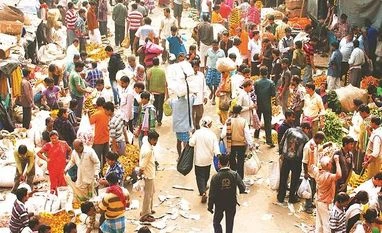
human development index
While it took 12 years for the world’s population to jump by a billion, it will take 15 years to hit the next milestone
Bloomberg
3 min read Last Updated : Nov 15 2022 | 11:28 PM IST

Don't want to miss the best from Business Standard?

The world’s population reached 8 billion Tuesday, according to estimates from the United Nations, even as the international body said that a surge in births in lower income countries is likely to create risks. Here’s what it means for the next few decades:

Slowing population growth

Much of the world’s population growth has come in the last century as better living standards and health advancements extended life expectancy, with the total number of people on earth growing from just 2 billion in 1927 to 6 billion by 1998. Still, there are early signs that this surge is slowing.

Annual population growth is now at its slowest level since 1950. While it took 12 years for the world’s population to jump by a billion, it will take 15 years to hit the next milestone, and around two more decades after that, UN projections show. 

Fewer babies in rich countries

The slowdown is in large part driven by wealthy countries, where the costly burden of raising a child and falling marriage rates have meant that countries from South Korea to France are facing a population fall as not enough babies are born to replace the elderly.

Even as governments resort to measures like payouts and better housing loans for families with more kids, the UN sees little sign of that shifting the needle. It projects that in the next three decades, the number of people below 65 in high-income and upper-middle-income countries will decline while the older demographic above that age will grow. 

Baby boom in poorer nations

The UN forecasts that much of the world’s future population growth will be concentrated in low-income countries, with just eight accounting for the majority of a projected increase until 2050. The bulk of these are countries in sub-Saharan Africa like Nigeria and Ethiopia, as well as other emerging nations like India, Pakistan and the Philippines.

That creates a challenge for such countries, which already suffer from relatively low incomes per capita. With more young people likely to put a further strain on limited resources like education and health-care, countries and non-profit organizations are trying to raise awareness of issues like birth control to drive birth rates down.

Doomsday scenarios unlikely 

There have been apocalyptic scenarios often painted in the past about a global population spike—including those popularized by “The Population Bomb” written by Stanford professor Paul Ehrlich in 1968, which warned of mass starvation.

That hasn’t come to pass due to advances in farming technology and slowdowns in fertility rates.

Even so, the United Nations warns that population growth has contributed to environmental damage, while driving global warming and deforestation. 

One subscription. Two world-class reads.

Already subscribed? Log in

Subscribe to read the full story →
*Subscribe to Business Standard digital and get complimentary access to The New York Times

Smart Quarterly

₹900

3 Months

₹300/Month

SAVE 25%

Smart Essential

₹2,700

1 Year

₹225/Month

SAVE 46%
*Complimentary New York Times access for the 2nd year will be given after 12 months

Super Saver

₹3,900

2 Years

₹162/Month

Subscribe

Renews automatically, cancel anytime

Here’s what’s included in our digital subscription plans

Exclusive premium stories online

  • Over 30 premium stories daily, handpicked by our editors

Complimentary Access to The New York Times

  • News, Games, Cooking, Audio, Wirecutter & The Athletic

Business Standard Epaper

  • Digital replica of our daily newspaper — with options to read, save, and share

Curated Newsletters

  • Insights on markets, finance, politics, tech, and more delivered to your inbox

Market Analysis & Investment Insights

  • In-depth market analysis & insights with access to The Smart Investor

Archives

  • Repository of articles and publications dating back to 1997

Ad-free Reading

  • Uninterrupted reading experience with no advertisements

Seamless Access Across All Devices

  • Access Business Standard across devices — mobile, tablet, or PC, via web or app

Topics :populationIndian PopulationLife expectancyUnited Nations

Next Story



