How artificial intelligence is making a final leap of imagination into art

Amrita Singh on an exhibition that showcases AI art
weekend
The Untitled series by Anna Ridler
Amrita Singh
Last Updated : Aug 17 2018 | 9:48 PM IST
In 1897, Paul Gauguin inscribed the following words in French on the upper-right corner of a painting: “Where do we come from / What are we / Where are we going”. Gauguin did not use question marks in his interrogative sentences. In fact, he capitalised each letter of every word, converting them into assertions, declarations of the inevitability of what is to come and the unchangeability of what is past. A similar philosophy has led to the collaboration between Nature Morte, a commercial gallery in New Delhi, and 64/1, an art curation and research collective for artists to engage with artificial intelligence and create art for the “post-human age”. 

“Gradient Descent”, at Nature Morte, is the first exhibition in India to showcase art created by artificial intelligence. This is also the first such show in the world to be hosted by a mainstream art gallery. Through its display of AI-created art, the exhibition explores the relationship between AI and art, urging artists to engage with the future. 

The Face (Artificial Muse) series by Mario Klingemann


The concept is based on an academic thesis by curators Raghava K K and Karthik Kalyanaraman, also the founders of 64/1. Raghava and Kalyanaraman are the authors of the first Indian academic document to use arguments from Indian philosophy to address contemporary art’s ability to create art that explores a dynamic human-machine relationship. Simply put, their argument is that our economic, political and social future will be revolutionised by AI and it is time artists embrace the change. The thesis raises questions about creativity, the imaginative possibilities of the machine and what the machine’s creativity means for artists. 

The Anatomy Lesson of Dr Algorithm by Harshit Agarwal
The art on display is a result of an intensive training process conducted by artists from USA, Japan, Germany, Turkey, India and New Zealand. These artists are “technologists” from academic institutions such as Massachusetts Institute of Technology (MIT), Oxford, Harvard, University College London and Indian Institute of Technology among others. “Our artists have taken on the rigour of scientists and their innovation and design can have real-life implications,” says Raghava. “This is a call to artists to focus on the future, because if every form of labour is being replaced by AI, then who are we?”

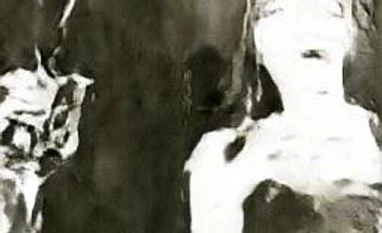
Harshit Agarwal, one of the seven pioneering artists, is a Bengaluru-based new media artist and human computer interaction (HCI) researcher who studied design at IIT Guwahati and then went on to get a masters degree in media, arts and sciences from the MIT Media Lab. His artwork, The Anatomy Lesson of Dr Algorithm, was produced by curating a data set of images of the human body and its various parts and organs. It applied GAN (Generative Adversarial Network), a set of artificial intelligence algorithms that creates art through unsupervised machine learning. 

Imaginary Landscape by Nao Tokui
Agarwal first “trained” GAN through a data set of images, with a particular bias in mind. He wanted to twist the relationship between humans and computers, as the computer is usually associated with its hardware and humans with their “unique” cognitive and perceptive abilities. While Agarwal is responsible for what is fed into the machine, the machine’s “creativity” directs its own understanding of what the data set may mean, allowing it to imagine a certain reality. The resulting abstract art is then open to interpretation. “The machine tries to replicate the images that are fed to it by reducing the complexity of the images in order to understand them. In that sense, the creative agency is off-loaded to machines, even though I may have a certain output in mind. I let the machine surprise me,” says Agarwal. 

Deep Meditations by Memo Akten
As Aparajita Jain, co-director of Nature Morte, says, “Good or bad, artificial intelligence is here to stay and ‘Gradient Descent’ is about claiming the space of art created by artificial intelligence. While India produces a lot of original thought, there are few platforms to showcase this original thought. This is why we are proud to host this exhibition.” Raghava terms AI-created art a “serious intervention in aesthetics”. The artworks will be priced between $1,000 and $30,000, opening up possibilities of buying art that is half-human and half-machine, even as it allows the artist to finally enter the artistic mainstream from the technological margins. 


The Untitled series by Anna Ridler


The Untitled series by Anna Ridler


The Untitled series by Anna Ridler


The exhibition will continue at Nature Morte in New Delhi till September 15

One subscription. Two world-class reads.

Already subscribed? Log in

Subscribe to read the full story →
*Subscribe to Business Standard digital and get complimentary access to The New York Times

Smart Quarterly

₹900

3 Months

₹300/Month

SAVE 25%

Smart Essential

₹2,700

1 Year

₹225/Month

SAVE 46%
*Complimentary New York Times access for the 2nd year will be given after 12 months

Super Saver

₹3,900

2 Years

₹162/Month

Subscribe

Renews automatically, cancel anytime

Here’s what’s included in our digital subscription plans

Exclusive premium stories online

  • Over 30 premium stories daily, handpicked by our editors

Complimentary Access to The New York Times

  • News, Games, Cooking, Audio, Wirecutter & The Athletic

Business Standard Epaper

  • Digital replica of our daily newspaper — with options to read, save, and share

Curated Newsletters

  • Insights on markets, finance, politics, tech, and more delivered to your inbox

Market Analysis & Investment Insights

  • In-depth market analysis & insights with access to The Smart Investor

Archives

  • Repository of articles and publications dating back to 1997

Ad-free Reading

  • Uninterrupted reading experience with no advertisements

Seamless Access Across All Devices

  • Access Business Standard across devices — mobile, tablet, or PC, via web or app

Next Story



