India Coronavirus Dispatch: Bharat Biotech short of volunteers for trials

Jaipur hospital to study mutant UK strain, WHO launches a new Covid app, and five experts' take on dining inside a restaurant-news relevant to India's fight against Covid-19

Covaxin, bharat biotech, covid, coronavirus, vaccine, drugs, medicine, pharma
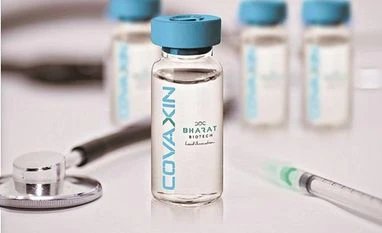
Bharat Biotech's vaccine candidate Covaxin
Bharath Manjesh New Delhi
4 min read Last Updated : Dec 27 2020 | 3:29 PM IST
Bharat Biotech ‘thousands of volunteers short’ for phase 3 trials of its vaccine candidate

Three drugmakers are seeking emergency-use authorisation for their Covid-19 vaccine candidates in India. One of them, Hyderabad-based Bharat Biotech, is still thousands of volunteers short of the target for its ongoing phase-3 trials, this report in ThePrint said.

The company has a given an indicative deadline of 31 December to the trial sites for wrapping up the recruitment of volunteers, but some of them claim it is unlikely the deadline will be met, according to the report. A company representative denied a deadline was set for volunteer recruitment, the report said.

On December 22, Bharat Biotech said it had recruited 13,000 of the 25,800 volunteers needed to finish the study since the launch on November 11. The company representative said a couple of thousand more have been recruited in the following days, according to the report. Read more here

Mutant UK strain to be studied in Jaipur hospital

Samples from travellers returning from the UK and other European countries who test positive for Covid-19 will be obtained by the Sawai Man Singh Government Hospital in Rajasthan to study the new mutant strain detected in Britain, according to a report in The Hindu.

Sawai Man Singh Government Hospital is the biggest hospital in the state. The hospital’s microbiology department is already carrying out about 6,000 RT-PCR tests a day. The sequencing lab, expected to kick off shortly, will detect the mutation in SARS-CoV-2 by testing the spike protein and the specific genes which were targeted as part of the screening of the infection cases, according to the report. Read more here

WHO launches new Covid-19 mobile application

The World Health Organisation has launched a new mobile app to help people be informed about the best practices to safeguard themselves against Covid-19 and also get the latest updates on the pandemic, according to a report in The Quint.

The app, named 'WHO Covid-19 Updates', can show you the latest pandemic-related news and updates about your region. Unlike other Covid apps such as India's Aarogya Setu, the app doesn't provide contact tracing information, the report said.

The app also features a list of symptoms, basic hygiene practices, common myths and answers. It also shows a count of the number of coronavirus cases in your country and globally. It also provides travel-related updates. The WHO had released a similar app in April. However, it was shortly taken down since it reportedly wasn’t meant for the public, the report said. Read more here 

Would you eat indoors at a restaurant? Five health experts answer

The pandemic has ravaged the world economy with most business sectors shrinking or experiencing a slowdown. One sector that was hit particularly hard was hospitality. Even after the lockdown was lifted, restaurants are yet to reach pre-pandemic levels in terms of traffic as people avoid going out to eat. This report in The Conversation features responses from five health professionals who were asked if they would dine indoors at a restaurant. Four said no – and one had a surprising answer. Read more here

Expert allays fears of adverse reactions to vaccines

To assuage fears of developing adverse side effects after being immunised, Dr Ashish K Jha, the dean of Brown University School of Public Health said the allergic reactions in vaccination drives in the US are in line with expectations, according to a report in Hindustan Times.

Over a million people have been vaccinated in the US and less than 10 people have had allergic reactions, said Dr Ashish K Jha, the dean of Brown University School of Public Health. He also highlighted that even one in 2,000 courses of penicillin also leads to an allergic reaction. Read more here

One subscription. Two world-class reads.

Already subscribed? Log in

Subscribe to read the full story →
*Subscribe to Business Standard digital and get complimentary access to The New York Times

Smart Quarterly

₹900

3 Months

₹300/Month

SAVE 25%

Smart Essential

₹2,700

1 Year

₹225/Month

SAVE 46%
*Complimentary New York Times access for the 2nd year will be given after 12 months

Super Saver

₹3,900

2 Years

₹162/Month

Subscribe

Renews automatically, cancel anytime

Here’s what’s included in our digital subscription plans

Exclusive premium stories online

  • Over 30 premium stories daily, handpicked by our editors

Complimentary Access to The New York Times

  • News, Games, Cooking, Audio, Wirecutter & The Athletic

Business Standard Epaper

  • Digital replica of our daily newspaper — with options to read, save, and share

Curated Newsletters

  • Insights on markets, finance, politics, tech, and more delivered to your inbox

Market Analysis & Investment Insights

  • In-depth market analysis & insights with access to The Smart Investor

Archives

  • Repository of articles and publications dating back to 1997

Ad-free Reading

  • Uninterrupted reading experience with no advertisements

Seamless Access Across All Devices

  • Access Business Standard across devices — mobile, tablet, or PC, via web or app

Topics :CoronavirusCoronavirus TestsCoronavirus Vaccine

Next Story