Most of India should remain locked down for 6-8 weeks: ICMR chief

Districts with over 10% Covid positivity rate should remain locked down, says Balram Bhargava while warning of disaster if Delhi reopens quickly after case surge
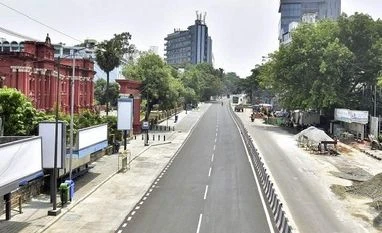
Lockdown
Reuters
4 min read Last Updated : May 13 2021 | 12:27 AM IST
The head of the main Indian health agency responding to the coronavirus has said districts reporting a high number of infections should remain locked down for another six to eight weeks to control the spread of the rampaging disease.

Dr. Balram Bhargava, head of the Indian Council of Medical Research (ICMR), said in an interview that lockdown restrictions should remain in place in all districts where the rate of infection is above 10% of those tested.

Currently, three-fourths of India's 718 districts have what is known as a test-positivity rate above 10%, including major cities like New Delhi, Mumbai and the tech hub of Bengaluru.

Bhargava's comments are the first time a senior government official has outlined how long lockdowns, which already encompass large parts of country, need to continue to rein in the crisis in India.

Prime Minister Narendra Modi's government has shied away from imposing a nationwide lockdown because of the economic impact and has left it to state governments.

Several states have introduced varying levels of curbs on economic activity and public movement to stop the spread of the virus, which are mostly being reviewed and extended on a weekly or fortnightly basis.

"The high positivity districts should remain (shut). If they come to 5% from 10% (positivity rate) we can open them, but that has to happen. That won't happen in six-eight weeks, clearly," Bhargava said in an interview at the New Delhi headquarters of the ICMR, the country's top medical research body.

Referring to the capital, one of India's hardest hit cities where the positivity rate reached around 35% but has now fallen to about 17%, Bhargava said: "If Delhi is opened tomorrow, it will be a disaster."

India is in deep crisis in the current wave of COVID-19 infections with around 350,000 cases and 4,000 deaths being reported daily. Hospitals and morgues are overflowing, medical staff is exhausted and oxygen and drugs are running short.
Many experts say the actual case tallies and deaths could be five to 10 times higher.

Modi and other top political leaders have faced a public backlash for addressing mass election rallies where no major COVID-19 safety protocols were followed. The federal government also didn't intervene to stop a religious festival in a northern state in March that was attended by millions of devout Hindus.

'SLIGHT DELAY'

Bhargava did not criticise the Modi government but conceded there had been a delay in responding to the crisis. 

"I think the only discontent we have was there was a slight delay accepting the 10% (recommendation), but that did happen," he said.

He said an April 15 meeting of the National Task Force on COVID-19 had made the recommendation to the government to lock down areas with a 10% positivity rate or higher.

Yet, in a televised speech on April 20, Modi dissuaded states and said a lockdown should be used as "last resort" and the focus should remain on "micro containment zones".

On April 26 - more than 10 days after the task force meeting - India's home (interior) ministry wrote to states, asking them to implement strict measures for "large containment areas" in hard-hit districts, but only for 14 days.

India's home and health ministries, as well as Modi's office, did not respond to requests for comment.

Reuters reported earlier this month the head of the National Centre for Disease Control had privately told an online gathering that strict lockdown measures were required in early April.

Two senior ICMR officials told Reuters the organization was frustrated about political leaders addressing large rallies and allowing religious gatherings, saying the actions publicly flouted required safety measures. Modi himself addressed several of the political meetings, maskless.

"Our messaging has been completely incorrect, not in sync with the situation," said one of the officials, referring to the government. "We have miserably failed."

Bhargava denied there was any discontent within the ICMR and added the agency was on the same page with policymakers. Without commenting directly on political leaders, he said mass gatherings during COVID-19 should not be acceptable in India or anywhere else.

"It's common sense," he said.

One subscription. Two world-class reads.

Already subscribed? Log in

Subscribe to read the full story →
*Subscribe to Business Standard digital and get complimentary access to The New York Times

Smart Quarterly

₹900

3 Months

₹300/Month

SAVE 25%

Smart Essential

₹2,700

1 Year

₹225/Month

SAVE 46%
*Complimentary New York Times access for the 2nd year will be given after 12 months

Super Saver

₹3,900

2 Years

₹162/Month

Subscribe

Renews automatically, cancel anytime

Here’s what’s included in our digital subscription plans

Exclusive premium stories online

  • Over 30 premium stories daily, handpicked by our editors

Complimentary Access to The New York Times

  • News, Games, Cooking, Audio, Wirecutter & The Athletic

Business Standard Epaper

  • Digital replica of our daily newspaper — with options to read, save, and share

Curated Newsletters

  • Insights on markets, finance, politics, tech, and more delivered to your inbox

Market Analysis & Investment Insights

  • In-depth market analysis & insights with access to The Smart Investor

Archives

  • Repository of articles and publications dating back to 1997

Ad-free Reading

  • Uninterrupted reading experience with no advertisements

Seamless Access Across All Devices

  • Access Business Standard across devices — mobile, tablet, or PC, via web or app

Topics :CoronavirusICMR

Next Story



