Rich nations can't force Net Zero emission target on others: R K Singh

Developed world has occupied 80 per cent of the carbon space already, says union minister
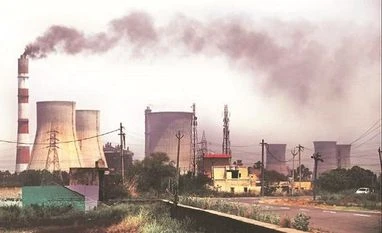
Pollution, power, electricity, climate change, emission, greenhouse gas, environment
Developed nations should not talk about Net Zero, but focus on removing carbon from the atmosphere they add. “Net negative is what they need to talk about,” Singh said.
Shreya Jai New Delhi
3 min read Last Updated : Apr 01 2021 | 1:07 PM IST
The developed world must not push others to adopt ‘Net Zero’ carbon emissions, said union minister R K Singh, insisting countries like India can’t be "stopped" from using resources needed for progress.

Singh, who handles the power, new and renewable energy ministry, was speaking at a virtual inter-ministerial summit on Net Zero hosted by the International Energy Agency on Wednesday. He comment comes ahead of the climate conference or COP26 in Glasgow, UK in November. Developed nations will announce their Net Zero target years during COP26.

Net Zero means that there is balance in carbon emissions versus emissions saved. Net negative emissions means saving is more than emitting. China has announced it will achieve Net Zero before 2060 and the UK has kept 2050 as the target. It has also passed a Net Zero emission law.

India does not have a Net Zero target. “Developed world has occupied 80 per cent of the carbon space already. Now you have to give space to others to develop, for instance, 800 million people still are without electricity in Africa. It is not about us (India); we get investment. It is about those countries. You can’t say you come to net zero – no, sorry. These countries have to develop and that development would need steel, cement etc. You can’t stop them,” Singh said.

Developed nations should not talk about Net Zero, but focus on removing carbon from the atmosphere they add. “Net negative is what they need to talk about,” Singh said.

“Countries whose per capita emissions are 4-6 times the world’s average, they should tell us when they are bringing it down. We are hearing by 2050-60 they will become carbon neutral but the years are far away. If people continue to emit the same way, the world won’t survive till then. What are you going to do in the next five years is what we want to know. We do not know which countries were able to meet their pledge made in earlier COP conferences,” he said, adding “2060 sounds good but it is just that - a pie in the sky.”

Singh said India will overachieve the targets it has set during the last COP21 in Paris in 2015. He said India has emerged as the fastest growing renewable energy capacity in the world and the country has no problems with finance.

“If we add hydro power to solar, wind and renewable energy sources we will touch 525 GW of non-fossil capacity by 2030. We are the only major economy in the world whose actions in energy transition are consistent with keeping the temperature rise below 2 degrees,” Singh said, adding several energy efficiency programs of India have brought down the emission intensity of the country's GDP. 

One subscription. Two world-class reads.

Already subscribed? Log in

Subscribe to read the full story →
*Subscribe to Business Standard digital and get complimentary access to The New York Times

Smart Quarterly

₹900

3 Months

₹300/Month

SAVE 25%

Smart Essential

₹2,700

1 Year

₹225/Month

SAVE 46%
*Complimentary New York Times access for the 2nd year will be given after 12 months

Super Saver

₹3,900

2 Years

₹162/Month

Subscribe

Renews automatically, cancel anytime

Here’s what’s included in our digital subscription plans

Exclusive premium stories online

  • Over 30 premium stories daily, handpicked by our editors

Complimentary Access to The New York Times

  • News, Games, Cooking, Audio, Wirecutter & The Athletic

Business Standard Epaper

  • Digital replica of our daily newspaper — with options to read, save, and share

Curated Newsletters

  • Insights on markets, finance, politics, tech, and more delivered to your inbox

Market Analysis & Investment Insights

  • In-depth market analysis & insights with access to The Smart Investor

Archives

  • Repository of articles and publications dating back to 1997

Ad-free Reading

  • Uninterrupted reading experience with no advertisements

Seamless Access Across All Devices

  • Access Business Standard across devices — mobile, tablet, or PC, via web or app

Topics :Emission normsCarbon emissionsGlobal Warming

Next Story



