Last MiG-27 fighters to retire on Friday; IAF down to 28 squadrons

This will reduce the IAF's combat strength to 28 fighter squadrons, just two-third of the 42 squadrons it is authorised to fight a two-front war against Pakistan and China together
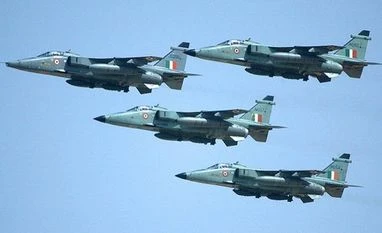
mig-27, fighter jet, IAF, Indian air force, squadron
Ajai Shukla New Delhi
4 min read Last Updated : Dec 25 2019 | 10:49 PM IST
The Indian Air Force (IAF) will have a moment of history in Jodhpur on Friday, when the last of its MiG-27 fighters fly into the sunset. Starting in 1985, the IAF has flown 165 MiG-27 fighters, built under licence by Hindustan Aeronautics (HAL).

With this, the last MiG-27 squadron — No. 29 Squadron, which calls itself the Scorpions — will be ‘numberplated’, or placed in suspended animation until it can be re-operationalised with new aircraft and manpower.

This will reduce the IAF’s combat strength to 28 fighter squadrons, just two-third of the 42 squadrons it is authorised to fight a two-front war against Pakistan and China together.

Worse, the IAF’s 28 squadrons operate six different types of fighters. These include 11 squadrons of Sukhoi-30MKI, three squadrons of Mirage 2000, six Jaguar squadrons, three MiG-29UPG squadrons, one squadron of indigenous Tejas Mark 1 fighters and four obsolete MiG-21 squadrons.

The MiG-21s would retire by 2022-23. By then, the IAF plans to induct five new squadrons: One squadron of Tejas Mark 1, two of the Rafale, and at least two more of Sukhoi-30MKIs. In addition, the IAF is negotiating to buy another MiG-29 squadron in flyaway condition from Russia.

The MiG-27, like the Jaguar, has provided the IAF with ground strike capability. Both aircraft can accurately deliver four-five tonnes of bombs or rockets on to enemy ground targets by day or night.

However, even after HAL upgraded 40 of the MiG-27 fighters with new avionics, it remains an outdated and unsafe fighter that has crashed in significant numbers. After December 27, the MiG-27 will be in operational service only with the Kazakh air force.

For decades, the IAF was the biggest operator of MiG-series (named after aircraft designers, Artem Mikoyan and Mikhail Gurevich) fighters outside the Soviet Union, and then Russia. Over the preceding decade, however, the growing numbers of Sukhoi-30MKI fighters has eclipsed the steadily dwindling MiG fleet.

India’s first MiG fighters were a batch of nine MiG-21s inducted in 1963-64 into No. 28 Squadron, which calls itself the ‘First Supersonics’. This squadron is now equipped with MiG-29UPG fighters. The IAF eventually flew more than a thousand MiG-21s, most of them built in HAL, Nashik.

The MiG-21 was followed by 160 MiG-23 fighters, which were bought ready-built in the late 1970s in two variants — air superiority and ground strike. The last MiG-23s were retired in March 2009.

Soon after buying the MiG-23, the IAF inducted the MiG-27, with HAL building 165 fighters in Nashik. These share the MiG-23’s basic design and swing wings, but are optimised for ground strike missions, flown mostly at supersonic speeds at extremely low altitudes to evade detection by radar. The MiG-27 has a sloping nose to improve pilot visibility, a stronger undercarriage to allow for operations from rough airfields, and a sophisticated navigation-attack system.

The most interesting aircraft from the MiG stable to serve in the IAF was the MiG-25 Foxbat, eight of which entered service in the early 1980s. One of the most high performance fighters ever built, its ability to fly at altitudes over 65,000 feet allowed it to repeatedly violate Pakistani airspace with impunity. Capable of flying three times the speed of sound (or at Mach 3), No. 102 squadron, which operated the MiG-25, calls itself the ‘Trisonics’. The MiG-25 was retired in May 2006.

After the MiG-27s and MiG-21s retire, the only aircraft from that family that will remain in service will be the MiG-29. The IAF will continue to operate three squadrons of the upgraded MiG-29UPG, while pursuing the purchase of a fourth squadron that Russia has offered. Meanwhile, the Navy will operate two squadrons of the MiG-29K/KUB off its aircraft carriers.

A more advanced variant of the MiG-29, called the MiG-35, is competing in the IAF’s ongoing tender for 114 medium fighters, worth at least $20 billion. It is in contention with the Sukhoi-35, Boeing’s F/A-18E/F Super Hornet, Lockheed Martin’s F-21, Eurofighter Typhoon, Dassault Rafale, and Saab Gripen E.

One subscription. Two world-class reads.

Already subscribed? Log in

Subscribe to read the full story →
*Subscribe to Business Standard digital and get complimentary access to The New York Times

Smart Quarterly

₹900

3 Months

₹300/Month

SAVE 25%

Smart Essential

₹2,700

1 Year

₹225/Month

SAVE 46%
*Complimentary New York Times access for the 2nd year will be given after 12 months

Super Saver

₹3,900

2 Years

₹162/Month

Subscribe

Renews automatically, cancel anytime

Here’s what’s included in our digital subscription plans

Exclusive premium stories online

  • Over 30 premium stories daily, handpicked by our editors

Complimentary Access to The New York Times

  • News, Games, Cooking, Audio, Wirecutter & The Athletic

Business Standard Epaper

  • Digital replica of our daily newspaper — with options to read, save, and share

Curated Newsletters

  • Insights on markets, finance, politics, tech, and more delivered to your inbox

Market Analysis & Investment Insights

  • In-depth market analysis & insights with access to The Smart Investor

Archives

  • Repository of articles and publications dating back to 1997

Ad-free Reading

  • Uninterrupted reading experience with no advertisements

Seamless Access Across All Devices

  • Access Business Standard across devices — mobile, tablet, or PC, via web or app

Topics :Indian Air Force MiG-27 light fightersIndian Air ForceMiG 27

Next Story




