CACP suggestions on sugar economy ring louder: How does it work?

Gujarat only state to go ahead with staggered payments; issue of area reservation resisted by most states
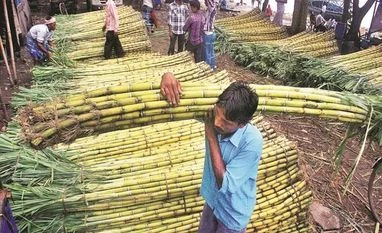
Sugar, sugarcane
The second important recommendation of the Commission is doing away with the cane reservation area and distance criteria for mills
Sanjeeb Mukherjee New Delhi
5 min read Last Updated : Sep 19 2021 | 11:30 PM IST
The Central government has declared the fair and remunerative price (FRP) for sugarcane for the 2021-22 season, starting in October, at Rs 290 per quintal based on an average recovery of 10 per cent.
 
The FRP was raised by Rs 5 per quintal from the level of 2020-21. The Commission for Agriculture Costs and Prices (CACP), which recommended this price among its other recommendations for the year, has made two notable suggestions.

The first is amending the Sugarcane Control Order (SCO), 1966, to allow paying sugarcane prices to farmers in instalments.

The Commission’s logic is that the provision that mandates payment to farmers within 14 days of supply creates pressure on mills. This is because though payment has to be made within 14 days, sales are spread over the year, which forces the mills to borrow.

The second suggestion is implementing the C Rangarajan Committee report on doing away with sugarcane area reservation and the distance criteria for mills. Given the fact that sugarcane and the sugar economy have again come centre stage due to mounting dues and the ongoing farmers’ agitation, with its likely impact on the UP elections six months from now, the pieces of advice merit a re-look.

Staggered payment

Various committees and panels have recommended this, the latest being the NITI Aayog committee constituted a few years back to prepare a road map for the sector.

A committee formed by the Central government to study the NITI Aayog’s recommendations, comprising senior officials from line ministries and state officials, have recommended and endorsed the model. Some states such as Gujarat are implementing it.

How does it work?

Unlike in the North and several other parts of the country where sugarcane farmers are entitled to get payment within 14 days of delivery, in some states such as Gujarat payment is made in tranches.According to votaries of the system, on the one hand this ensures mills aren’t pressured into dumping their sugar in the market. On the other hand, it ensures that there are no carry-forward dues for the farmer.

“In Gujarat, most sugar factories are in the cooperative sector and we make 30 per cent of the payment within 15 days of delivery, while the next round of payment is made after the factories close in April and the third and final round of payment is made before Diwali,” Ketanbhai C Patel, vice-chairman of the Gujarat State Federation of Cooperative Sugar Factories, had told Business Standard some time ago.

The system has ensured that to date not a single rupee is carried forward, he added.

The Indian Sugar Mills Association (ISMA), the apex body of private sugar millers in the country, in a letter sent to the panel to study the NITI Aayog’s recommendations for reforming the sugar sector, had favoured such a model of staggered sugarcane payment within 90 days of cane delivery. But there are pitfalls to this.

V M Singh, convener of the Rashtriya Kisan Mazdoor Sangathan (RKMS), a prominent body of farmers that has been fighting for the rights of sugarcane farmers for long, had said the staggered payment system would hurt the interests of sugarcane farmers.

“When the farmer is not able to pay the price of fertilisers and other inputs, how can he be asked to take a return for the same crop in tranches,” Singh had said.

Sugarcane reservation area and distance criteria

The second important recommendation of the Commission is doing away with the cane reservation area and distance criteria for mills.

At present, each mill has an earmarked area from which it has to purchase cane. The farmers of that area too have to sell to the sugar mill concerned. This prohibits setting up a sugarcane mill within a designated area.

Abinash Verma, director general of the ISMA, said the philosophy behind the cane area reservation and distance criteria stemmed from the nature of the sugarcane crop.

“Sugarcane can neither be stored for long, nor can it be carried over long distances because of the problem of the crop losing its sucrose content. Therefore, sugarcane area reservation and the distance criteria for mills protect the farmers and give the mills a certain guaranteed quantity of sugarcane to run their operations,” Verma told Business Standard.

The disadvantages of this norm, according to Verma, are that they bind the farmers to a particular mill.

For the miller, the disadvantage is that he can’t refuse the cane even if production is surplus and he doesn’t need to crush. The CACP report shows a majority of sugarcane-growing states have opposed any dilution of cane area reservation.

They have suggested some changes to the distance criteria for mills, but don’t want them struck off. Only Maharashtra is among the bigger sugarcane producers which has favoured doing away with cane area reservation, but it too is in favour of retaining the 25-km distance criterion for mills.

One subscription. Two world-class reads.

Already subscribed? Log in

Subscribe to read the full story →
*Subscribe to Business Standard digital and get complimentary access to The New York Times

Smart Quarterly

₹900

3 Months

₹300/Month

SAVE 25%

Smart Essential

₹2,700

1 Year

₹225/Month

SAVE 46%
*Complimentary New York Times access for the 2nd year will be given after 12 months

Super Saver

₹3,900

2 Years

₹162/Month

Subscribe

Renews automatically, cancel anytime

Here’s what’s included in our digital subscription plans

Exclusive premium stories online

  • Over 30 premium stories daily, handpicked by our editors

Complimentary Access to The New York Times

  • News, Games, Cooking, Audio, Wirecutter & The Athletic

Business Standard Epaper

  • Digital replica of our daily newspaper — with options to read, save, and share

Curated Newsletters

  • Insights on markets, finance, politics, tech, and more delivered to your inbox

Market Analysis & Investment Insights

  • In-depth market analysis & insights with access to The Smart Investor

Archives

  • Repository of articles and publications dating back to 1997

Ad-free Reading

  • Uninterrupted reading experience with no advertisements

Seamless Access Across All Devices

  • Access Business Standard across devices — mobile, tablet, or PC, via web or app

Topics :Sugarcane FRPFair and Remunerative PriceSugarcane

Next Story



