Edible oil refining capacity utilisation drops below 50% as imports rise

Small and medium-sized units at risk of complete shutdown as stagnant oilseed production adds to industry's woes
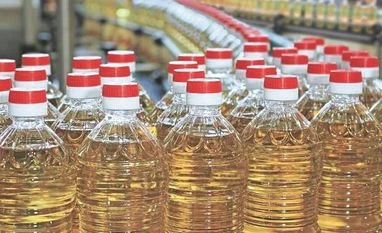
Edible Oil
Dilip Kumar Jha Mumbai
4 min read Last Updated : Nov 19 2019 | 1:45 AM IST

Don't want to miss the best from Business Standard?

The average capacity utilisation of Indian edible oil refineries has fallen to 46 per cent, declined by half the past five years due to stagnant domestic oilseed production and an increase in vegetable oil imports.

Data compiled by the apex industry body, the Solvent Extractors’ Association (SEA), puts the average capacity utilization of Indian edible oil refineries at 46 per cent, which is a sharp decline from 65 per cent about five years ago. Amid expectations of increase edible oil consumption, Indian oil mills had created 6-7 million tonnes of additional capacity in the last five years to around 33 million tonnes now.

The decline in average capacity utilization indicates closure of some parts of large units and full shutdown of small and medium-size units, rendering thousands of people unemployed and investment worth crores idle. Closure of local units creates undue pressure on oilseed prices which slips below the minimum support price (MSP) causing an uproar among farmers for the benefit of such support price system. In the last five years, oilseeds prices have declined to their respective MSP on multiple occasions which prompted farmers’ discontent and protests.

“The average capacity utilization of Indian refineries has declined to 46 per cent now from the level of 65 per cent about five years ago due to increase in refined oil,” said B V Mehta, Executive Director, SEA.

Import of refined oil has increased by 64 per cent to 2.73 million tonnes for the oil year (November – October) 2018-19 as compared to 1.66 million tonnes reported in 2014-15. Thus, the share of refined oil in India’s overall import of refined and crude edible oil has surged to 18 per cent for 2018-19 from the level of 12 per cent in 2014-15 despite overall import reported to have increased marginally to 14.9 million tonnes from 14.42 million tonnes during the period under consideration. Apart from edible oils, India also imports palm derivatives to the tune of around 600,000 tonnes for use in soap and detergent making taking thereby overall import of palm products to the tune of 15 million tonnes for 2018-19.

The variation in capacity utilization of Indian edible oil refineries depends upon oilseed crushing parity (profit on manufacturing oil from local oilseeds) versus imported refined oil. Normally, the operating capacity of domestic edible oil units decline in case crushing parity turns negative or unviable (import becomes cheaper than oil produced from local seeds).

In this case, domestic edible oil refineries import crude palm oil mostly from Indonesia for blending with locally produced oil for selling. When refined oil becomes cheaper than crude palm oil, refineries shift their import of refined, bleached and deodorized (RBD or refined oil) from Malaysia for repacking in local units and selling.

Also, capacity utilisation of Indian refineries, however, depends upon oilseed availability also which remained stagnant at around 33 million tonnes over the last five years.

Interestingly, India has increased import of palm derivatives which enjoys import duty of 7.5 per cent as compared to 40 per cent on crude oil.

Meanwhile, India has started importing edible oil from Malaysia after a month of pause with around $5 a tonne of discount offered by the Malaysian exporters to the edible oil prices quoted by their competitors in Indonesia. Indian traders had voluntarily appealed to their trade fraternity to prevent imports from Malaysia following Malaysian Prime Minister Mahathir Mohammad’s remark in the United Nations over India’s abrogation of article 370 and 35A in Jammu & Kashmir which displeased Indian importers.

“We had issued an advisory to our trade members to prevent imports from Malaysia amid expectations of an increase in import duty. But the government of India did not raise import duty. Hence, we resumed import from Malaysia. We require 700,000 – 800,000 tonnes of additional edible oil to meet our increased annual demand for which we need around 2.5 million tonnes of additional oilseeds production,” said Mehta.

One subscription. Two world-class reads.

Already subscribed? Log in

Subscribe to read the full story →
*Subscribe to Business Standard digital and get complimentary access to The New York Times

Smart Quarterly

₹900

3 Months

₹300/Month

SAVE 25%

Smart Essential

₹2,700

1 Year

₹225/Month

SAVE 46%
*Complimentary New York Times access for the 2nd year will be given after 12 months

Super Saver

₹3,900

2 Years

₹162/Month

Subscribe

Renews automatically, cancel anytime

Here’s what’s included in our digital subscription plans

Exclusive premium stories online

  • Over 30 premium stories daily, handpicked by our editors

Complimentary Access to The New York Times

  • News, Games, Cooking, Audio, Wirecutter & The Athletic

Business Standard Epaper

  • Digital replica of our daily newspaper — with options to read, save, and share

Curated Newsletters

  • Insights on markets, finance, politics, tech, and more delivered to your inbox

Market Analysis & Investment Insights

  • In-depth market analysis & insights with access to The Smart Investor

Archives

  • Repository of articles and publications dating back to 1997

Ad-free Reading

  • Uninterrupted reading experience with no advertisements

Seamless Access Across All Devices

  • Access Business Standard across devices — mobile, tablet, or PC, via web or app

Topics :Edible oil pricesEdible oil refinery capacityedible oil production

Next Story



