Davos 2020: Tariff wars now the new norm, disrupting global value chains

Tariff wars are among the three serious challenges to global trade.
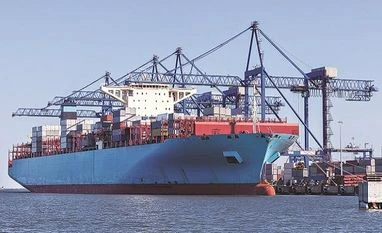
rcep, trade, import, export, shipping, ships, sea, port
Pranjal Sharma Davos
3 min read Last Updated : Jan 24 2020 | 3:16 AM IST
As tariff wars become the new normal in global trade, policy makers and industry leaders are arguing for twin focus on scale and localisation. 

Even as countries emphasise on locally manufactured products for domestic markets, there is also the need to reduce barriers to international trade. 

At a session in Davos on global value chains (GVCs), US Commerce Secretary Wilbur Ross emphatically defended the tiff over tariffs. He said, “The world has to rebalance on trade. US will continue to fight for fair rules of trade.”

Tariff wars are among the three serious challenges to global trade. The long chain of linkages that bring products from the manufacturers to consumers worldwide is under threat. GVCs, which account for over two thirds of world trade, are being disrupted by tariff wars. Add to this the focus on improving sustainable practices and use of emerging technologies, and there appears a perfect storm for GVCs. 

In recent decades, manufacturing of complex products has been done in a disaggregated manner. Various components and sub-assemblies of engineering goods are manufactured in different countries and then assembled in a central location to be then shipped back to consumers across the world. 

“Small and medium enterprises (SMEs) and multinational corporations (MNCs) urgently need to understand the risks and opportunities associated with the impending changes to GVCs. And, also the future shape of production as a driver of economic growth and development,” said a report by World Economic Forum (WEF) and United Nations Development Programme (UNDP) on GVCs. The report was prepared with AT Kearney. 

According to the World Bank, participation in GVCs is associated with higher productivity gains and economic growth. A 1 per cent increase in GVC participation is estimated to increase per capita income by more than 1 per cent. This is about twice the effect of participation in conventional trade. As a result, the poverty reduction impact of GVC participation is greater, said the report. 
“Global trade policies are also development policies,” said Achim Steiner, administrator of UNDP. “Disruption is the new norm and requires new types of public policies for sustainability,” added Steiner.

The WEF UNDP report has projected a potential value impact across end-to-end value chains of -40 per cent at the lower bound and +70 per cent at the upper bound because of the changes taking place. 

If the disruptions are managed well, GVCs can increase their value. However, thay can also fall without a stable policy environment. 
 
Rodolphe Saade, chairman of CMA CGM, a global French shipping group, said GVCs are in for volatile times. Tariff wars mean that there will be higher inter-region trade while climate change imperatives will require investment in green technologies. “We must change the way of doing business and need to pay more attention to the environment,” said Saade. 

Manufactures who sell across global markets face rising uncertainty too. “It is difficult for us to predict the next few weeks. Managing the changes created by automation and tariff wars will force new models on us. We will focus more on manufacturing facilities closer to the markets we sell in,” said Dipali Goenka, chief executive officer (CEO) of Welspun India. 

From textiles to mobiles to automobiles, the connected manufacturing chain will need to reinvent itself to cope with these multiple challenges. 

One subscription. Two world-class reads.

Already subscribed? Log in

Subscribe to read the full story →
*Subscribe to Business Standard digital and get complimentary access to The New York Times

Smart Quarterly

₹900

3 Months

₹300/Month

SAVE 25%

Smart Essential

₹2,700

1 Year

₹225/Month

SAVE 46%
*Complimentary New York Times access for the 2nd year will be given after 12 months

Super Saver

₹3,900

2 Years

₹162/Month

Subscribe

Renews automatically, cancel anytime

Here’s what’s included in our digital subscription plans

Exclusive premium stories online

  • Over 30 premium stories daily, handpicked by our editors

Complimentary Access to The New York Times

  • News, Games, Cooking, Audio, Wirecutter & The Athletic

Business Standard Epaper

  • Digital replica of our daily newspaper — with options to read, save, and share

Curated Newsletters

  • Insights on markets, finance, politics, tech, and more delivered to your inbox

Market Analysis & Investment Insights

  • In-depth market analysis & insights with access to The Smart Investor

Archives

  • Repository of articles and publications dating back to 1997

Ad-free Reading

  • Uninterrupted reading experience with no advertisements

Seamless Access Across All Devices

  • Access Business Standard across devices — mobile, tablet, or PC, via web or app

Topics :Tariff warGlobal TradeDomestic industrySME companiesmanufacturing World Economic Forum

Next Story



