GST ministerial panel puts off two issues; Council to meet on July 21

The panel decided to omit the reverse charge mechanism (RCM) clause from the GST law
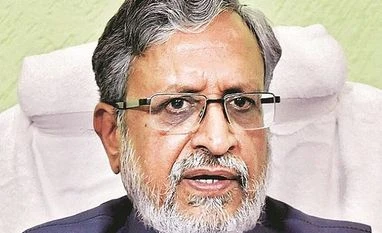
sushil modi
Dilasha Seth New Delhi
Last Updated : Jul 09 2018 | 2:43 AM IST
The GST ministerial panel led by Bihar Deputy Chief Minister Sushil Modi put off two key items — the reverse charge mechanism and digital payment incentives — in its meeting on Sunday, indicating a slowdown in decision-making under the one-year-old indirect tax regime ahead of the impending elections.

The GST Council will meet on July 21 after more than two months to discuss issues including outcomes of meetings of the group of ministers (GoM).

The panel decided to omit the reverse charge mechanism (RCM) clause from the GST law under which registered taxpayers buying from unregistered taxpayers have to deposit the GST.

It recommended empowering the GST Council to impose the reverse charge mechanism only on a certain class of registered taxpayers.

“We have recommended omitting Section 9(4) of the GST law and replacing it with another one to empower the Council to decide on the class of registered taxpayers for the RCM. Traders have raised the issue of compliance burden the reverse charge mechanism will bring with it. It indeed will be a big issue. So we have left it to the Council to decide,” said Modi.


The government has been deferring the reverse charge mechanism since October last year. The Centre wants to make it applicable under the composition scheme, a flat tax rate scheme for small taxpayers.

Unlike the usual practice of sellers depositing the tax to the government, the buyer does so under the RCM.


Traders have argued that the reporting requirement will go up, increasing hardship for many small taxpayers. Small taxpayers report their turnover in a single-line item.

Besides, composition dealers may lose the competitive advantage they have because of a lower rate of tax.
 

Digital payment incentive
 

The panel has deferred the proposal to incentivise digital payments by two percentage points till 2019-20 on account of revenue implications.

“We want to wait till GST revenues stabilise. So digital payment incentives should be considered in 2019-20,” said Modi.

The panel has computed an annual cost of Rs 140 billion to the exchequer on account of digital incentives.

According to the proposal, a two percentage point discount was to be given to those paying digitally, subject to a ceiling of Rs 100 a transaction.

This was to be available for business-to-consumer (B2C) transactions for goods and services that face a tax rate of 3 per cent or more. The incentive could comprise a 1 per cent concession on Central GST and another 1 per cent on State GST.

Another view was to have a ‘negative list’ of items, on which this incentive would not apply.

The panel comprised West Bengal Finance Minister Amit Mitra, Gujarat Deputy Chief Minister Nitinbhai Patel, Haryana Excise and Taxation Minister Capt. Abhimanyu and Punjab Finance Minister Manpreet Singh Badal.

In 2016-17, the number of digital transactions was 10.76 billion, where the average value per transaction (debit and credit card transaction) was Rs 1,833. 

Transactions below Rs 1,000 accounted for 16 per cent of digital transactions, between Rs 1,000 and Rs 2,000 14 per cent, and above Rs 2,000 70 per cent.

In 2017-18, the number of digital transactions stood at around 18 billion.

Although the concession may mean revenue loss, the government is hopeful that improvement in compliance and higher demand will make up for it.

One subscription. Two world-class reads.

Already subscribed? Log in

Subscribe to read the full story →
*Subscribe to Business Standard digital and get complimentary access to The New York Times

Smart Quarterly

₹900

3 Months

₹300/Month

SAVE 25%

Smart Essential

₹2,700

1 Year

₹225/Month

SAVE 46%
*Complimentary New York Times access for the 2nd year will be given after 12 months

Super Saver

₹3,900

2 Years

₹162/Month

Subscribe

Renews automatically, cancel anytime

Here’s what’s included in our digital subscription plans

Exclusive premium stories online

  • Over 30 premium stories daily, handpicked by our editors

Complimentary Access to The New York Times

  • News, Games, Cooking, Audio, Wirecutter & The Athletic

Business Standard Epaper

  • Digital replica of our daily newspaper — with options to read, save, and share

Curated Newsletters

  • Insights on markets, finance, politics, tech, and more delivered to your inbox

Market Analysis & Investment Insights

  • In-depth market analysis & insights with access to The Smart Investor

Archives

  • Repository of articles and publications dating back to 1997

Ad-free Reading

  • Uninterrupted reading experience with no advertisements

Seamless Access Across All Devices

  • Access Business Standard across devices — mobile, tablet, or PC, via web or app

Next Story



