India is pitching its climate mitigation efforts on giga-scale renewable energy deployment. The country is aiming for a 450 Gw of renewable energy (RE) capacity by 2040, and is confident of meeting the commitments it made at the Paris Climate Conference in 2015. But this very plan is threatened by climate change since weather extremes in India hurt the sustainability of solar and wind projects.
This then creates the need for additional investment in projects for mitigation technologies, and forecasting and scheduling of RE generation to tackle unprecedented short- and long-term weather changes.
In the last five years, the average wind speed has been witnessing negative variation in the five key wind power generation states: Maharashtra, Madhya Pradesh, Rajasthan, Andhra Pradesh and Karnataka. The negative variation is in the range of 90-120 per cent over the nominal wind speeds seen in the past 38 years. For instance, last year, due to back-to-back cyclones and changing monsoon patterns, with heavy rains impacting wind speeds, wind energy generation fell by 40 per cent in some windy regions during peak generation season.
Changing weather patterns also brought more cloudy days, masking solar power generation. During April to July this year, Gujarat, Rajasthan, Madhya Pradesh and Karnataka saw solar power generation fall 7-15 per cent over last year. Sector experts say the trend continues in August, too.
The Sixth Assessment Report (AR6) of the United Nations Intergovernmental Panel on Climate Change (IPCC), released recently, says that in 20 years, global average air temperature may rise by more than 1.5 degree Celsius, a dangerous threshold. Carbon emissions are the main driver of climate change, besides other greenhouse gases and air pollutants, it said.
India has maintained that its RE targets are enough to keep its carbon emissions in check. Senior officials in ministries of new and renewable energy, and environment said India need not do much more than what it has “already committed”. The country would be able to meet its Intended Nationally Determined Contributions (INDC) targets for tackling climate change, they said.
“According our latest submission to the UNFCCC (United Nations Framework Convention on Climate Change), as on 2016, India’s emission intensity to GDP was 24 per cent. We have 14 years to meet the 33-34 per intensity and we will meet that. Second, the NDC of our renewable energy capacity has touched 38 per cent (including hydro) and we will soon touch 40,” said a senior official in the environment, forest and climate change ministry.
The renewable energy sector, however, wants the government to realign the focus keeping in mind the challenges of climate change. “India’s focus for climate mitigation is based on RE capacity addition, whereas climate extremes are impacting RE generation. The policy focus should be on maximising generation,” said Sunil Jain, chairman, Energy Council, Indo-American Chamber of Commerce.
Jain said the project developers would need to make additional investment but it is likely that it would not be sustainable at current RE tariff rates. “More predictable and sustainable RE generation would come from technology-based planning and investments,” he said.
Companies such as Hero Future Energies (HFE) have started investing in digital solutions that help monitor weather changes, and plan generation accordingly. Srivatsan Iyer, Global CEO, Hero Future Energies, told Business Standard, “Plant operations at HFE projects are being improved through a combination of smart sensors, advanced analytics, and machine-learning predictive models. This enables continuous performance optimisation and predictive maintenance.” At HFE, he added, they monitor real-time plant performance via a central monitoring system. “For energy forecasting, HFE has partnered with leading weather forecasting agencies to generate accurate forecasts at regional/local level.”
Wind turbine majors such as Vestas, Suzlon etc have started investing in taller wind turbines and more efficient generators to tackle the lack of windy sites and sporadic wind movements.
Subrahmanyam Pulipaka, chief executive officer, National Solar Energy Federation of India (NSEFI), said sector majors have been handling climate-related impact on RE in isolation but it needs a broader stakeholder engagement now. “Climate change is on the agenda for our Environmental, Social and Governance (ESG) working group next year. We are looking at how to operate solar power plants in a sustainable manner under extreme climate,” he said, adding, “Heatwaves would increase the power demand, too, and we will be looking at how solar can contribute to the peak demand, how it can help address that power surge and how it can withstand the heatwave.”

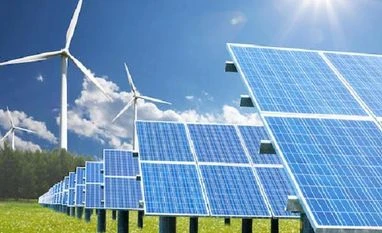 "India's climate mitigation plans face a threat as Earth warms")












 Connect with us on WhatsApp