The government changed rules protecting tribal rights, forests and environment to ensure that more than 130 mines do not face fresh auctions and are retained by the miners concerned.
The changes were made to several regulations in a coordinated manner by the environment ministry, the tribal affairs ministry and the mines ministry over a year, documents show. The government had passed an amendment to the Mines and Mineral Development and Regulation Act, 2015, to facilitate auctioning of mines, generating revenue for the states concerned. Earlier, mines were only allocated, denying higher revenue to the state coffers. But the government created an exception even in the amended law.
According to Section 10(2) of the amended law, anybody with a licence to prospect or to carry out reconnaissance and had started operations would get a mining licence. But the miner had to get all permissions for mining within two years of the amended MMDR Act — by January 12, 2017.
The mines ministry calculated in October 2016 that about 317 mines across 12 states could potentially be out of the auction list under this provision. Of these, the ministry observed, 97 mine owners had not taken any action to process their licences, and faced cancellation, and 138 required environment, forests and tribal clearances. These 138 mines, thus, escaped being auctioned.
A formal mining lease is predicated on securing the statutory forest and environmental clearances. Besides meeting other criteria, the forest clearance itself is predicated on the affected tribal village councils giving consent to their traditional forests being cut down for mining and the claims of the forest-dwellers being settled under the Forest Rights Act. The miners with prospecting and reconnaissance licence had to, therefore, ensure they had forest clearance, the tribal community’s consent and the environmental clearance in the two years before the deadline of January 12.
But records showed that on April 1, 2015, the environment ministry changed rules to facilitate mines being protected against the threat of auction. It passed an order to “assign” forests to these miners on lease as a general rule without full-fledged forest clearance. The ministry clarified that mining can begin only when the miners secured full-fledged forest clearance. For fresh mining, it noted that now leases could be signed based on mere assigning of forestland, instead of a detailed clearance. But the environment ministry asked that the miners pay up the levy for the forest area - previously collected only when it was decided the forests would be cut down for mining. It was not clarified how the government would return the levy if mining was not permitted after assigning the land to the miners.
This helped the miners circumvent the deadline of securing full forest clearance before the January deadline. This short-cut version continued to be predicated on the miners securing the consent of tribals under the Forest Rights Act. This was reiterated in November 2016 by the environment ministry, when it said all provisions of the Forest Rights Act had to be followed even for the assignment of forestland. This meant taking consent and settling all rights before the mining lease was signed.
However, by January 2017, this provision was diluted.
In a dated January 5, 2017, the tribal affairs ministry noted the consent of tribals was not required while assigning land but only before mining begins, based on stage-2 forest clearance. It stated that under no circumstances would the rights of tribals and other forest-dwellers be infringed upon until the FRA provisions are addressed later. It said if rights over part of the forest land were assigned to tribals later under the FRA, that part would be excluded from the lease area.
In a parallel move, the mines ministry also did away with the need for environmental clearance before signing leases for these mines. On January 4, the mines ministry said it had consulted the law and the environment ministries and decided that the mandatory environmental clearance was not required for these mines before signing the lease agreement. The clearance can be sought at a later stage by the miners, before actual mining begins.
On January 5, listing down all the changes it had helped make to save these 300-odd mines from auction, the mines ministry wrote that “such pending cases, where mining plan was sanctioned but cases were pending because of environment clearance, forest clearance and tribal rights, the states have been facilitated by the central government to be able to grant the lease expeditiously”.

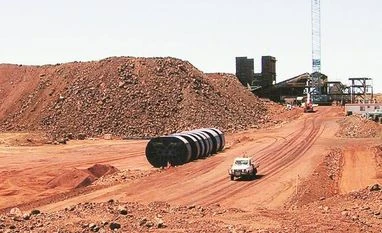 "Rule change gives miners route to bypass auction")












 Connect with us on WhatsApp