A peek into the 28-page document Oppn will use to fight Modi in LS polls

The 28-page document is set to become the foundational text for the Opposition's common minimum agenda
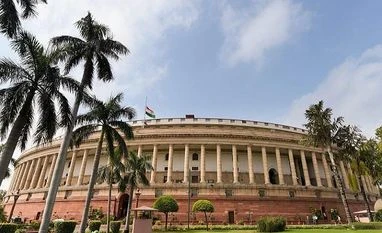
parliament
Archis Mohan
5 min read Last Updated : Mar 09 2019 | 11:18 PM IST
Several civil society groups, activists and Opposition leaders, including those from the Congress, have brainstormed for the last nine months to give shape to a ‘people’s progressive agenda’ for India. The 28-page document is set to become the foundational text for the Opposition’s common minimum agenda, likely to be unveiled later this month, for the upcoming Lok Sabha polls.

Some of the key proposals of the agenda relate to transforming the banking sector, addressing agrarian distress, countering hate crimes and discrimination, and spurring employment generation.

The agenda has suggested that India “should seriously consider the feasibility of a ‘bad bank’, which can quickly clean up the banking system so it can resume lending”. “If the latest tweaks in the IBC (Insolvency and Bankruptcy Code), Project Sashakt and the asset resolution approaches fail, a ‘bad bank’ could be a possible solution for which external financing will be needed,” the document states.

On the need for reforming and strengthening the Reserve Bank of India (RBI), it says the central bank’s role as the public debt manager can create a conflict of interest, as it also oversees the functioning of independent monetary policy. The agenda has proposed that the debt management function should be either in the finance ministry or under an independent public debt management agency. 

“Such a move would also need to be accompanied by eliminating the Statutory Liquidity Ratio (SLR) for banks and by reducing public ownership in the banking sector to manageable levels.” It envisages strengthening the RBI’s regulatory role over public sector banks.

Enhanced funding of 1 per cent of the Budget for the judiciary and reform of the judicial system have also been proposed. It has suggested that the term ‘civil society’ be introduced in the Constitution of India and establish an independent department accountable to Parliament, on the lines of the Charity Commission of England and Wales or the Australian not-for-profit and charities commission, to oversee the work of non-governmental organisations. The agenda has proposed that there should be “mandatory social auditing” of all public projects; a social accountability act; grievance redressal act and ensuring delivery of public goods and services. It also talks about a farmers’ commission and a debt relief commission to arbitrate between farmers and banks on one hand and farmers and insurance companies on the other.

For employment generation, the agenda envisages special packages for five labour-intensive manufacturing sectors —food processing, garments, textiles and apparels, leather and footwear, wood manufacturers and furniture — which account for 62 per cent of all manufacturing employment.

It says the state should enact a national urban employment guarantee Act to provide employment within town or city limits to all those who demand it and thereby provide service to all residents, build civic infrastructure, and restore the urban commons. Other recommendations include the state allocating 6 per cent GDP on education and 3 per cent on health, enhancing land ownership by women, comprehensive anti-discrimination law and protecting forest rights of tribals.

While opposition parties are busy formulating their respective state-specific manifestos, only the Congress among them has had the wherewithal to conduct nationwide consultations with different stakeholders, at least 176 until the last count, to prepare its manifesto. 

However, opposition leaders, academicians and others had felt the need for the ‘anti-Bharatiya Janata Party (BJP)’ front to come up with a common vision document to present to the electorate at a time when they are being asked if they have any agenda to come together beyond their opposition to Prime Minister Narendra Modi. The Samruddha Bharat Foundation, a multi-party platform, set up in July 2017, has prepared the document in consultation with opposition leaders and taking inputs from the ‘common minimum programme’ of 2004, and similar documents prepared by ‘Reclaiming the Republic’, ‘Wada Na Todo Abhiyan (don’t break your promise) and others.
 
Leaders from the Congress, Telugu Desam Party, Dravida Munnetra Kazhagam, Rashtriya Janata Dal, Nationalist Congress Party, Left parties and other smaller parties have been part of the process to prepare the blueprint. Over 350 intellectuals, activists and politicians grouped into 16 sectoral working groups have held more than 60 meetings since May 2018 to prepare the document. 

At the meeting of opposition leaders on February 27, some flagged the need for presenting a vision document to the people while building pre-poll alliances.

Congress party’s research head Rajeev Gowda, Left leaders Sitaram Yehcury and D Raja, Rashtriya Lok Dal’s Jayant Chaudhary, Loktantrik Janata Dal’s Sharad Yadav and several other leading politicians have been part of the consultations. 

“The consultations with politicians were an effort to get them to talk to each other at an informal level that helped build mutual trust and facilitated exchange of ideas. It also gave academicians a platform to get access to political leadership and share their ideas,” said Gurdeep Sappal, executive trustee of Samruddha Bharat.

One subscription. Two world-class reads.

Already subscribed? Log in

Subscribe to read the full story →
*Subscribe to Business Standard digital and get complimentary access to The New York Times

Smart Quarterly

₹900

3 Months

₹300/Month

SAVE 25%

Smart Essential

₹2,700

1 Year

₹225/Month

SAVE 46%
*Complimentary New York Times access for the 2nd year will be given after 12 months

Super Saver

₹3,900

2 Years

₹162/Month

Subscribe

Renews automatically, cancel anytime

Here’s what’s included in our digital subscription plans

Exclusive premium stories online

  • Over 30 premium stories daily, handpicked by our editors

Complimentary Access to The New York Times

  • News, Games, Cooking, Audio, Wirecutter & The Athletic

Business Standard Epaper

  • Digital replica of our daily newspaper — with options to read, save, and share

Curated Newsletters

  • Insights on markets, finance, politics, tech, and more delivered to your inbox

Market Analysis & Investment Insights

  • In-depth market analysis & insights with access to The Smart Investor

Archives

  • Repository of articles and publications dating back to 1997

Ad-free Reading

  • Uninterrupted reading experience with no advertisements

Seamless Access Across All Devices

  • Access Business Standard across devices — mobile, tablet, or PC, via web or app

Next Story



