A man for all seasons: Srikrishna to probe conflict charges against Kochhar

Srikrishna, who hails from a Kannadiga family, is a second generation lawyer
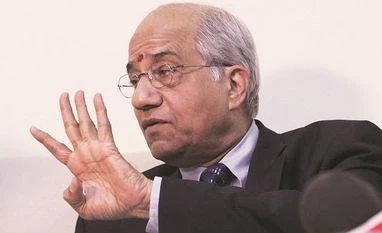
Bellur Narayanaswamy Srikrishna
Pavan Lall Mumbai
Last Updated : Jun 16 2018 | 1:23 AM IST
Once again, Bellur Narayanaswamy Srikrishna, the 77-year-old retired judge who hails from Matunga in Mumbai, will have the arc lights on him. 

That’s because his latest assignment involves being an independent investigator for the ongoing allegations of financial impropriety against ICICI Bank’s boss Chanda Kochhar. She is facing charges of colluding with industrialists to engage in quid pro quo relationships that involved her husband Deepak Kochhar. 

Asked what he makes prima facie of the ICICI-Kochhar issue so far,  Srikrishna’s says, “It’s still very early as I have just been handed over the matter and therefore I haven’t formed any views on it as yet.” 

Srikrishna adds that the committee on data protection and privacy framework, which he is heading, will complete its mandate in a week or two, after which he will take up the ICICI matter.  The outcome of the data protection matter could have a huge impact on citizens’ privacy, on firms such as Facebook as well as Google and how they do business in India. 

Why is he taking on the ICICI Bank-Kochhar issue? Srikrishna says that he is driven by any problem that is put up in front of him and that he is willing to take on anything that makes sense to him. Despite the professed detachment to work that comes his way, Srikrishna acknowledged that the ICICI Bank issue is “significantly important”, but declined to speculate on how long the inquiry would take to complete. 

“Your guess is as good as mine,” is the retort from the straight-talking former Supreme Court judge, who other lawyers accurately describe as “salt of the earth.”

Srikrishna, who hails from a Kannadiga family, is a second generation lawyer. Before starting out predominantly as a labour litigation lawyer in the Bombay high court, he built on his legacy. That was followed by his elevation in 1991 as a judge in the Bombay High Court when he retained his residence in Matunga opting not to shift to official residences reserved for judges in south Mumbai.

Even as Srikrishna’s ICICI-related appointment was closely guarded until recently, it doesn’t come as a surprise. Nikhil Sakhardande, a Mumbai-based lawyer, who knows Srikrishna, says, “He is grounded, astute and everyone has only good things to say about him.” His popularity aside, a lawyer specialising in corporate law, said one of the key reasons for his selection is because his position as chairman of the Financial Sector Legislative Reform Committee (FSLRC) in 2013. The FSLRC had suggested a major overhaul in the finance sector’s regulatory architecture that included establishing an Indian Financial Code to replace most existing laws. It also called for creating one regulator for equity, pension, insurance and commodities markets. It suggested reviewing the Reserve Bank of India's regulatory structure.

In 2017, Srikrishna led a 10-member committee which submitted recommendations to the Union law ministry calling for promoting institutional arbitration for both domestic and international cases. This was suggested for speedy resolution of commercial disputes and to make India an international hub for arbitration. Srikrishna has to his credit key path-breaking judgments that involved the double taxation Mauritius treaty and the 1991 case of Minoo Balsara vs The Union of India and others on the matter of residents of government premises enjoying the protection of rent control Acts. It also included a judgment against Maharashtra's urban development minister Manohar Joshi for illegal construction that his son-in-law undertook in Pune. 

There have also been several committees on hot-button issues of national significance that he steered.

An investigative commission formed under Srikrishna oversaw an inquiry into the Bombay riots which saw large-scale unrest in late 1992 and early 1993 between Hindus and Muslims as a result of demolition of the Babri Masjid in Ayodhya. 

However, the recommendations of the inquiry were not enacted. Later in 2010, the committee for consultations (CoC) headed by Srikrishna assessed the demand for a separate state of Telangana. 

As a linguist who’s conversant with Tamil, Sanskrit, Malayalam, Telugu, Marathi and his mother tongue Kannada, Srikrishna is also familiar with Bengali. 

“How many languages you speak doesn’t really matter. What is important is that what you say is understood,” Srikrishna quips.

One subscription. Two world-class reads.

Already subscribed? Log in

Subscribe to read the full story →
*Subscribe to Business Standard digital and get complimentary access to The New York Times

Smart Quarterly

₹900

3 Months

₹300/Month

SAVE 25%

Smart Essential

₹2,700

1 Year

₹225/Month

SAVE 46%
*Complimentary New York Times access for the 2nd year will be given after 12 months

Super Saver

₹3,900

2 Years

₹162/Month

Subscribe

Renews automatically, cancel anytime

Here’s what’s included in our digital subscription plans

Exclusive premium stories online

  • Over 30 premium stories daily, handpicked by our editors

Complimentary Access to The New York Times

  • News, Games, Cooking, Audio, Wirecutter & The Athletic

Business Standard Epaper

  • Digital replica of our daily newspaper — with options to read, save, and share

Curated Newsletters

  • Insights on markets, finance, politics, tech, and more delivered to your inbox

Market Analysis & Investment Insights

  • In-depth market analysis & insights with access to The Smart Investor

Archives

  • Repository of articles and publications dating back to 1997

Ad-free Reading

  • Uninterrupted reading experience with no advertisements

Seamless Access Across All Devices

  • Access Business Standard across devices — mobile, tablet, or PC, via web or app

Next Story



