PSU banks' recapitalisation challenging, say analysts

Acharya's suggestions on the issue are good, how to go about these is the problem, say stakeholders
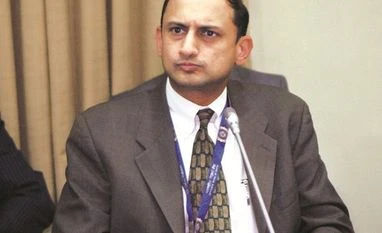
RBI Deputy Governor Viral Acharya
Viral Acharya
Anup RoyKrishna Kant Mumbai
Last Updated : Sep 09 2017 | 1:45 AM IST
Reserve Bank of India (RBI) deputy governor Viral Acharya's urgings on the capitalisation need of public sector banks (PSBs) are fine but implementation is the challenge, say analysts and rating agency executives.

PSBs are saddled with a huge load of loans gone or going sour, with correspondingly high provisioning requirements on their balance sheet. On Thursday, Acharya posed a number of questions, as a way of suggesting that these be incorporated in a new plan for recapitalising and nursing back the PSBs to health, in a post- loan resolution period.

Among his suggestions were asking banks to access the market now, when you have lots of liquidity chasing the stock market. The government should also pare its stake in PSBs to 52 per cent, so that capital can be raised from the market.

On average, PSBs have a more leveraged balance sheet than either private sector banks or large and listed retail non-banking finance companies (NBFCs). For example, every Rs 100 worth of advances by PSBs are backed by Rs 10.4 worth of core capital. The corresponding numbers for private banks and listed NBFCs are Rs 17 and Rs 21.4, respectively.

Fear of more loans going bad and of low capital adequacy has greatly impaired PSBs' ability to make new loans to their corporate clients.

Critics point to problems in Acharya's suggestions. For one, they contend there are no large buyers for PSB shares, other than government-owned Life Insurance Corporation of India (LIC). The latter periodically picks up stake in PSBs, in the absence of healthy demand from the market for such stocks.

"There is no use in becoming a minority shareholder in a bank which remains a government bank and continues to run like before. Yes, if the stake can be pared to 24 per cent or so, there will be huge interest but not before that," said an analyst with a brokerage, requesting not to be named.

A rating agency executive absolved bank managements of the charge of not trying to tap the market. "It is not that banks are not trying. Whenever we meet them, they say we will be raising money the next quarter or so and you should not downgrade us. There is no doubt that the managements have been trying their best to raise equity but they are not able to," said the executive.

However, Acharya's suggestion to explore opportunities for selling off deposit franchises to private capital, which means selling off the branch network that mobilises deposits, is interesting, say some analysts. "There will be huge resistance from various quarters but, that aside, there will be huge buyer interest for this and the value that can be unlocked is massive," said one.

This is because a number of private and foreign banks, including the newly floated ones, will find it very attractive to buy 50-60 branches at one go, instead of reaching that number by growing organically over years.

"PSBs' reach, however small, is very deep, quite old and established. These branches are part of the town and saving habit of the local population, and the 'stickiness' is very good. If these branches can be bought, they immediately start garnering deposits for new banks," said an analyst.

However, as this move can also be interpreted as selling the bank itself, it would be politically very risky.

"Acharya has the refreshing view of an outsider. It seems at every opportunity he is testing the bureaucracy and letting them know his views. However, at this point, it doesn't seem the government is keen on creating a moral hazard by capitalising the banks adequately, as banks with such depressed valuations and high stress might not be the right intermediaries for efficient resource use," say rating agency executives.

Analysts say even if the problems are sorted for now by aggressive government and RBI intervention, it is likely that the situation would revert to the same state over more time. Yet, right now, there is a need to address the festering problems of high stress in bank balance sheets.

RBI proposals
  • Banks should access the market now as huge liquidity is chasing the stock market
     
  • The government should pare its stake in banks to the minimum 52%, so that capital can be raised from the market
     
  • Need to explore opportunities for selling off deposit franchises to private capital, which means selling off branch network that mobilises deposits for public sector banks

One subscription. Two world-class reads.

Already subscribed? Log in

Subscribe to read the full story →
*Subscribe to Business Standard digital and get complimentary access to The New York Times

Smart Quarterly

₹900

3 Months

₹300/Month

SAVE 25%

Smart Essential

₹2,700

1 Year

₹225/Month

SAVE 46%
*Complimentary New York Times access for the 2nd year will be given after 12 months

Super Saver

₹3,900

2 Years

₹162/Month

Subscribe

Renews automatically, cancel anytime

Here’s what’s included in our digital subscription plans

Exclusive premium stories online

  • Over 30 premium stories daily, handpicked by our editors

Complimentary Access to The New York Times

  • News, Games, Cooking, Audio, Wirecutter & The Athletic

Business Standard Epaper

  • Digital replica of our daily newspaper — with options to read, save, and share

Curated Newsletters

  • Insights on markets, finance, politics, tech, and more delivered to your inbox

Market Analysis & Investment Insights

  • In-depth market analysis & insights with access to The Smart Investor

Archives

  • Repository of articles and publications dating back to 1997

Ad-free Reading

  • Uninterrupted reading experience with no advertisements

Seamless Access Across All Devices

  • Access Business Standard across devices — mobile, tablet, or PC, via web or app

Next Story



