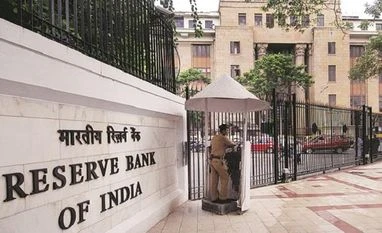
The Reserve Bank of India�s (RBI�s) draft guidelines on liquidity risk management for non-banking financial companies (NBFCs), announced on Friday last week, could dilute the latter�s profitability in the near term, albeit marginally.
Though in draft form, the guidelines were anticipated by market/industry experts and are in the right direction because the sector has been reeling from liquidity problems after the IL&FS crisis in September last year.
An initial reading of the guidelines indicates two factors � potential rise in borrowing cost and lower returns on investment book � could hit the spread of NBFCs.
The spread is a profitability measure of lenders.
�NBFCs that were chasing profitability by borrowing in the short term where cost is lower to finance longer-tenure assets could see some pressure on margins in the short term. This practice will go once these guidelines are finalised,� said Lalitabh Srivastava, associate vice-president, Sharekhan.
According to the draft guidelines, NBFCs have to disclose their asset-liability management (AML) data in more granular ways (weekly, 8-14 days, 15-30 days, etc.) and the cumulative ALM mismatch is allowed up to 10 per cent for weekly and 8-14 days each, and 20 per cent for 15-30 days.
An ALM mismatch occurs when cash outflows exceed cash inflows in a particular period.
Many large, listed NBFCs have started lowering their exposure to short-term borrowings such as commercial papers and have a satisfactory asset-liability management (ALM) profile.
�Most liquidity measures announced were practised by well-managed NBFCs. But there were no regulations to supervise through the ALM committee. If these guidelines are finalised, it will be strict monitoring of the NBFCs� liability side and everyone has to follow proper procedures,� said Umesh Revenkar, managing director and chief executive officer, Shriram Transport Finance Company.
�Every NBFC is carrying additional cash now. So I don�t see any impact on profitability and earnings of NBFCs,� he added.
Further, the adoption of the �stock� approach through liquidity ratios could mean more cautious use of short-term borrowings, warranting a rise in long-term borrowing cost and the margin pressure. This apart, the regulator has defined �high quality liquid assets� (HQLA) for calculating the liquidity coverage ratio (LCR). This could dilute the yield earned on investments.
According to Anil Gupta, vice-president and head of financial sector ratings at ICRA, most big players do maintain on-book liquidity. However, those who have not been doing so could see a negative impact on spread. Also, going by components of the HQLA, the return on investment could be lower than their borrowing cost.
NBFCs could undertake some measures to mitigate the expected impact by increasing fee income or upward price revisions of their products.
However, given the competitive pressure, how much of the potential additional borrowing cost the NBFCs can pass on to customers is a question. Gupta said NBFCs� ability to meet 100 per cent LCR should be better than that of banks, given the fact that the former largely have liabilities that are not payable on demand.
Thus, the five-year time frame given to NBFCs to meet 100 per cent LCR can be shortened.
Raman Aggarwal, chairman, Finance Industry Development Council (FIDC), said the RBI was prescribing a liquidity ratio when liquidity was a challenge. �It is a kind of situation where the patient is suffering from pain and instead of giving him/her relief from pain you are prescribing the plan for the future.�
The first task is to make liquidity available and then work on how finance companies manage it and prescribe norms, he said. The FIDC will give a point-by-point assessment and suggestion to the Reserve Bank of India soon.
Read this article for free
Register to continue reading premium journalism and analysis from Business Standard.

 "RBI risk draft may hit NBFCs; FIDC asks to address liquidity problem first")












 Connect with us on WhatsApp