China hits back at US, imposes additional 25% tariff on American imports

China responds to US tariffs aimed at recouping IP losses, Beijing's aim is to bring Trump to negotiating table
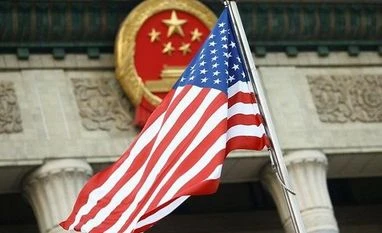
China-US ties
Photo: Reuters
Bloomberg
Last Updated : Apr 05 2018 | 3:05 AM IST
China said it would levy an additional 25 percent tariff on imports of 106 US products including soybeans, automobiles, chemicals and aircraft, in response to proposed American duties on its high-tech goods.

Matching the scale of proposed US tariffs announced the previous day, the Ministry of Commerce in Beijing said the charges will apply to around $50 billion of US imports. Officials signaled that the implementation of the proposed measures will depend on when the US applies its own after a period of public consultation.

The step ratchets up tension in a brewing trade war between the world’s two largest trading nations, with the Trump administration’s latest offensive based on alleged infringements of intellectual property in China. In targeting high-tech sectors that Beijing is openly trying to promote, the US has provoked furious rhetoric from Beijing and stronger threats of retaliation than many had anticipated.

"China’s response was tougher than what the market was expecting -- investors didn’t foresee the country levying additional tariffs on sensitive and important products such as soybeans and airplanes," said Gao Qi, Singapore-based strategist at Scotiabank. "Investors believe a trade war will hurt both countries and their economies eventually."

Asian stocks fell, with the MSCI Asia Pacific Index declining 0.4 percent to the lowest in more than seven weeks. The yen advanced.

Trade war primer

What is a trade war?

It’s “an economic conflict in which countries impose import restrictions on each other in order to harm each other’s trade.” 

What happened in previous trade wars?

One of the examples is the 1930’s Smoot-Hawley Act, which hiked US tariffs by around 20%, to protect American farmers. It then broadened after other industries lobbyied for protections. 

Who wins in a trade war?

No one, if history is any guide. For example, when President George W Bush raised steel tariffs in 2002, US gross domestic product declined by $30.4 million, according to the US International Trade Commission.

Why did Trump invite this fight?

In a recent Twitter post, he declared trade wars “good, and easy to win.” His focus remains reducing the trade deficit, which shows the US imports hundreds of billions of dollars more than it exports

Can tariffs backfire on the US?

Yes, for example, tariffs. Many more people are employed in industries, such as auto manufacturing, that buy steel to make products, than in steel-making itself. Some consumers may also have to pay higher prices. Trade tensions could boost inflation more than desired by Federal Reserve policy makers, who might feel the need to raise rates more aggressively than planned. 

Beijing’s proposed targets strike at the core of commercial relations between the two countries, and at some of the most politically sensitive goods in core Trump constituencies. For example, China is the world’s largest soybean importer and biggest buyer of U.S. soybeans in trade worth about $14 billion last year.

The US list of planned charges on more than 1,300 product categories focused on China’s industrial machinery and technology exports. China’s envoy to the WTO, Zhang Xiangchen, called it "an intentional and gross violation of the WTO’s fundamental principles of non-discrimination and bound tariffs."

Industries including aerospace, information and communications technology, robotics and machinery were among those targeted by the USTR on Tuesday. It said it chose products to minimize the impact on the U.S. economy and consumers.

In addition to advanced technologies such as communication satellites, the U.S. list includes things ranging from various types of steel to television components, medical devices, dishwashers, snow blowers and even flame throwers.

"The U.S. list suggests that the government is targeting the ’Made in China 2025’ initiative, while China’s retaliation intends to bring Americans back to the negotiation table," said Zhou Hao, an economist at Commerzbank AG in Singapore. said in an e-mail.

The release of the list by U.S. Trade Representative Robert Lighthizer leads into a roughly 60-day period when the public can provide feedback and the government holds hearings on the tariffs. The 25 percent tariffs come on top of any existing levies.

China’s Made in China 2025 plan was announced in 2015, and highlighted 10 sectors for support on the way to China becoming an advanced manufacturing power, from information technology, to robotics and aerospace. In addition, China has a separate development strategy for artificial intelligence, published in 2017.

USTR said the public can submit written comments on the tariffs until May 11, and it will hold a public hearing on them on May 15 in Washington.

"The U.S. has this vicious intention to strangle China’s high-tech innovation," said Wei Jianguo, former vice commerce minister and now an executive deputy director of the China Center for International Economic Exchanges, a government-linked think tank. "China won’t submit to the U.S. bully. Our countermeasures will hit their soft spots."

One subscription. Two world-class reads.

Already subscribed? Log in

Subscribe to read the full story →
*Subscribe to Business Standard digital and get complimentary access to The New York Times

Smart Quarterly

₹900

3 Months

₹300/Month

SAVE 25%

Smart Essential

₹2,700

1 Year

₹225/Month

SAVE 46%
*Complimentary New York Times access for the 2nd year will be given after 12 months

Super Saver

₹3,900

2 Years

₹162/Month

Subscribe

Renews automatically, cancel anytime

Here’s what’s included in our digital subscription plans

Exclusive premium stories online

  • Over 30 premium stories daily, handpicked by our editors

Complimentary Access to The New York Times

  • News, Games, Cooking, Audio, Wirecutter & The Athletic

Business Standard Epaper

  • Digital replica of our daily newspaper — with options to read, save, and share

Curated Newsletters

  • Insights on markets, finance, politics, tech, and more delivered to your inbox

Market Analysis & Investment Insights

  • In-depth market analysis & insights with access to The Smart Investor

Archives

  • Repository of articles and publications dating back to 1997

Ad-free Reading

  • Uninterrupted reading experience with no advertisements

Seamless Access Across All Devices

  • Access Business Standard across devices — mobile, tablet, or PC, via web or app

Next Story



