US President Donald Trump is more popular with likely voters than he is with the general public, according to a Reuters/Ipsos poll that underscores why Republican lawmakers have largely stuck with the polarising President despite his plunging approval ratings.
The poll, released on Wednesday, shows he ranks better among people who voted in the 2016 Presidential election than with the overall US adult population – a group that includes both voters and non-voters. Only about 60 per cent of the voting-age public took part in last year’s election.
In October, for example, 44 per cent of 2016 voters said they approved of Trump’s performance in office, compared with 37 per cent of the general population. Among Republicans, 82 per cent of voters approved of Trump in October, compared with 75 per cent of all Republicans. Some 85 per cent of those who voted for Trump in 2016 said they would do so again, the poll found.
The findings suggest that Republican candidates in the 2018 congressional elections who shun the president risk alienating his followers, Republican strategists and political scientists said. At the same time, those who embrace him in the early primary races that choose party candidates risk losing moderate voters in the general election.
“It is very difficult for any Republican candidate to distance themselves from Trump,” said Michael McDonald, an expert on voter turnout at the University of Florida.
That dilemma played out in Virginia on Tuesday, when Ed Gillespie, the Republican candidate in the governor’s race, was soundly beaten by his Democratic opponent. Gillespie had adopted some of Trump's hardline positions but avoided campaigning with the unpopular President.
Gillespie's strategy had been closely watched within the party to see if it could provide a template for other Republican candidates in 2018, when control of the House of Representatives and the Senate would be up for grabs.
Gillespie's loss sparked debate among Republicans on the way forward on Wednesday. Trump suggested in a tweet that the outcome could have been different had Gillespie fully embraced him, but critics pointed out that exit polls showed that a third of Virginian voters had turned out to signal displeasure with Trump, double the number who cast ballots to express support for the president.
Tuesday's results clearly signal that opposition to Trump has grown, even though he remains popular among 2016 Republican voters, said Elaine Kamarck, an expert in presidential politics at the Brookings Institution.
For Republicans, "the hurdle won’t be with getting out the base," Kamarck said. "It will be in getting anyone else to vote for you" in elections where Republican voters are outnumbered.
Reuters/Ipsos was able to compare the opinions of voters with the general public by creating two separate surveys: a poll of voters and a poll of the public.
For the voter poll, Reuters/Ipsos reconnected with people who took its exit poll on November 8, 2016, the day of the US Presidential election. Those voters were sent additional questionnaires in May, July and October that asked if they approved or disapproved of the president.
Their responses were then compared with the results of a separate survey – the Reuters/Ipsos national tracking poll – that surveys all adults in the United States.
In May and July, the results of both polls were nearly identical, with about 40 percent of voters and the general adult population expressing approval for the president.
The two polls diverged in October, however, with voters expressing stronger levels of approval than the general public.
Jan Leighley, an expert on political behavior at American University, said it makes sense that Trump is more popular among people who voted in the 2016 election. They were more likely to be white and less likely to identify with Democrats than the general public, she said.

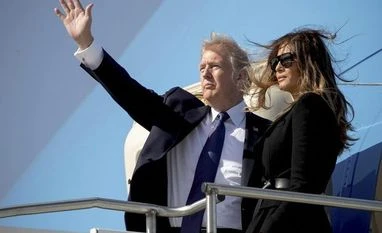 "Donald Trump's low approval rating masks his support among likely voters")











