Global leaders at UN meet: If virus does not kill us, climate change will

The pandemic has muted the U.N. meeting, with world leaders speaking not from the podium in New York but via video from home
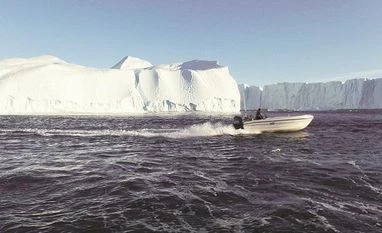
global warming, climate change, environment, ice melting, rising sea levels, greenland
According to a recent study, a big chunk of Greenland’s ice cap measuring approximately 42.3 square miles has broken off in the far northeastern Arctic. Scientists believe this is due to the Earth’s rapidly changing climate
AP | PTI Johannesburg
5 min read Last Updated : Sep 28 2020 | 1:54 AM IST
In a year of cataclysm, some world leaders at this week's annual United Nations (UN) meeting are taking the long view, warning: If Covid-19 doesn't kill us, climate change will.

With Siberia seeing its warmest temperature on record this year and enormous chunks of ice caps in Greenland and Canada sliding into the sea, countries are acutely aware there’s no vaccine for global warming.

“We are already seeing a version of environmental Armageddon,” Fiji's Prime Minister Frank Bainimarama said, citing wildfires in the western US and noting that the Greenland ice chunk was larger than a number of island nations.

This was meant to be the year “we took back our planet,” he said. Instead, the coronavirus has diverted resources and attention from what could have been the marquee issue at this UN gathering. Meanwhile, the UN global climate summit has been postponed to late 2021.

That hasn't stopped countries, from slowly sinking island nations to parched African ones, from speaking out. “In another 75 years, many ... members may no longer hold seats at the United Nations if the world continues on its present course,” the Alliance of Small Island States and the Least Developed Countries Group said.

The main goal of the 2015 Paris climate accord is to limit the rise in global temperatures to 2 degrees Celsius (3.6 degrees Fahrenheit) above pre-industrial times, but scientists say the world is on track to soar past that. A new study found that if the world warms another 0.9 degrees Celsius (1.6 degrees Fahrenheit), the West Antarctic ice sheet will reach a point of irreversible melting. It has enough water to raise global sea levels by 5 meters (16 feet).

The Pacific island nation of Palau hasn't had a single Covid-19 infection, but President Tommy E. Remengesau Jr. warns it's the rising seas that will bring the country down.

“The momentary drop in (carbon) emissions this year cannot be allowed to generate any complacency about global progress,” he said, referring to the sparkling skies that followed lockdowns to slow the spread of the virus around the world. Pollution has crept back up as restrictions ease.

World powers cannot shirk their financial commitments to fighting climate change during the pandemic, Remengesau said, even as economies are battered.

But few pledges have emerged at the U.N. gathering, aside from China's announcement that it aims to have carbon dioxide emissions peak before 2030 and achieve carbon neutrality by 2060.

The pandemic has muted the U.N. meeting, with world leaders speaking not from the podium in New York but via video from home. That has sapped the urgency of diplomacy and left nations wondering just how many people are listening.

Amid concerns that the world is distracted, it was perhaps no surprise that the student-led movement Fridays for Future returned to the streets this week for the first major demonstrations for climate action in months.

Still, island nations have seized on the unusual circumstances to show off what's at stake.

The prime minister of Tuvalu, Kausea Natano, delivered his U.N. speech with a vista of turquoise waters and swaying fronds behind him that instantly fired the imaginations of house-bound viewers.

But the prime minister quickly shattered any dreams. While Tuvalu is free of the coronavirus, the pandemic struck as the island nation was recovering from a pair of tropical cyclones — storms that scientists say are likely to become wetter as the planet warms.

Tuvalu's highest point is just a few meters (yards) above sea level. The pandemic's effect on the movement of goods exposed food insecurity as local agriculture becomes more difficult with rising sea levels, Natano said.

“While Covid-19 is our immediate crisis, climate change remains the single greatest threat to the livelihoods, security and well-being of the Pacific and its peoples in the long run,” the prime minister said.

From the Marshall Islands, also free of Covid-19, President David Kabua used the virus's example to plead for more help now.

“Change relies on protecting the most vulnerable, because those on the frontline – whether healthcare workers battling the pandemic or small island nations sounding the alarm on climate change – are critical to the survival of us all,” he said.

“Small island and atoll nations like mine do not have time for paper promises,” Kabua added.

Urgent pleas also came from Africa, which contributes least to global warming but stands to suffer from it the most.

“In favoring solutions based on the respect for nature, we're also preserving the health of our peoples,” said President Issoufou Mahamadou of Niger, part of the Sahel region south of the Sahara desert where temperature increases are expected to be 1.5 times higher than the world average.

“Our global home that was teeming with millions of species of God-given creatures, both great and small, is slowly dying,” said Kenyan President Uhuru Kenyatta, who last year noted that his country was the only one in Africa to reach the goal of making renewable energy 75% of its energy mix.

He added: “Our world is yearning for us to stop its ruin.”

One subscription. Two world-class reads.

Already subscribed? Log in

Subscribe to read the full story →
*Subscribe to Business Standard digital and get complimentary access to The New York Times

Smart Quarterly

₹900

3 Months

₹300/Month

SAVE 25%

Smart Essential

₹2,700

1 Year

₹225/Month

SAVE 46%
*Complimentary New York Times access for the 2nd year will be given after 12 months

Super Saver

₹3,900

2 Years

₹162/Month

Subscribe

Renews automatically, cancel anytime

Here’s what’s included in our digital subscription plans

Exclusive premium stories online

  • Over 30 premium stories daily, handpicked by our editors

Complimentary Access to The New York Times

  • News, Games, Cooking, Audio, Wirecutter & The Athletic

Business Standard Epaper

  • Digital replica of our daily newspaper — with options to read, save, and share

Curated Newsletters

  • Insights on markets, finance, politics, tech, and more delivered to your inbox

Market Analysis & Investment Insights

  • In-depth market analysis & insights with access to The Smart Investor

Archives

  • Repository of articles and publications dating back to 1997

Ad-free Reading

  • Uninterrupted reading experience with no advertisements

Seamless Access Across All Devices

  • Access Business Standard across devices — mobile, tablet, or PC, via web or app

Topics :Climate ChangeGlobal Warmingice meltingRising sea levelsUnited Nations

Next Story



