Report finds Australian troops unlawfully killed 39 Afghan prisoners

Australia launched the inquiry in 2016, amid reports from whistle-blowers and in the local media of the alleged killing of unarmed men and children in Afghanistan.
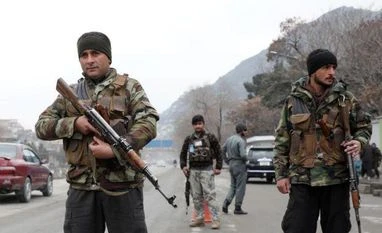
Report finds Australian troops unlawfully killed 39 Afghan prisoners
Press Trust of India
3 min read Last Updated : Nov 20 2020 | 1:24 AM IST
There is "credible information" that at least 19 serving and former Australian special forces allegedly committed up to 39 unlawful murders during the conflict in Afghanistan, according to a long-awaited military report into war crimes released on Thursday.

Australia launched the inquiry in 2016, amid reports from whistle-blowers and in the local media of the alleged killing of unarmed men and children in Afghanistan.

The four-year inquiry by NSW Court Of Appeal Justice Paul Brereton found there was "credible information" of 23 incidents where Australian Defence Force (ADF) personnel were involved in the serious crimes, either carrying out the offences or at least being "accessories" to the incidents.

There was "credible information" that 39 Afghans were allegedly murdered by Australian special forces in 23 incidents. There were also two incidents could be classified as the war crime of "cruel treatment", the report said.

According to the Australian media, the latest report has been based on over 400 interviews with soldiers and officers from the SAS, a special forces unit, and Commandos, Afghan villagers, special forces interpreters and support staff.

The inquiry found evidence some Australian troops in Afghanistan carried "throwdowns" such as weapons, radios and grenades not issued by the ADF but planted next to the bodies of Afghan civilians to suggest they were a "legitimate target" in any post-incident investigations.

"This practice probably originated for the less egregious though still dishonest purpose of avoiding scrutiny where a person who was legitimately engaged turned out not to be armed," Brereton said.

Issuing an apology to Afghanistan people while releasing the report in Canberra, Australia's Chief of Defence Force Angus Campbell said: "These findings allege the most serious breaches of military conduct and professional values. The killing, the unlawful killing, of civilians and prisoners is never acceptable.'' Campbell also apologised to the Australian people, saying he was sincerely sorry for any wrongdoing by members of the Australian Defence Force.

Campbell said the report discloses a "disgraceful and a profound betrayal of the Australian Defence Force's professional standards and expectations".

"Today the Australian Defence Force is rightly held to account for allegations of grave misconduct by some members of our special forces community on operations in Afghanistan," he said.

The public summary of the inquiry, released on Thursday morning, based partly on evidence given by eyewitnesses interviewed under oath, also found that Australian soldiers summarily executed non-combatants and prisoners.

Brereton wrote, "when what the inquiry has found is taken collectively, the answer to the question, 'Is there substance to rumours of war crimes by elements of the Special Operations Task group' must sadly be, 'Yes, there is'." Brereton, who was appointed by the Inspector-General of defence in 2016 to investigate the allegations of war crimes in Afghanistan between 2003 and 2016, found commanders higher up the chain should bear a "moral command responsibility" for a culture that allowed the alleged crimes to take place.

Campbell said it was termed a "warrior culture" which had a "misplaced focus on prestige, status and power”.

"The report notes that the distorted culture was embraced and amplified by some experienced, charismatic and influential non-commissioned officers and their proteges who sought to fuse military excellence with ego, elitism and entitlement," he said.

"Cutting corners, ignoring and bending rules was normalised. What also emerged was a toxic, competitiveness between the Special Air Service Regiment and the Second Commando Regiment, destructive of trust, cohesion and mission, and a disgrace to both," he said.

One subscription. Two world-class reads.

Already subscribed? Log in

Subscribe to read the full story →
*Subscribe to Business Standard digital and get complimentary access to The New York Times

Smart Quarterly

₹900

3 Months

₹300/Month

SAVE 25%

Smart Essential

₹2,700

1 Year

₹225/Month

SAVE 46%
*Complimentary New York Times access for the 2nd year will be given after 12 months

Super Saver

₹3,900

2 Years

₹162/Month

Subscribe

Renews automatically, cancel anytime

Here’s what’s included in our digital subscription plans

Exclusive premium stories online

  • Over 30 premium stories daily, handpicked by our editors

Complimentary Access to The New York Times

  • News, Games, Cooking, Audio, Wirecutter & The Athletic

Business Standard Epaper

  • Digital replica of our daily newspaper — with options to read, save, and share

Curated Newsletters

  • Insights on markets, finance, politics, tech, and more delivered to your inbox

Market Analysis & Investment Insights

  • In-depth market analysis & insights with access to The Smart Investor

Archives

  • Repository of articles and publications dating back to 1997

Ad-free Reading

  • Uninterrupted reading experience with no advertisements

Seamless Access Across All Devices

  • Access Business Standard across devices — mobile, tablet, or PC, via web or app

Topics :AfghanistanAustralia

Next Story



