Sri Lanka devalues rupee, seen as step towards IMF help

Sri Lanka's foreign reserves fell to $2.36 billion at the end of January
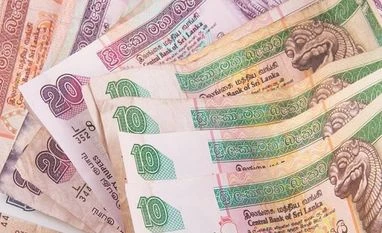
sri lanka
Analysts said the devaluation was insufficient by itself, and the government needed to take additional policy steps, including increasing taxes to shore up public revenues and adjusting fuel prices
Uditha Jayasinghe | Reuters Colombo
3 min read Last Updated : Mar 09 2022 | 12:52 AM IST
Sri Lanka’s central bank has devalued the rupee by up to 15 per cent, taking one of several steps analysts said are needed to obtain a International Monetary Fund loan programme that would boost currency reserves and help negotiate debt restructuring.

Late on Monday, the Central Bank of Sri Lanka, with immediate effect, set an exchange rate limit of 230 rupees per dollar compared to a limit of 200-203 that had prevailed since October.

Analysts said the depreciation was likely done to encourage remittances, a major source of foreign exchange in Sri Lanka, which dropped to a 10-year low of $5.49 billion in 2021 as a result of the Covid-19 pandemic.

Sri Lanka’s foreign reserves fell to $2.36 billion at the end of January and it is due to repay about $4 billion in debt in the rest of 2022, making it likely that government will seek IMF assistance. As yet, Sri Lanka has not formally sought talks on an IMF programme, an IMF official said, declining to be named.

“We believe this will support growth and assist us to face external challenges better,” Cabinet spokesman and Media Minister Dullas Allahaperuma told reporters on Tuesday. He did not say whether the government would approach the IMF. “Currency flexibility is something IMF will see as a pre-condition to a program, so it makes future negotiations with them easier,” Thilina Panduwawala, Head of Economic Research at Frontier Research said.

“But without clear communication on intention for IMF program and debt restructuring, it does not mean much right now.”

Analysts said the devaluation was insufficient by itself, and the government needed to take additional policy steps, including increasing taxes to shore up public revenues and adjusting fuel prices.

“The recent 100 bps hike in key policy rates combined with the exchange rate correction are key stepping stones for the country to move towards an IMF led restructuring program,” Asia Securities said in its latest Macro Outlook update.

“Given the relatively unsustainable level of debt as outlined by the IMF during its recent Article IV assessment, we continue to factor a restructuring during the year.”  Some analysts said the central bank should have depreciated by more to achieve to boost remittances significantly, and some expected an even bigger devaluation of up to 25 per cent later in the year.

“Hawala” traders, who transfer funds informally between countries without physically moving money, adjusted their rate to 270 rupees per dollar after the CBSL announcement, having previously offered a rate around 255 rupees, market sources said.

Umesh Moramudali, an economist attached to the University of Colombo, said the exchange rate limit should have been set at about 250-260 rupees per dollar to bring in more remittances.

“This move could help exporters but it is too little, too late for migrant workers who are now used to higher curb rates and are unlikely to shift to bank rates,” Moramudali said.

CBSL called on the government to incentivise remittances and foreign investments in its latest monetary policy announcement. In December, CBSL announced a host of measures including giving an additional 10 rupees per dollar as an incentive but this had limited impact with remittances dropping 61.6 per cent in January to $259 million from $675 million a year earlier. 

One subscription. Two world-class reads.

Already subscribed? Log in

Subscribe to read the full story →
*Subscribe to Business Standard digital and get complimentary access to The New York Times

Smart Quarterly

₹900

3 Months

₹300/Month

SAVE 25%

Smart Essential

₹2,700

1 Year

₹225/Month

SAVE 46%
*Complimentary New York Times access for the 2nd year will be given after 12 months

Super Saver

₹3,900

2 Years

₹162/Month

Subscribe

Renews automatically, cancel anytime

Here’s what’s included in our digital subscription plans

Exclusive premium stories online

  • Over 30 premium stories daily, handpicked by our editors

Complimentary Access to The New York Times

  • News, Games, Cooking, Audio, Wirecutter & The Athletic

Business Standard Epaper

  • Digital replica of our daily newspaper — with options to read, save, and share

Curated Newsletters

  • Insights on markets, finance, politics, tech, and more delivered to your inbox

Market Analysis & Investment Insights

  • In-depth market analysis & insights with access to The Smart Investor

Archives

  • Repository of articles and publications dating back to 1997

Ad-free Reading

  • Uninterrupted reading experience with no advertisements

Seamless Access Across All Devices

  • Access Business Standard across devices — mobile, tablet, or PC, via web or app

Topics :sri lankaRupeeIMF

Next Story



