Patience is running out for many in the international community when it comes to effectively engaging with the Taliban, the UN deputy representative for Afghanistan Markus Potzel, told the Security Council on Tuesday.
Despite some positive developments over the past few months, the senior UN envoy for the country said they have been "too few and too slow and the negatives outweigh them".
"I am afraid that patience is running out by many in the international community regarding a strategy of engagement with Afghanistan's Taliban authorities," he said.
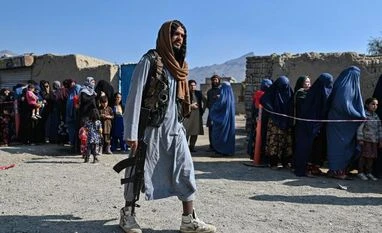
Potzel drew attention to the ongoing ban on girls' secondary education and growing restrictions on women's rights, as "signals that the Taliban are indifferent to more than 50 per cent of the population" and are willing to risk international isolation.
"The relegation of women and girls to the home not only deprives them of their rights, but Afghanistan as a whole is denied the benefit of the significant contributions that women and girls have to offer," he detailed.
This comes as armed clashes and deadly terrorist attacks have spiked in the country.
"Our earlier warnings about the capabilities of Islamic State Khorosan Province (ISKP) were dismissed by the Taliban," he told ambassadors.
"But ISKP has demonstrated in the last few months alone that it can carry out assassinations of figures close to the Taliban, attacks against foreign embassies, as well as fire rockets across Afghanistan's border to attack its neighbours - all while maintaining its long-standing sectarian campaign against Shia Muslims and ethnic minorities," said Potzel.
And armed clashes are continuing between Taliban security forces and armed opposition groups in the Panjshir, Baghlan, Kapisa, Takhar, and Badakhshan provinces, the UN envoy continued.
"There are disturbing reports, as well as videos and photos, indicating possible serious human rights violations committed in Panjshir," he said, calling for an investigation into allegations of extra-judicial killings there.
He added that the mission will continue to carefully monitor these and other reports of serious human rights violations.
As per capita income has collapsed to 2007 levels - erasing 15 years of economic growth - the country's economic situation "remains tenuous" (with little detail forthcoming from the Taliban) due in part to Afghanistan's isolation from the international banking system, according to UN News.
"Liquidity remains heavily dependent on the cash that the UN continues to bring in for humanitarian operations - cash, I must stress, that supports the needs of the Afghan people and does not directly reach the de facto authorities," said Potzel.
But even the funding is uncertain as the 2022 Humanitarian Response Plan has only received $1.9 billion out of a USD 4.4 billion requirements.
He warned humanitarian and economic measures will not meet the Afghan people's longer-term needs, and the emergency aid cannot replace essential service delivery systems, such as health and water, or hold off an economic collapse.
Moreover, a continued lack of political inclusivity and transparency in decision-making leave most Afghans without any government representation.
"There are no consistent mechanisms for citizens to provide feedback to the authorities and little indication that the Taliban wish to even hear any," the UN envoy said.
While the Taliban's self-identified emirate has not been recognized by any State, the international community also does not want to see the country collapse, Potzel stressed.
"If the Taliban do not respond to the needs of all elements of Afghan society and constructively engage within the very limited window of opportunity with the international community, it is unclear what would come next," said the Deputy Special Representative.
"Further fragmentation, isolation, poverty, and internal conflict are among the likely scenarios, leading to potential mass migration and a domestic environment conducive to terrorist organizations, as well as greater misery for the Afghan population.
"That's why we have to engage", he declared, adding that "continued qualified engagement" was the most realistic way of helping the Afghan people.

 "World's patience is running out for engagement with Taliban: UN envoy")

