Brokerages call for $30-35 billion NRI bonds to strengthen rupee

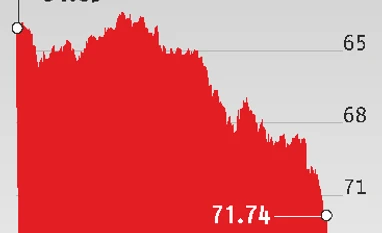
The rupee on Friday reversed its seven-day losing streak to close at 71.74 a dollar from its previous close of 72
Brokerages call for $30-35 billion NRI bonds to strengthen rupee
Anup Roy Mumbai
Last Updated : Sep 08 2018 | 5:36 AM IST
Orchestrated demands to strengthen the rupee are being put in place even as the current account deficit (CAD) for the first quarter of this fiscal year widened to 2.4 per cent of gross domestic product, up from 1.9 per cent in the fourth quarter of 2017-18. 

The rupee on Friday reversed its seven-day losing streak to close at 71.74 a dollar from its previous close of 72. The latest figures the Reserve Bank of India released show that India’s foreign exchange reserves stood at $400 billion as of August 31. 

After Bank of America Merrill Lynch (BofaML), which has been a strong proponent of the NRI dollar-deposit scheme such as the one seen in 2013, it is brokerage CLSA that wrote in a report that in its interactions with government officials, measures such as the dollar-deposit scheme were under consideration. 

“Our recent meetings in Delhi in early August had highlighted that the government may plan some measures like a foreign currency bond or NRI deposits similar to that seen in Q4FY13 — a period of taper tantrum,” CLSA wrote.

Even as NITI Aayog Vice-Chairperson Rajiv Kumar said the currency should be allowed to find its “natural level”, the brokerage said: “The rupee certainly becomes a political issue running up to the elections and it’s fair to expect some remedial measures from the government.”

Indranil Sengupta of BofaML reiterated the government and the RBI should raise NRI bonds of $30-35 billion if the rupee remained at 70 a dollar into the December quarter without FPI flows reviving. 

“In our view, RBI rate hikes actually end up hurting rupee as FPI equity investments that chase growth are 8x of debt,” Sengupta wrote, adding the central bank would make an intervention of another $20 billion in the currencies markets and buy bonds from the secondary markets. However, whether a rate hike will happen depends on the inflation path the recent rupee depreciation charts. The rupee has depreciated 11 per cent year-to-date against the dollar, making it the worst-performing currency in Asia and one of the worst in the world. 

“When asked (in June) if the RBI would hike rates to defend the currency, the RBI governor stated that ‘monetary policy is determined by the nominal anchor [inflation]’, implying the RBI would hike if depreciation results in upside risks to the inflation target, not otherwise,” wrote Nomura economist Sonal Varma in a note. 

Varma expects the RBI to maintain the status quo in its October policy and beyond even as many other economists expect the central bank to hike rates in October.

Currency dealers say the RBI has recently started intervening in the currency market. Till the end of August, the RBI was keeping its reserves at $400 billion, a psychological figure for the markets.

However, as the rupee approached 72 a dollar, the RBI’s intervention started. And this then is interpreted as a level the central bank is keen on keeping rupee at. 

Currency dealers say taking a cue from the RBI, technology companies, major dollar earners for the country, have started selling dollars in the forwards markets. “Tech companies have started receiving premiums,” said the treasury head of a foreign bank. Receiving premiums means taking a fee for a contractual obligation to supply dollars at a particular level at a future date. 

Currency dealers say software companies were selling dollars when the rupee was at 68-69, but stopped after that as the rupee started losing against the dollar because in that case they would have to book mark-to-market losses.

One subscription. Two world-class reads.

Already subscribed? Log in

Subscribe to read the full story →
*Subscribe to Business Standard digital and get complimentary access to The New York Times

Smart Quarterly

₹900

3 Months

₹300/Month

SAVE 25%

Smart Essential

₹2,700

1 Year

₹225/Month

SAVE 46%
*Complimentary New York Times access for the 2nd year will be given after 12 months

Super Saver

₹3,900

2 Years

₹162/Month

Subscribe

Renews automatically, cancel anytime

Here’s what’s included in our digital subscription plans

Exclusive premium stories online

  • Over 30 premium stories daily, handpicked by our editors

Complimentary Access to The New York Times

  • News, Games, Cooking, Audio, Wirecutter & The Athletic

Business Standard Epaper

  • Digital replica of our daily newspaper — with options to read, save, and share

Curated Newsletters

  • Insights on markets, finance, politics, tech, and more delivered to your inbox

Market Analysis & Investment Insights

  • In-depth market analysis & insights with access to The Smart Investor

Archives

  • Repository of articles and publications dating back to 1997

Ad-free Reading

  • Uninterrupted reading experience with no advertisements

Seamless Access Across All Devices

  • Access Business Standard across devices — mobile, tablet, or PC, via web or app

Next Story



