A silver lining

Normal monsoon will support rural demand
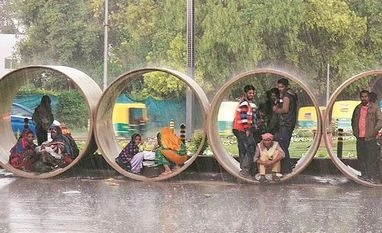
Monsoon, rains, people, IMD, weather, atmosphere, environment, season
Business Standard Editorial Comment
3 min read Last Updated : Apr 16 2020 | 11:26 PM IST
The forecast by the India Meteorological Department (IMD) of a normal monsoon this year has come as a silver lining in the general atmosphere of despondency created by the Covid-19 outbreak. This prediction, if true, bodes well for agriculture, which supports the livelihood of over half the population, as also for hydel power generation and other water-dependent industries. The agriculture and allied activities sector, which seems set to grow at 3.5 per cent in 2019-20, regardless of the of Covid-19 onslaught towards the end of the rabi season, can be expected to sustain or excel this level of growth in 2020-21 as well. The optimism on this count is supported also by the remarkable current water profile of the country. The water stock in 123 major reservoirs is estimated by the Central Water Commission at a whopping 63 per cent above the previous year’s corresponding level and 57 per cent above normal for this time of the year. This can help meet the water needs of agriculture and domestic sectors during the approaching dry summer. The economy as a whole can also hope to gain from the buoyant agriculture because of the attendant surge in rural demand for goods and services. But this is conditional upon the success in shielding the farm sector against the crippling impact of the pandemic on labour availability, marketing, and cash flow. 

Significantly, the IMD has also outlined the revised “normal dates” for the onset, progress, and withdrawal of the monsoon in different regions, based on the experience of the past few decades, thus, virtually altering the country’s monsoon-dictated cropping calendar. With this, more importantly, the duration of the monsoon season stands stretched to four and a half months (June to mid-October) from the four months (June to September) deemed earlier. While the normal date of the monsoon’s onset over Kerala remains unchanged at June 1, its further advance to the middle regions of the country now tends to take three to seven days longer. Yet it manages to cover the entire country, including the northwest, by July 8, nearly a week earlier than the previously deemed normal time of mid-July. The reworked date of the monsoon’s complete withdrawal from the country is now October 15, instead of September-end. Whether these deviations are attributable to climate change or not may be debatable, but these do have a significant bearing on planning for sowing and harvesting crops and other monsoon-related activities.

That said, the truth also is that the IMD’s long-period weather predictions are yet to acquire the kind of credibility that its short- and medium-term forecasts have managed to do. Its preliminary monsoon projections, issued around this time every year, most often, go wrong. At times, even the updated versions and the region-wise forecasts released later on also prove incorrect. The indication about the distribution of the rainfall, which matters more for agriculture than the amount of precipitation, comes only when the rainy season is already underway and the bulk of the crop sowing has taken place. That is too late to be of much avail for the farmers and policy planners. A good deal, therefore, still needs to be done to sharpen the IMD’s monsoon rainfall foretelling models and improve the utility of its predictions for the various stakeholders. 

One subscription. Two world-class reads.

Already subscribed? Log in

Subscribe to read the full story →
*Subscribe to Business Standard digital and get complimentary access to The New York Times

Smart Quarterly

₹900

3 Months

₹300/Month

SAVE 25%

Smart Essential

₹2,700

1 Year

₹225/Month

SAVE 46%
*Complimentary New York Times access for the 2nd year will be given after 12 months

Super Saver

₹3,900

2 Years

₹162/Month

Subscribe

Renews automatically, cancel anytime

Here’s what’s included in our digital subscription plans

Exclusive premium stories online

  • Over 30 premium stories daily, handpicked by our editors

Complimentary Access to The New York Times

  • News, Games, Cooking, Audio, Wirecutter & The Athletic

Business Standard Epaper

  • Digital replica of our daily newspaper — with options to read, save, and share

Curated Newsletters

  • Insights on markets, finance, politics, tech, and more delivered to your inbox

Market Analysis & Investment Insights

  • In-depth market analysis & insights with access to The Smart Investor

Archives

  • Repository of articles and publications dating back to 1997

Ad-free Reading

  • Uninterrupted reading experience with no advertisements

Seamless Access Across All Devices

  • Access Business Standard across devices — mobile, tablet, or PC, via web or app

Topics :Indian monsoonMonsoon monsoon deficitMonsoon preparednesssouthwest monsoonmonsoon rainfallIMD

Next Story



