Building bridges

Govt must kick-start infrastructure to bridge financing gap
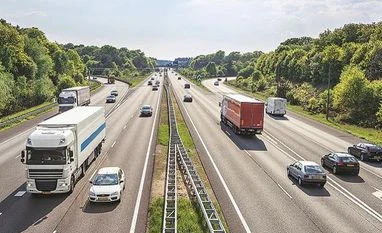
Road, infrastructure, construction, highway
In 2017-18, the National Highways Authority of India awarded 7,400 km of projects, valued at an all-time high of Rs 1.2 trillion
Business Standard Editorial Comment
Last Updated : Oct 22 2018 | 11:26 PM IST
The People’s Republic of China has once again displayed its engineering prowess, as well as its implementation capability, through the opening of the world’s longest sea bridge — a 55-kilometre stretch between Hong Kong, Zhuhai on the mainland, and Macau — that has a nine-kilometre underground stretch as well. The bridge has been built in nine years and is part of Beijing’s continued effort to drag the autonomous regions of Hong Kong and Macau closer to its orbit, as well as develop relatively under-connected locations within the Pearl River Delta megacity. All three cities connected will now be an hour’s commute from each other. The contrast with India could not be more vivid. The Signature Bridge over the Yamuna river, meant to link north and northeast Delhi with Ghaziabad — a mere 675 metres long — has taken nine years and is expected to be thrown open to traffic next week, after several missed deadlines. It was first approved by the Delhi cabinet in 2007 and has missed five deadlines — the first being in 2010. It is also more than Rs 6 billion over budget.


India’s inability to build infrastructure is a constant thorn in the side of Indian citizens and businesses. The immediate constraint at the moment is, in fact, one of financing. Multiple different approaches have been tried for financing infrastructure. Many of them have failed. For example, the private-public partnership (PPP) route in which a private sector concessionaire developed the infrastructure in return for user fees has been rendered unattractive, thanks to a combination of government inaction, private sector overconfidence, and, in some cases, judicial action. There is little interest in traditional PPPs now. Other forms of long-term financing have been similarly hit. For a while, it looked like the non-banking financial sector could step in and pick up some of the financing slack. But the troubles of Infrastructure Leasing & Financial Services, or IL&FS, have shown that this was always going to be a problem. The maturity mismatch problem — IL&FS was borrowing in the short-term markets in order to finance long-term infrastructure projects — has not been overcome. IL&FS has eventually been brought to a halt by the same rollover risk that hit traditional bank financing of infrastructure.

It is also true that the government itself may not have the resources needed for the multi-trillion rupee rollout of infrastructure, which, it says, is necessary. Given that, it will have to look for other ways to manage the financing of infrastructure. Asset monetisation of existing infrastructure is one possible way. There is little private sector interest now in actually taking on the risk involved in building infrastructure, but there is considerable willingness to operate infrastructure that already exists and can provide a steady revenue stream. A way out, therefore, is that the government builds the required infrastructure, operates it for a while so that its usage and revenue parameters are known, and then monetises it by transferring it to a private producer as was done recently for several highways in Andhra Pradesh and Gujarat. The funds so obtained could be recycled into new projects. Of course, this would require increased efficiency and reduced corruption in government projects. Creating the capacity needed to ensure that end must be priority over the next few years.

One subscription. Two world-class reads.

Already subscribed? Log in

Subscribe to read the full story →
*Subscribe to Business Standard digital and get complimentary access to The New York Times

Smart Quarterly

₹900

3 Months

₹300/Month

SAVE 25%

Smart Essential

₹2,700

1 Year

₹225/Month

SAVE 46%
*Complimentary New York Times access for the 2nd year will be given after 12 months

Super Saver

₹3,900

2 Years

₹162/Month

Subscribe

Renews automatically, cancel anytime

Here’s what’s included in our digital subscription plans

Exclusive premium stories online

  • Over 30 premium stories daily, handpicked by our editors

Complimentary Access to The New York Times

  • News, Games, Cooking, Audio, Wirecutter & The Athletic

Business Standard Epaper

  • Digital replica of our daily newspaper — with options to read, save, and share

Curated Newsletters

  • Insights on markets, finance, politics, tech, and more delivered to your inbox

Market Analysis & Investment Insights

  • In-depth market analysis & insights with access to The Smart Investor

Archives

  • Repository of articles and publications dating back to 1997

Ad-free Reading

  • Uninterrupted reading experience with no advertisements

Seamless Access Across All Devices

  • Access Business Standard across devices — mobile, tablet, or PC, via web or app

Next Story



