RBI's renewed challenges

The second wave could increase risk for the banking system
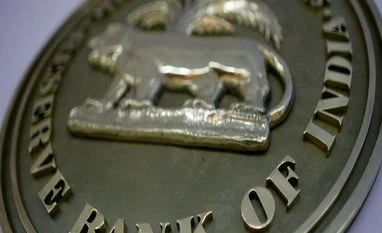
RBI
Crony capitalism has built up slowly in India, emerging as a Frankenstein’s monster a decade and a half after politicians began to unchain the private sector in the early 1990s
Business Standard Editorial Comment
3 min read Last Updated : Apr 27 2021 | 10:22 PM IST
The Indian economy has been recovering well in recent months but a sudden surge in Covid-19 cases has increased risks. A number of states are imposing restrictions on mobility to contain the virus. While this may be unavoidable in many parts of the country, it will still affect the economy in multiple ways. Apart from growth, disruption in supply chains will also affect inflation outcomes. The latest monthly bulletin of the Reserve Bank of India (RBI), for instance, notes that if the resurgence in infection is not contained in time, protracted restrictions and supply-chain disruption can increase inflation risks. The inflation rate based on the consumer price index (CPI) increased to 5.5 per cent in March. Supply-side disruptions can potentially push up the rate in the coming months. The fact that the CPI for April and May 2020 was not based on actual prices will also complicate matters for the central bank.

A potential increase in inflation rates would not allow the RBI to support economic recovery with excessively accommodative monetary and financial conditions. The banking system has excess liquidity worth about Rs 6 trillion. Further, the RBI has launched a new bond-buying programme. As the bulletin notes, there are risks such as asset bubbles and capital flights associated with such a programme. To be sure, financial markets have been anticipating such risks for some time, which is being reflected in bond yields. Clearly, the RBI is not pleased with the situation and argues that by anticipating monetary policy tightening, the markets may bring it sooner than warranted. In this context, the central bank must look at the reasons why financial markets are not convinced. A significant divergence could affect policy credibility with longer-term costs.

Further, besides convincing the financial market that it will contain inflationary pressures, the RBI will also need to closely monitor the banking sector. The last financial year witnessed a modest 5.6 per cent growth rate in bank credit. Bank credit expanded by just Rs 5.8 trillion during the financial year. But banks invested Rs 7.2 trillion in government bonds. Also, since industrial demand for credit remains low, banks have been extending more loans to individuals. The share of personal loans in incremental non-food credit in February, for example, stood at 41.7 per cent. Banks have been focusing on retail loans for some time. But a large disruption in economic activity and loss of income could affect asset quality.

In fact, some non-banking financial companies (NBFCs) are reportedly facing difficulties in recovering individual loans. Problems in the NBFC sector would also affect the banking system as it lends significantly to the sector. Thus, both banks and NBFCs should be careful in lending to the retail segment as well. Broadly, the RBI will need to ensure that the banking and NBFC sectors are well capitalised to absorb any potential shock emanating from the second wave. Since the embargo on declaring accounts non-performing has been lifted, the impact of last year’s disruption on asset quality will be known with the declaration of the March-quarter results. It is likely that the economic impact this time will not be as severe as last year, but would still increase risks for lenders. Therefore, in the given circumstances, the RBI will need to be more vigilant both in terms of conducting the monetary policy and monitoring the banking system.

One subscription. Two world-class reads.

Already subscribed? Log in

Subscribe to read the full story →
*Subscribe to Business Standard digital and get complimentary access to The New York Times

Smart Quarterly

₹900

3 Months

₹300/Month

SAVE 25%

Smart Essential

₹2,700

1 Year

₹225/Month

SAVE 46%
*Complimentary New York Times access for the 2nd year will be given after 12 months

Super Saver

₹3,900

2 Years

₹162/Month

Subscribe

Renews automatically, cancel anytime

Here’s what’s included in our digital subscription plans

Exclusive premium stories online

  • Over 30 premium stories daily, handpicked by our editors

Complimentary Access to The New York Times

  • News, Games, Cooking, Audio, Wirecutter & The Athletic

Business Standard Epaper

  • Digital replica of our daily newspaper — with options to read, save, and share

Curated Newsletters

  • Insights on markets, finance, politics, tech, and more delivered to your inbox

Market Analysis & Investment Insights

  • In-depth market analysis & insights with access to The Smart Investor

Archives

  • Repository of articles and publications dating back to 1997

Ad-free Reading

  • Uninterrupted reading experience with no advertisements

Seamless Access Across All Devices

  • Access Business Standard across devices — mobile, tablet, or PC, via web or app

Topics :Reserve Bank of IndiaCoronavirusCPI-based InflationInflationConsumer Price IndexCPINon-Banking Finance Companies

Next Story



