Restoration of trust

Higher judiciary must introspect on response to contempt case
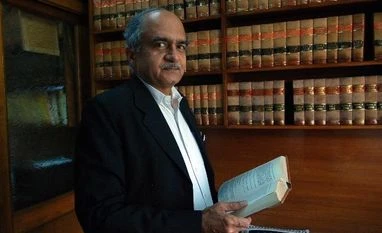
Prashant Bhushan
Prashant Bhushan, senior advocate and activist
Business Standard Editorial Comment
3 min read Last Updated : Aug 24 2020 | 11:51 PM IST
The decision by the Supreme Court to hold senior advocate Prashant Bhushan in contempt has taken on a life of its own. Mr Bhushan, given a three-day window to apologise or retract his tweets concerning the court and previous judges, has said it would amount to contempt of his conscience and of an institution he held in highest esteem. Certainly, whatever the facts of this particular case, Mr Bhushan’s commitment to the rule of law and to judicial independence and supremacy cannot be gainsaid. Perhaps that is why there is a groundswell of support for Mr Bhushan across all sections of informed opinion. The court must recognise that the public belief is not only that Mr Bhushan may have courageously raised issues that deserve greater examination at the highest level of the judiciary but also that the judiciary itself has not been sufficiently introspective about such issues. 

What it shows is that the courts, including the Supreme Court, are seen as having fallen short of what people expect. This is a remarkable change from even a few years ago, when there was no general protest when courts frequently overstepped their brief and impinged on the executive. Prime Minister Manmohan Singh used to regularly complain of judicial trespasses on the domain of the executive, on one occasion pointing out that “substituting [the writ of] mandamus with a take-over of the functions of another organ may, at times, become a case of over-reach”. Then, the courts were seen as intervening to save the system from politicians; now they are seen as caving in to the powers of the day. It is for the superior judiciary to introspect on these issues, to examine their own verdicts and conduct, especially in the last two or three years, and apply the required remedies. They have been served the warning that it is the public trust that upholds the judiciary, not the power to imprison on a charge of contempt. Not a more worrying impression could be given, since there are major implications of such a belief for the future of judicial independence, for its authority, and for its power. 

The Supreme Court, in particular, is the guardian of liberty, the watchdog of federalism, and the ultimate protector of the Constitution. This comes with the duty to stand up to both politicians and the public, since the Supreme Court’s judges have no masters save the law. The lessons from this incident must be studied in the higher judiciary, and appropriate measures taken. The apex court needs to have a far more liberal interpretation of the contempt provision, even as it safeguards the sanctity of the judicial process. The simple fact is that the Indian people want to trust the higher judiciary implicitly, and will certainly respond with relief and gratitude to a Court that appears to be willing to examine its own actions and remedy them. A trusted, autonomous judiciary is the keystone supporting the rest of the Indian constitutional order, and it is up to the judges themselves to ensure this stone is secure. 

One subscription. Two world-class reads.

Already subscribed? Log in

Subscribe to read the full story →
*Subscribe to Business Standard digital and get complimentary access to The New York Times

Smart Quarterly

₹900

3 Months

₹300/Month

SAVE 25%

Smart Essential

₹2,700

1 Year

₹225/Month

SAVE 46%
*Complimentary New York Times access for the 2nd year will be given after 12 months

Super Saver

₹3,900

2 Years

₹162/Month

Subscribe

Renews automatically, cancel anytime

Here’s what’s included in our digital subscription plans

Exclusive premium stories online

  • Over 30 premium stories daily, handpicked by our editors

Complimentary Access to The New York Times

  • News, Games, Cooking, Audio, Wirecutter & The Athletic

Business Standard Epaper

  • Digital replica of our daily newspaper — with options to read, save, and share

Curated Newsletters

  • Insights on markets, finance, politics, tech, and more delivered to your inbox

Market Analysis & Investment Insights

  • In-depth market analysis & insights with access to The Smart Investor

Archives

  • Repository of articles and publications dating back to 1997

Ad-free Reading

  • Uninterrupted reading experience with no advertisements

Seamless Access Across All Devices

  • Access Business Standard across devices — mobile, tablet, or PC, via web or app

Topics :Supreme CourtPrashant Bhushan

Next Story



