The limits of MSP

Farm sector needs intervention at multiple levels
The limits of MSP
Business Standard Editorial Comment
3 min read Last Updated : Jan 04 2022 | 11:17 PM IST
The year-long farm protests ended last month after the government got the three contentious farm laws repealed in Parliament. The government also agreed to look into the demand for legal backing of the minimum support price (MSP). It has reportedly asked farm groups to suggest names to be part of the panel to look into the issue. The mandate of the panel would be fairly wide. The committee, aside from suggesting ways to make MSP more effective and transparent, will also be expected to look into natural farming, and changing crop patterns in a scientific manner in accordance with the changing needs. Clearly, the suggestions of the panel will be important for the farm sector.

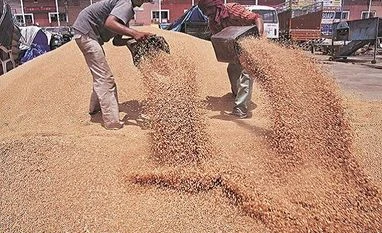
The focus, however, will be on how the committee approaches the issue of MSP because of the existing conditions. The government announces MSPs for 23 crops but procures mainly wheat and rice in a select few states. At the aggregate level, the reach and impact of the government’s intervention are fairly limited. As Ashok Gulati and Ranjana Roy showed in a recent article in The Indian Express — based on the Census and national accounts data — only about 5.6 per cent farmers benefit from MSPs. In terms of the value of agricultural produce, only about 2.2 per benefit from the MSP system. The data based on the National Statistical Office’s latest Situation Assessment of Agricultural Households report also shows that both the households and the value of output benefiting from the MSP system are fairly limited. Besides, the benefit is spread unevenly across the country. Farmers in Punjab and Haryana have benefited the most from the MSP system, though now it is being spread to some other states.

The given level and spread of the MSP system clearly indicate that the government cannot increase its scale significantly. It is already buying more than what it can distribute through the public distribution system. It also does not have the fiscal capacity to provide guaranteed prices for all crops. Additionally, the expansion of MSP interventions will not allow the agricultural sector to adjust to the evolving demand conditions. The cycle of wheat and rice is becoming unsustainable, particularly in states like Punjab and Haryana. Thus, the panel and the government will need to find other ways to support farmers. One option that has significant support is income transfer. The government is already transferring Rs 6,000 per year under PM-KISAN. It can increase the scale and scope of the programme to account for landholdings. Further, it can use cash transfers to incentivise farmers in water-stressed areas to move away from water-intensive crops. Ways will also have to be found to bring landless labourers and tenant farmers into the support system.

Aside from exploring ways to extend direct support, the government will need to continue to push farm reforms and strengthen the value chain. Despite rightly defending the repealed farm laws, the government is again resorting to steps like stockholding limits and banning futures trading to cool prices. This clearly goes against the idea of increasing farm income and strengthening the agri value chain. The government should allow the market to function, which will enable farmers to adjust to demand conditions. The government will need a multi-pronged approach to address concerns in the farm sector. Guaranteed prices would only increase complications. 

One subscription. Two world-class reads.

Already subscribed? Log in

Subscribe to read the full story →
*Subscribe to Business Standard digital and get complimentary access to The New York Times

Smart Quarterly

₹900

3 Months

₹300/Month

SAVE 25%

Smart Essential

₹2,700

1 Year

₹225/Month

SAVE 46%
*Complimentary New York Times access for the 2nd year will be given after 12 months

Super Saver

₹3,900

2 Years

₹162/Month

Subscribe

Renews automatically, cancel anytime

Here’s what’s included in our digital subscription plans

Exclusive premium stories online

  • Over 30 premium stories daily, handpicked by our editors

Complimentary Access to The New York Times

  • News, Games, Cooking, Audio, Wirecutter & The Athletic

Business Standard Epaper

  • Digital replica of our daily newspaper — with options to read, save, and share

Curated Newsletters

  • Insights on markets, finance, politics, tech, and more delivered to your inbox

Market Analysis & Investment Insights

  • In-depth market analysis & insights with access to The Smart Investor

Archives

  • Repository of articles and publications dating back to 1997

Ad-free Reading

  • Uninterrupted reading experience with no advertisements

Seamless Access Across All Devices

  • Access Business Standard across devices — mobile, tablet, or PC, via web or app

Topics :farm sectorminimum support pricefarmers protest

Next Story



