The troubleshooter

Pranab Mukherjee's career spanned three phases of Indian politics
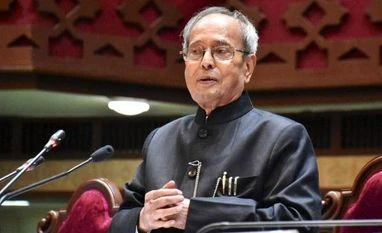
Pranab Mukherjee
Former president of India Pranab Mukherjee.
Business Standard Editorial Comment
3 min read Last Updated : Sep 01 2020 | 12:22 AM IST
Former president Pranab Mukherjee, who died on Monday aged 84, was a giant of India’s political economy. His tenure as first citizen of India between 2012 and 2017 was a fitting culmination of a career in which he occupied multiple major positions in the constellation of Indian power. Over the course of a long career, Mukherjee developed deep personal connections across political and ideological divides; he was almost universally respected not just for his abilities but for his encyclopaedic memory.

Mukherjee’s career spanned the three phases of Indian politics: The era when the Congress was dominant; the decades of coalition government and reform; and, finally, as president, he worked with the new Bharatiya Janata Party dispensation as India transitioned back from coalitions to majority governments. He brought specific skills to each of these periods. During the period of Congress centrality, he was the precocious mind in the council of ministers, which he first joined in the early 1970s. He owed his rise within the party and government to his administrative, drafting, and policymaking talents rather than to any mass following; he was associated strongly with the Rajya Sabha from the moment of his entry into national politics till as late as 2004, when he won the seat of Jangipur in West Bengal.

In the coalition era, Mukherjee came into his own as a troubleshooter — called upon not just to pacify political egos and manage the internal fissures in party and alliance but also to shepherd policy through thickets of conflicting bureaucratic and ministerial interests within governments. The United Progressive Alliance, which he served first as defence, then as external affairs minister, and finally finance minister, became known for forming “empowered groups of ministers” to try and manage an often fractious cabinet. Mukherjee was the usual chair of these groups. As defence minister and then foreign minister, his tenure coincided with the warming of relations between the United States and India; as finance minister, he managed India’s response to the 2008 global financial crisis. While India apparently recovered swiftly from the crisis, it is in this period that it became clear that Mukherjee — once called Indira Gandhi’s “man for all seasons” — was perhaps in fact lost in time. An overestimation of government power, an inability to use his political skills to manage subsidy cuts, sustained overspending, and unwillingness to retreat in the face of market outrage — for example, over the question of retrospective taxation — meant that the effects of his second tenure as finance minister are still being felt. Ironically, as finance minister he may actually have been more suited to the current moment — when statism and an all-powerful prime minister’s office have made a return to the national conversation.

It is a comment on Indian politics that few politicians at the highest level are known more for their policymaking abilities than their mass base. Mukherjee’s policy instincts may have remained in the 1970s and 1980s, when he cut his teeth in government. But the true example that he leaves for those who follow in his footsteps must surely be how he came to be known and associated with the ability to manage divisions, and to create a coherent administration out of messy politicking. This is a skill that India needs more of.

One subscription. Two world-class reads.

Already subscribed? Log in

Subscribe to read the full story →
*Subscribe to Business Standard digital and get complimentary access to The New York Times

Smart Quarterly

₹900

3 Months

₹300/Month

SAVE 25%

Smart Essential

₹2,700

1 Year

₹225/Month

SAVE 46%
*Complimentary New York Times access for the 2nd year will be given after 12 months

Super Saver

₹3,900

2 Years

₹162/Month

Subscribe

Renews automatically, cancel anytime

Here’s what’s included in our digital subscription plans

Exclusive premium stories online

  • Over 30 premium stories daily, handpicked by our editors

Complimentary Access to The New York Times

  • News, Games, Cooking, Audio, Wirecutter & The Athletic

Business Standard Epaper

  • Digital replica of our daily newspaper — with options to read, save, and share

Curated Newsletters

  • Insights on markets, finance, politics, tech, and more delivered to your inbox

Market Analysis & Investment Insights

  • In-depth market analysis & insights with access to The Smart Investor

Archives

  • Repository of articles and publications dating back to 1997

Ad-free Reading

  • Uninterrupted reading experience with no advertisements

Seamless Access Across All Devices

  • Access Business Standard across devices — mobile, tablet, or PC, via web or app

Topics :Pranab MukherjeeCongressIndira Gandhi

Next Story



