Associate Sponsors

Co-sponsor

Time to prepare

Proper and targeted measures needed for Covid-19
Time to prepare
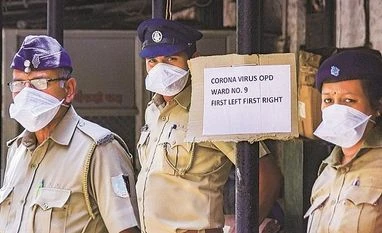
Security personnel outside a special isolation ward at Kasturba Hospital, in Mumbai, on Sunday. Maharashtra has reported 32 confirmed cases of COVID-19, ahead of Kerala's 22 cases Photo: PTI
Business Standard Editorial Comment
3 min read Last Updated : Mar 17 2020 | 12:20 AM IST
Across the world, the spread of the novel coronavirus epidemic within national borders has followed a similar pattern. Growth has typically been exponential, and at some point the number of critical cases threatens to overwhelm the country’s health infrastructure. Differences in patterns between countries emerge in general because of specific mitigation factors: The level of social distancing and quarantining imposed, and the stage of the epidemic in which these are enforced; the number of tests conducted; the accuracy of identification of those who might be potential carriers but are asymptomatic; and, finally, the level to which the public health system is able to manage. 

While the government has taken prudent measures so far to contain the coronavirus, coming weeks could increase the intensity and require response at a much larger scale. The spread of the virus is at its preliminary stages in most of the country. Some states have shut down schools, but many large gatherings — such as the Ram Navami celebration at Ayodhya — are still being planned. The government will have to take a call soon on what a national response should look like. India should be testing for the presence of the coronavirus as widely as it can. Countries that have succeeded in “flattening the curve” — in other words, slowing the spread of the virus in the population — include Hong Kong, South Korea and Taiwan, all of which tested intensively. This allowed more precise targeting of those who might otherwise spread the virus in the population. As of the end of last week, India had conducted about 6,000 tests. Current protocol calls for a test only in the case of those showing symptoms and who have had contact with a confirmed carrier or were in a high-risk area. This is too stringent a requirement, especially as there appears to be considerable inventory of test kits and ample capacity to increase production if required, according to the government. 

Further, if not over the next few weeks, then sometime in the fall — if the pattern follows previous novel influenza outbreaks, such as the one in 1918-19 — there could be a re-emergence of the virus in the population. What are the preparations being made to pad out the health system to deal with an increased load? The experience of other countries can be a guide as to what is needed: Isolation zones, expanded and very specific intensive care units that focus on the equipment needed to deal with pneumonia complications. Ventilators and masks will be needed, as well as more trained health care providers who are qualified to conduct procedures such as intubations. The relatively delayed onset of the pandemic in India is an opportunity for preparation, not a cause for complacency. 

While this is primarily a public health problem and should be approached as such, the need for preparation for a more intensive period extends to the economy as well. The authorities should be prepared for a decrease in output associated with the period in which the epidemic takes hold. Proper and targeted measures — nothing as general as an overall stimulus, which might be counter-productive — should be discussed. On its part, the Reserve Bank of India has done well by taking steps to increase both foreign currency and rupee liquidity in the system.

One subscription. Two world-class reads.

Already subscribed? Log in

Subscribe to read the full story →
*Subscribe to Business Standard digital and get complimentary access to The New York Times

Smart Quarterly

₹900

3 Months

₹300/Month

SAVE 25%

Smart Essential

₹2,700

1 Year

₹225/Month

SAVE 46%
*Complimentary New York Times access for the 2nd year will be given after 12 months

Super Saver

₹3,900

2 Years

₹162/Month

Subscribe

Renews automatically, cancel anytime

Here’s what’s included in our digital subscription plans

Exclusive premium stories online

  • Over 30 premium stories daily, handpicked by our editors

Complimentary Access to The New York Times

  • News, Games, Cooking, Audio, Wirecutter & The Athletic

Business Standard Epaper

  • Digital replica of our daily newspaper — with options to read, save, and share

Curated Newsletters

  • Insights on markets, finance, politics, tech, and more delivered to your inbox

Market Analysis & Investment Insights

  • In-depth market analysis & insights with access to The Smart Investor

Archives

  • Repository of articles and publications dating back to 1997

Ad-free Reading

  • Uninterrupted reading experience with no advertisements

Seamless Access Across All Devices

  • Access Business Standard across devices — mobile, tablet, or PC, via web or app

Topics :Coronavirus

Next Story



