Congress takes research route to corner Centre

The work of Congress' research cell, at times, is personally reviewed by party chief Sonia Gandhi
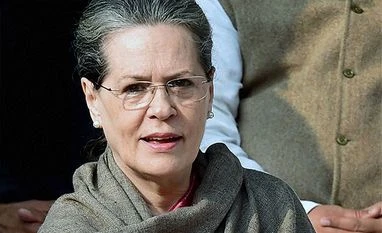
Congress President Sonia Gandhi. Photo: PTI
Amit Agnihotri New Delhi
Last Updated : Apr 15 2017 | 9:29 PM IST
The Congress may appear to be static post 2014 but India’s grand old party is quietly gearing up to face the future political challenges.

Playing a key role in the process of change is the party’s research and coordination unit run by a group of young scholars who work under the supervision of Rajya Sabha member Rajeev Gowda.

Following the instructions of Congress chief Sonia Gandhi, who wants party members in Parliament to be well versed with various issues and corner the government with facts and figures, the research cell has been providing backgrounders on social, political and economic issues besides legislative primers that may be expected during a particular parliament session.

Besides hard copy, e-mails and WhatsApp groups are also being used to disseminate information among the lawmakers.

Sometimes members seek info on specific issues. For instance, Renuka Chowdhury wanted a paper on droughts in southern India while Rajni Patil wanted a detailed note on electronic voting machines.

The cell also plans interactive sessions where experts brief the lawmakers on specific issues. For instance, economist Pronab Sen briefed the MPs on demonetisation and its impact on the economy. As the party took notes ban protests across the country, the cell provided a fact sheet for the use of spokespersons during TV debates. Though notes ban did not fetch sufficient electoral dividend in the recent five assembly polls, the state of the economy report prepared by the cell on the eve of economic survey 2016-17 was lapped up by the media. Congress insiders said that moving beyond the usual rhetoric, they wanted to corner the government with solid facts. The cell plans to make such reports an annual affair and aims to up the ante by focusing more on political issues. It has also held lectures for MPs on the new education policy, the Arunachal Pradesh constitutional crisis- where the BJP made a backdoor entry to get power- and the flip flops on foreign policy.

Lawmakers, especially the veterans find the cell’s effort a welcome step. Rajya Sabha members Kapil Sibal and Abhishek Manu Singhvi, both top Supreme Court lawyers, have teams of young researchers in their offices.

The cell marks a shift in the way the Congress has been working. For decades, a party office operating from 15, GRG Road, often dubbed as the war room, acted as a hub of strategy sessions. But the place becomes active only during national or state polls unlike the research cell, which functions round the year.

In due course of time, the research activity would be expanded beyond Delhi with similar cells functioning in various state capitals in close coordination. The research cell, which provides info for shadow union ministry handles on Twitter and Facebook, closely works with the party’s social media team, which too has been scaled-up over the past three years.

Interestingly, Sonia Gandhi deployed four party leaders, Sandeep Dikshit, Sanjay Nirupam, Randeep Surjewala and Rajeev Gowda, in 2014 to run the research cell, but three of them got busy with other responsibilities. 

While Surjewala heads the AICC communication department, Nirupam is Mumbai unit chief and Sandeep, a former Delhi MP, is withdrawn with mother and former Delhi chief minister Sheila Dikshit’s diminished role in city politics. Gowda, who keeps shuttling between Delhi and hometown Bengaluru, does the needful. An ever-watchful Sonia, though she has withdrawn from an active role, reviews the work done by the research cell after each Parliament session.

One subscription. Two world-class reads.

Already subscribed? Log in

Subscribe to read the full story →
*Subscribe to Business Standard digital and get complimentary access to The New York Times

Smart Quarterly

₹900

3 Months

₹300/Month

SAVE 25%

Smart Essential

₹2,700

1 Year

₹225/Month

SAVE 46%
*Complimentary New York Times access for the 2nd year will be given after 12 months

Super Saver

₹3,900

2 Years

₹162/Month

Subscribe

Renews automatically, cancel anytime

Here’s what’s included in our digital subscription plans

Exclusive premium stories online

  • Over 30 premium stories daily, handpicked by our editors

Complimentary Access to The New York Times

  • News, Games, Cooking, Audio, Wirecutter & The Athletic

Business Standard Epaper

  • Digital replica of our daily newspaper — with options to read, save, and share

Curated Newsletters

  • Insights on markets, finance, politics, tech, and more delivered to your inbox

Market Analysis & Investment Insights

  • In-depth market analysis & insights with access to The Smart Investor

Archives

  • Repository of articles and publications dating back to 1997

Ad-free Reading

  • Uninterrupted reading experience with no advertisements

Seamless Access Across All Devices

  • Access Business Standard across devices — mobile, tablet, or PC, via web or app

Next Story



