For years, I have been seeking a stock I can retire on. My search is over in Adani Transmission.
It combines the security of a fixed deposit (assured returns) with the excitement of growth (higher incentives). These are some reasons that make Adani a go-to stock in troubled times.
One, the company is the Power Grid of India’s private sector power transmission entity, having achieved its 2020 capacity target three years ahead of schedule.
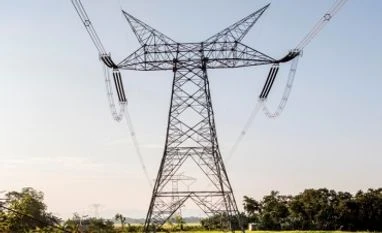
Two, the returns on the assets —power transmission lines from one point to another — have been secured through long-term annuity revenue contracts with the government.
Three, the business is marked by high profitability; the Ebitda (earnings before interest, taxes, depreciation and amortisation) margin was 92 per cent in the first quarter of this financial year.
Four, the moment the company stops expanding, it can select to patiently draw debt down and become a cash cow — or keep expanding capacity, with a relatively stretched but secured balance sheet (which is what it is doing).
Five, it has reconciled two business models, the pass-through where the government provides a pre-agreed return of 18 per cent internal rate of return (IRR) equity, with all costs reimbursed (five projects) and a tariff-based competitive bidding (TBCB) model, where the lowest cost company wins (nine projects).
Six, the business is largely de-risked the moment a transmission network is activated — a high penalty for delaying or defaulting customers ensures timely inflow for Adani Transmission.
Seven, as the government graduates an increasing number of projects to TBCB, Adani Transmission expects to flex its muscle, using cutting-edge HVDC lines that deliver network availability much higher than the mandated average.
Eight, the company has graduated to investment-grade rating, making it possible to raise low-cost global funds (the second biggest profitability driver). The company’s 10-year $500 million bond offering attracted Rs 35,000 crore of borrowing interest, translating into a premium.
Nine, the company possesses deep competence through senior managers who, in their previous jobs, commissioned an aggregate 25,000 circuit km, providing Adani Transmission with rich intellectual capital (in land aggregation and right of way), making it possible to commission faster and cheaper (huge edge in a TBCB environment), leading to a 18-19 per cent equity IRR return, around 400 basis points higher than what is assured by the government.
Ten, the company has demonstrated it can acquire transmission networks with speed, which has helped eliminate risk and prepone revenue inflow.
So, what do I make of this?
Permit me to narrow my investment argument to three points.
The company should be able to report an Ebitda of around Rs 2,000 crore in the current financial year, which should increase by 50 per cent (my calculation) once the acquired assets go on stream.
The company is the largest private sector company in a core infrastructure segment, available for a market capitalisation of only around Rs 6,800 crore.
The country’s transmission capacity needs to increase attractively if it is to match existing national generation capacity. When generation capacity increases (as it will), the country’s transmission appetite will need to increase faster, providing long-term players like Adani Transmission a huge competitive advantage. Quod erat demonstrandum. The author is a stock market writer, tracking corporate earnings and investor psychology to gauge where markets are not headed

 "Multiple triggers for Adani Transmission")












 Connect with us on WhatsApp