Before you buy your next lot of mangoes this summer, don’t just look at the colour of the fruit but check for aroma. Artificially ripened mangoes don’t have aroma. While the outer part of the fruit will have a yellow skin, the tissue/flesh won’t be ripe. Artificially ripened mangoes are green and yellow in patches as the chemical doesn’t react evenly. But it doesn’t hold true always. Some artificially ripened bananas appear bright yellow, and sometimes a light powder-like compound is visible on the surface of the fruit. Besides, artificially ripened fruits are dry and less juicy compared to the natural ones. Calcium carbide, also called masala by vendors, is commonly used for illegal ripening of mangoes. It contains traces of arsenic and phosphorus. Once dissolved in water, it produces acetylene gas that affects the neurological system and can cause headaches, mood swings, dizziness, sleepiness, confusion and seizures as short-term effects. It can also cause mouth ulcers, gastric problems, diarrhoea and skin rashes. An extended exposure can even cause memory loss and cancer. Though, the usage of ethylene-releasing agents for ripening fruits such as ethrel — also known as ethephon — is permitted. Doctors consider it a safe option. But vendors avoid using ethrel because of its high cost and cumbersome ripening procedure.
> Experts suggest that mangoes should be kept under running water for a few minutes before eating to wash off the chemicals. Watermelon Many a time, one is tempted to buy watermelons just for its bright red colour. The bad news is that it might have been injected with red dye. Erythrosine-B or Red-3, a cherry-pink synthetic, is commonly used to give watermelon pulps a bright red colour. Erythrosine-B contains iodine and sodium. Thyroid malfunction is one of the possible harmful effects of consuming this compound. Sometimes, chemicals like carbide, lead chromate, methanol yellow and sudan red are also used in watermelons as artificial sweeteners and catalysts for faster growth. Lead chromate can cause skin allergies and damage the nervous system. Its exposure can also lead to kidney and brain damage, and anemia. Sudan red is a carcinogenic compound and is harmful for the stomach. “The best way to avoid such harmful fruits is to consume them only during the season in which they are cultivated. When you consume non-seasonal fruits, you are probably consuming poison,” says Liaqat Hussain, a 42-year-old farmer from Assam.
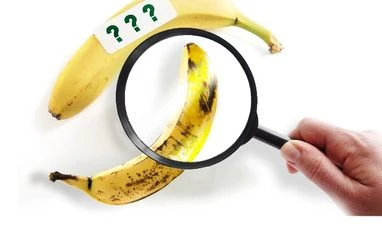
> There are certain ways in which one can differentiate between natural and artificially produced watermelons. If the fruit is uniformly coloured and black patches are visible on its skin, chances are it is chemically treated. Banana An artificially ripened banana tends to be lime yellow, while its stem appears to be of a slightly different colour. They are also spotless, unlike the bananas that are naturally ripened. Interestingly, the artificially ripened bananas also have a shorter shelf life. “Sometimes they keep bananas in smoke chambers. Smoke emanates acetylene gas. Several fruit traders follow this technique to achieve uniform ripening,” says an official at the Association of Food Scientists and Technologists in Mysuru. “The use of ethrel solution is allowed. But, vendors do not prefer it to cut cost.” Calcium carbide is also often used to ripen bananas. The vendors dip the bananas in the solution. When smoke is used to ripen bananas, the odour of the smoke impairs the quality of the fruit. “Typically bananas are artificially ripened a month before they would have ripened naturally. Like mangoes, vendors do it to avoid transportation hazards,” says Hasmukh Sapnawala, 54, who owns Sapna Ranch, an organic farm in Maharashtra’s Mandangad. The use of calcium carbide is not only toxic to consumers, but is also harmful to those who handle it.
> Experts advise that one should remove the peel completely before consuming the banana in order to reduce the side-effects of calcium carbide. Apple The old adage, an apple a day keeps the doctor away may not hold true any longer. Most apples that you see in the market have wax coating. Wax, mostly shellac and carnauba, gives the fruit an extra shine to lure customers. It is also used to increase the shelf life of the fruit, which means the apple that you ate last could have been more than a year old. Although experts suggest that wax is not harmful in itself, but the worrying fact is that it is usually applied before the pesticide is removed from the surface of the fruit. So even if you wash the apples the pesticides will not be removed. The wax also alters the taste of the apple.
> The solution is to rinse apples with vinegar and remove its skin before consumption. Grapes
Did you ever go on a fruit diet and ended up vomiting? In case you had grapes, toxic benzene hexa chloride (BHC), a non-water soluble pesticide, could have caused it. BHC remains on the fruit skin even after it’s washed. Exposure to BHC in mild doses can cause vomiting and muscular pain. These days, BHC is often used beyond the permissible limits in grapes. Sometimes calcium carbide or wax, like in apples, is also used to ripen the fruit. A prolonged exposure to BHC can adversely affect the functioning of the liver.
> If grapes appear to have an extra shine, it means the fruit has been coated with wax. Experts suggest that grapes should be rinsed with a mix of salt and baking soda, and then with water before consumption.

 "Poison on your plate")












 Connect with us on WhatsApp