Popular robots dangerously easy to hack, say experts

This could result in them being programmed to injure the humans around them
robots, technology
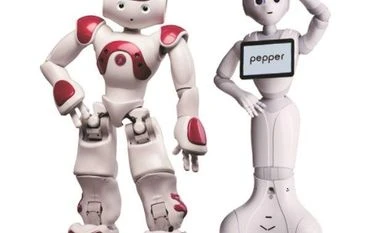
With the robots intended for home use—SoftBank’s Pepper and NAO–IOActive found that cyberattackers could use them to record audio and video and secretly transmit this data to an external server. Photo courtesy: SoftBank
Jeremy Kahn | Bloomberg
Last Updated : Aug 23 2017 | 2:34 AM IST
Some of the most popular industrial and consumer robots are dangerously easy to hack and could be turned into bugging devices or weapons, IOActive said.

The Seattle-based cybersecurity firm found major security flaws in industrial models sold by Universal Robots, a division of US technology company Teradyne. It also cited issues with consumer robots Pepper and NAO, which are manufactured by Japan’s Softbank Group, and the Alpha 1 and Alpha 2 made by China-based UBTech Robotics. 

These vulnerabilities could allow the robots to be turned into surveillance devices, surreptitiously spying on their owners, or let them to be hijacked and used to physically harm people or damage property, the researchers wrote in a report released Tuesday.

Universal Robots’s devices are designed to work directly alongside humans without being confined to a cage for safety, as with many other industrial models. But IOActive was able to remotely hack the software that controls the robot and disable key safety features. This could result in them being programmed to injure the humans around them. 

This is particularly worrying, IOActive said, because these machines are large enough and have enough power that “even running at low speeds, their force is more than sufficient to cause a skull fracture.”

With the robots intended for home use – SoftBank’s Pepper and NAO – IOActive found that cyberattackers could use them to record audio and video and secretly transmit this data to an external server. UBTech’s Alpha series home robots did not encrypt sensitive information they captured before storing or transmitting it, opening an avenue for cybercriminals to potentially steal important personal information, IOActive said.

As with the Universal Robots machines, these home robots could also be made to carry out physical attacks. Although they are much less powerful than the industrial models from Universal Robots, IOActive released a video of a test in which an otherwise cute NAO robot suddenly begins laughing in an evil and maniacal way and uses a screwdriver to repeatedly stab a tomato. While the video is clearly intended to be humorous, IOActive’s researchers said it had a serious intent: one could imagine the robot potentially launching a similar attack against an infant, toddler or pet.

“If we know about these vulnerabilities, chances are that we’re not the only ones,” Lucas Apa, principal security consultant at IOActive, wrote in an e-mail.

Universal Robots spokesman Thomas Stensbol said the company was aware of IOActive's report. “We have a constant focus on our product improvement and industrial hardening for the sake of our customers,” he wrote in an e-mailed statement. “This includes monitoring any potential vulnerability, not just cyber-security." He said the company's products "undergo rigorous safety certification.”

SoftBank spokesman Vincent Samuel said the company would provide a response to IOActive’s report but it had not done so as of press time. UBTech didn’t respond to requests to comment on IOActive’s findings. Apa said that SoftBank had told IOActive that it planned to issue patches to address security flaws the researchers found, but that no fixes had been released yet. 

IOActive issued an initial report highlighting many of these vulnerabilities in March but withheld the specific techniques used to hack into the software that controls the robots in order to give manufacturers time to fix flaws. On Tuesday, the cybersecurity firm made technical details of the hacks public.

“We contacted all the vendors in January but sadly there’s little to suggest that the 50-plus vulnerabilities we demonstrated have been fixed,” Apa said.

“Most vendors were not forthcoming when we contacted them in private, so going public was the only option left available to us.”

Apa said the intent was to make the public aware of the risks and prod the manufacturers to fix the security flaws.

He said IOActive wanted to highlight the need for robotics companies to think about cybersecurity at every stage of their design process. “These are early days for the robotics industry, but as it grows, we want to make sure it has a more secure future,” he said. 

Bloomberg

One subscription. Two world-class reads.

Already subscribed? Log in

Subscribe to read the full story →
*Subscribe to Business Standard digital and get complimentary access to The New York Times

Smart Quarterly

₹900

3 Months

₹300/Month

SAVE 25%

Smart Essential

₹2,700

1 Year

₹225/Month

SAVE 46%
*Complimentary New York Times access for the 2nd year will be given after 12 months

Super Saver

₹3,900

2 Years

₹162/Month

Subscribe

Renews automatically, cancel anytime

Here’s what’s included in our digital subscription plans

Exclusive premium stories online

  • Over 30 premium stories daily, handpicked by our editors

Complimentary Access to The New York Times

  • News, Games, Cooking, Audio, Wirecutter & The Athletic

Business Standard Epaper

  • Digital replica of our daily newspaper — with options to read, save, and share

Curated Newsletters

  • Insights on markets, finance, politics, tech, and more delivered to your inbox

Market Analysis & Investment Insights

  • In-depth market analysis & insights with access to The Smart Investor

Archives

  • Repository of articles and publications dating back to 1997

Ad-free Reading

  • Uninterrupted reading experience with no advertisements

Seamless Access Across All Devices

  • Access Business Standard across devices — mobile, tablet, or PC, via web or app

Next Story



